

















May 21, 2015
World Education Forum adopts Declaration on the Future of Education
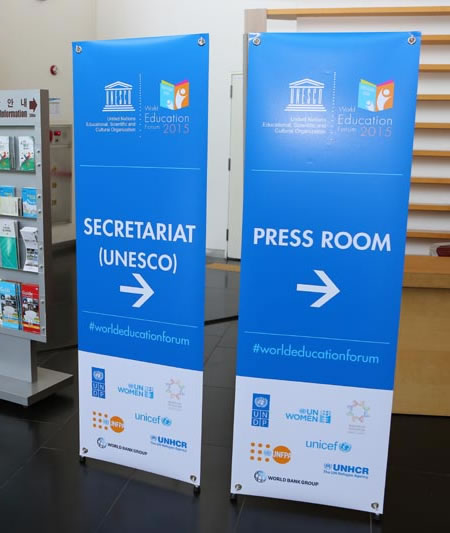
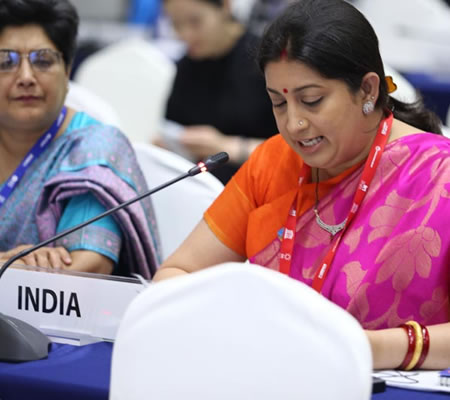

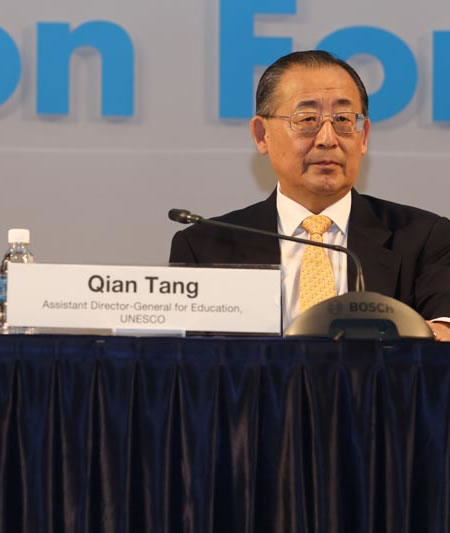
Photos: World Education Forum 2015, Incheon, Republic of Korea. Images provided by and copyright © UNESCO.
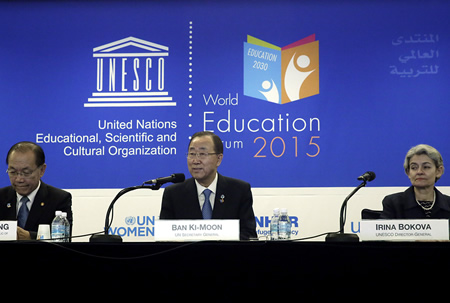

Photo: Opening of World Education Forum 2015, Seoul. UN Secretary-General Ban Ki-moon centre, at the opening of the World Education Forum 2015, in Seoul. He is flanked by Hwang Woo-yea (left), Deputy Prime Minister and Minister of Education of the Republic of Korea; and Irina Bokova, Director-General of the UN Educational, Scientific and Cultural Organization (UNESCO). 19 May 2015. Seoul, Republic of Korea. UN Photo/Evan Schneider.
Incheon, Republic of Korea, 21 May 2015 — A transformative vision for education over the next 15 years has been adopted at the World Education Forum, which concluded today in Incheon, Republic of Korea. The Incheon Declaration was welcomed by the global education community, including government ministers from more than 100 countries, non-governmental organizations and youth groups. It encourages countries to provide inclusive, equitable, quality education and life-long learning opportunities for all. The Declaration will underpin the education targets in the Sustainable Development Goals that will be ratified at the United Nations in September.
“This Declaration is a huge step forward,” stated the Director-General of UNESCO, Irina Bokova. “It reflects our determination to ensure that all children and young people gain the knowledge and skills they need to live in dignity, to reach their potential and contribute to their societies as responsible global citizens. It encourages governments to provide learning opportunities through life, so that people can continue to grow and develop. It affirms that education is the key to global peace and sustainable development.”
The Incheon Declaration will be implemented through the Education 2030 Framework for Action, a roadmap for governments to be adopted by the end of the year. It will provide guidance on effective legal and policy frameworks for education, based on the principles of accountability, transparency and participatory governance.
|GlobalGiants.Com|
“Educating the mind without educating the heart is no education at all.”
— Aristotle.



Edited & Posted by Editor | 1:08 PM | Link to this Post
March 12, 2015
The World's 100 Most Prestigious Universities
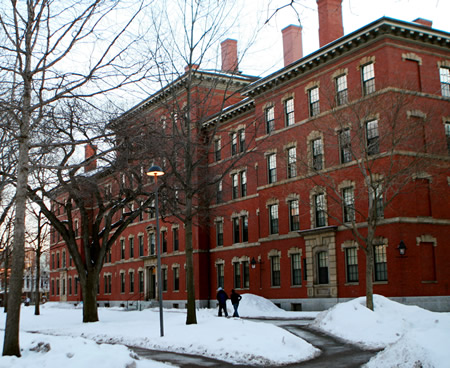
Photo: A building at Harvard University. Photo Credit: Hong Duong.
London — Times Higher Education (THE) has announced its World Reputation Rankings 2015 that determines the 100 most renowned higher education institutions in the world.
For the fifth consecutive year, the rankings highlight an elite group of six US and UK “super-brands” that hold a significant lead over the rest. Although the order has changed over the years, the institutions in the top six have remained constant: Harvard University, Cambridge, Oxford, the Massachusetts Institute of Technology, Stanford University and the University of California, Berkeley.
“What we are finding year on year is that universities in this group of six tend to stand out well above the seventh and eighth placed institutions,” said THE rankings editor Phil Baty. “They seem to be in a super-league all of their own.”
Germany remains the best-represented nation after the US and the UK, with six top 100 universities (the same as last year). Its neighbour France now boasts five institutions in the table (all of them based in Paris), up from two last year.
Asia’s best performer, the University of Tokyo, slipped one place to 12th position. Meanwhile, China’s top institution, Tsinghua University, climbed 10 places to 26th, and Peking University leaped from 41st to 32nd place.
THE partnered with Elsevier to disseminate the Academic Reputation Survey on which the results are based. Questionnaires, which asked participants to nominate up to 10 of the best institutions in their field of expertise, were completed by some 10,000 academics selected to give a statistically representative sample of global scholars.
World’s Most Prestigious Universities
Top 50
Rank - Institution - Location - Overall Score
- Harvard University — United States — 100.0
- University of Cambridge — United Kingdom — 84.3
- University of Oxford — United Kingdom — 80.4
- Massachusetts Institute of Technology (MIT) — United States — 77.8
- Stanford University — United States — 72.1
- University of California, Berkeley — United States — 60.0
- Princeton University — United States — 35.0
- Yale University — United States — 33.1
- California Institute of Technology (Caltech) — United States — 24.1
- Columbia University — United States — 21.0
- University of Chicago — United States — 19.8
- The University of Tokyo — Japan — 19.3
- University of California, Los Angeles (UCLA) — United States — 18.9
- Imperial College London — United Kingdom — 18.2
- ETH Zurich - Swiss Federal Institute of Technology Zurich — Switzerland — 16.7
- University of Toronto — Canada — 15.8
- University College London (UCL) — United Kingdom — 15.7
- Johns Hopkins University — United States — 14.6
- University of Michigan — United States — 13.8
- Cornell University — United States — 13.6
- New York University (NYU) — United States — 13.6
- London School of Economics and Political Science (LSE) — United Kingdom — 12.9
- University of Pennsylvania — United States — 11.2
- National University of Singapore (NUS) — Singapore — 10.4
- Lomonosov Moscow State University — Russian Federation — 9.9
- Tsinghua University — China — 9.5
- Kyoto University — Japan — 9.3
- Carnegie Mellon University — United States — 9.2
- University of Edinburgh — United Kingdom — 8.3
- University of Illinois at Urbana-Champaign — United States — 8.2
- King’s College London — United Kingdom — 8.1
- Peking University — China — 7.7
- University of Washington — United States — 7.4
- Duke University — United States — 7.3
- Ludwig Maximilian University of Munich — Germany — 7.2
- McGill University — Canada — 7.2
- University of British Columbia — Canada — 7.0
- Heidelberg University — Germany — 6.4
- University of California, San Francisco — United States — 6.4
- University of Wisconsin-Madison — United States — 6.4
- Humboldt University of Berlin — Germany — 6.3
- University of California, San Diego — United States — 6.3
- University of Melbourne — Australia — 6.3
- University of California, Davis — United States — 6.0
- Karolinska Institute — Sweden — 5.9
- University of Texas at Austin — United States — 5.8
- Northwestern University — United States — 5.7
- Ecole Polytechnique Federale de Lausanne — Switzerland — 5.5
- Georgia Institute of Technology (Georgia Tech) — United States — 5.4
- University of Manchester — United Kingdom — 5.3
51 to 60
- Australian National University — Australia
- Delft University of Technology — Netherlands
- Free University of Berlin — Germany
- KU Leuven — Belgium
- Panthéon-Sorbonne University - Paris 1 — France
- Paris-Sorbonne University - Paris 4 — France
- Seoul National University — Republic of Korea
- The University of Hong Kong — Hong Kong
- University of Amsterdam — Netherlands
- University of São Paulo — Brazil
- University of Sydney — Australia
61 to 70
- Ecole Normale Superieure — France
- Leiden University — Netherlands
- National Taiwan University — Taiwan
- Pennsylvania State University — United States
- Technical University of Munich — Germany
- University of California, Santa Barbara — United States
- University of North Carolina — United States
- University of Southern California — United States
- Wageningen University and Research Center — Netherlands
71 to 80
- Boston University — United States
- Brown University — United States
- Hong Kong University of Science and Technology — Hong Kong
- Michigan State University — United States
- National Autonomous University of Mexico — Mexico
- Purdue University — United States
- Rutgers, The State University of New Jersey — United States
- Saint Petersburg State University — Russian Federation
- University of Minnesota — United States
- University of Pittsburgh — United States
- Utrecht University — Netherlands
81 to 90
- Durham University — United Kingdom
- Ohio State University — United States
- Texas A&M University — United States
- University of Copenhagen — Denmark
- University of Helsinki — Finland
- University of Queensland — Australia
- University of Warwick — United Kingdom
- Uppsala University — Sweden
- Washington University in St Louis — United States
91 to 100
- Ecole Polytechnique — France
- London Business School — United Kingdom
- Mayo Medical School — United States
- Monash University — Australia
- Nanyang Technological University — Singapore
- Pasteur Institute — France
- RWTH Aachen University — Germany
- University of Bristol — United Kingdom
- University of Maryland, College Park — United States
- University of Massachusetts — United States
|GlobalGiants.Com|
Edited & Posted by Editor | 9:43 AM | Link to this Post
November 27, 2014
What Makes a Great Student City? Discover the Top Cities for Students with QS Best Student Cities 2015 Announced Today

Photo: “University Life”. Photo Credit: Photographer © Francisco Osorio.

Photo: “University Life”. Photo Credit: Photographer © Francisco Osorio.

Photo: London, United Kingdom. “Where am I?”. Photo Credit: Photographer © Daniele Zanni.
Paris tops for the third consecutive year the QS Best Student Cities, a ranking of the world’s top cities for students, released today.
Melbourne (2nd) gains three places while London drops to the third position.
The ranking, compiled by the team behind the QS World University Rankings, is based on five key pillars, which are then broken down into individual criteria:
- University Rankings
- Student Mix
- Quality of Living
- Employer Activity
- Affordability
To be included in the ranking, each city must have a population of over 2,50,000, and must be home to at least two ranked institutions in the QS World University Rankings. 116 cities in the world qualify on this basis, and 50 have been ranked.
This year, the number of criteria has increased from 14 to 18, adding in metrics on Safety and Pollution as well as the Transparency International’s Corruption Perception Index and the Social Progress Index.
29 countries are represented with the most cities in the US (8), followed by Australia (6), UK (4) and by Canada and Japan with 3 apiece.
Europe boasts 20 cities, North America 12, Asia 9, Oceania 7 and South America 2.
QS Best Student Cities 2015
- Paris, France
- Melbourne, Australia
- London, United Kingdom
- Sydney, Australia
- Hong Kong, Asia
- Boston, Massachusetts, United States
- Tokyo, Japan
- Montreal, Canada
- Toronto, Canada
- Seoul, South Korea
- Zurich, Switzerland
- Vancouver, Canada
- San Francisco, California, United States
- Munich, Germany
- Singapore, Asia
- Berlin, Germany
- New York, United States
- Chicago, Illinois, United States
- Barcelona, Spain
- Vienna, Austria
- Canberra, Australia
- Auckland, New Zealand
- Brisbane, Australia
- Buenos Aires, Argentina
- Taipei, Taiwan
- Beijing, China
- Edinburgh, United Kingdom
- Copenhagen, Denmark
- Adelaide, Australia
- Manchester, United Kingdom
- Los Angeles, United States
- Dublin, Ireland
- Shanghai, China
- Kyoto, Japan
- Stockholm, Sweden
- Milan, Italy
- Amsterdam, Netherlands
- Perth, Australia
- Helsinki, Finland
- Madrid, Spain
- Philadelphia, Pennsylvania, United States
- Washington DC, United States
- Moscow, Russia
- Santiago, Chile
- Coventry, United Kingdom
- Pittsburgh, United States
- Brussels, Belgium
- Osaka, Japan
- Prague, Czech Republic
- Mexico City, Mexico
|GlobalGiants.Com|
Edited & Posted by Editor | 1:56 AM | Link to this Post
November 23, 2014
Make Sure Your University is Signed Up and Ready for the Latest Data Collection by Times Higher Education for its World University Rankings 2015-2016
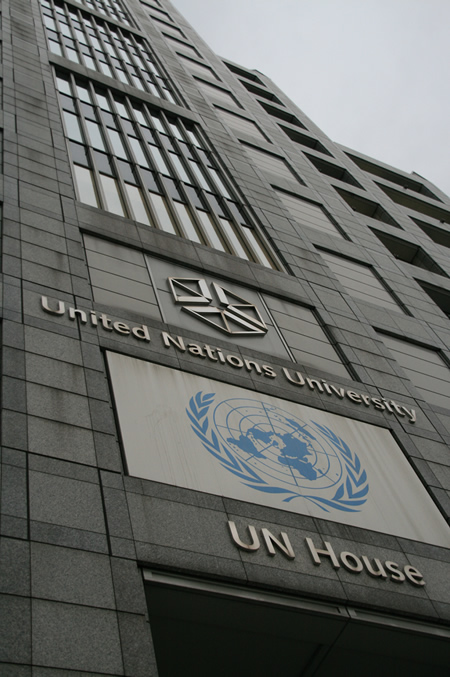
Photo: Entrance to the United Nations University, Tokyo, Japan. Photo Credit: © Shinya ICHINOHE.
Times Higher Education (THE) has announced a series of important changes to its flagship THE World University Rankings and its suite of global university performance analyses, following a strategic review by THE parent company TES Global.
According to THE, the methodology of the global rankings will be broadly preserved and the rankings will continue to use the most comprehensive and balanced performance indicators to evaluate universities across all of their core missions, including research, knowledge transfer, international outlook and - uniquely - the teaching environment. But a series of structural changes will ensure that the THE rankings continue to lead the field for rigour, responsiveness and transparency and provide an ever richer picture of the global higher education and research landscape.
The key change is that all institutional data collection, previously outsourced to Thomson Reuters, will be expanded and will now be brought in-house, carried out by a new, dedicated team of data analysts at THE. The team, in partnership with universities, intends to build the largest and most comprehensive database of university data in the world.
Data, including key information such as an institution’s resources and staff and student profiles, at both the institutional and subject level, will be collected from many hundreds of institutions across the world. The data will be used to underpin the overall THE World University Rankings, as well as supplementary rankings, including the THE 100 Under 50, the THE Asia University Rankings and the THE BRICS & Emerging Economies Rankings. It will also be used to develop new analyses, in response to sector demand and consultation, including new rankings and analytical services.
• So, to ensure that your university is included in the THE World University Rankings 2015-2016, make sure that it is signed up and ready for the latest data collection by Times Higher Education.
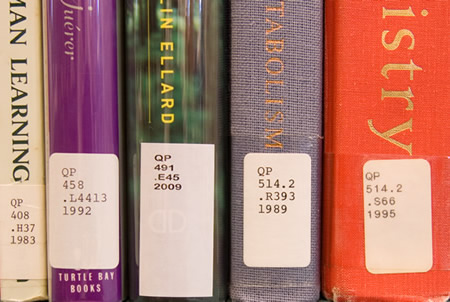
Photo: Call Numbers on Books (Library of Congress Classification). Photo Credit: © CCAC North Library.
Meanwhile, tens of thousands of senior academics around the world are being invited to shape the results of the Times Higher Education World University Rankings 2015-2016 and to contribute to the most comprehensive picture yet produced of global teaching and research.
THE, in partnership with world-leading provider of scientific and technical information Elsevier, today launched the 2015 THE Academic Reputation Survey, with a number of key improvements.
According to THE, leading scholars from across the world and across all academic disciplines - those best placed to understand excellence in teaching and research in our universities - have been selected, based on their publication record, to represent their country and their academic field in the exercise, which is the world’s largest invitation-only survey of its kind.
THE does not allow institutions to nominate participants in the survey and does not allow anyone to sign up for the research without an invitation, so those selected to take part will be representing thousands of their peers.
THE advises that leading academics should look out for an email from it headed: “Your invitation to influence the outcome of the Times Higher Education World University Rankings”, and, if invited, take part to represent their peers in their respective country and in their respective field.
|GlobalGiants.Com|
Edited & Posted by Editor | 1:56 AM | Link to this Post
October 28, 2014
U.S. News Releases Inaugural Best Global Universities Rankings

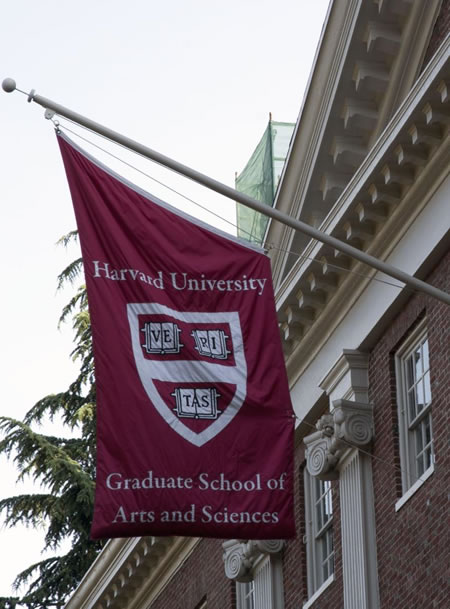
Photo: Harvard University - Graduate School of Arts and Sciences. Photo Credit: il.irenelee.
U.S. News & World Report, a leading U.S.-based publisher of education analysis and rankings, today unveiled the inaugural Best Global Universities rankings.
The U.S. prevails as the global leader among research universities, with many U.S. universities dominating the list of top schools. Harvard University claims the No. 1 spot overall, followed by the Massachusetts Institute of Technology at No. 2 and the University of California—Berkeley at No. 3. Of the 500 institutions ranked, 134 are in the U.S. Germany follows with 42 schools, and the United Kingdom with 38 schools. China makes a strong showing, with 27 schools in the top 500.
The publisher said that the 2015 Best Global Universities rankings offer the most comprehensive assessment of research universities worldwide as well as by region and country. The overall rankings include 500 universities spread out across 49 countries. There are four regional rankings of the top universities in Asia, Australia/New Zealand, Europe and Latin America, as well as country-specific rankings highlighting the top schools in 11 countries, including Canada, China, France, Germany and Italy. The rankings also feature the top 100 global universities in 21 subject areas, including fields such as economics and business, engineering, computer science and clinical medicine.
According to U.S. News, it developed the Best Global Universities rankings to help students accurately compare schools worldwide. “Increasingly, students are enrolling in universities outside of their own countries,” said Brian Kelly, editor and chief content officer. “As higher education becomes more global, our new rankings will set standards and allow students to better evaluate all of their options.”
The Best Global Universities rankings - which are based on data and metrics provided by Thomson Reuters InCitesTM research analytics solutions - focus on institutions’ research overall. The methodology weighs factors that measure a university’s global and regional reputation; academic research performance using bibliometric indicators; and school-level data on faculty and Ph.D. graduates.
The 2015 rankings are U.S. News’ first evaluation of higher education institutions worldwide. For 30 years, U.S. News has produced the Best Colleges rankings, which help prospective students identify the best schools for them in the U.S.
2015 U.S. News Best Global Universities Rankings
Overall Best Global Universities
- Harvard University (U.S.)
- Massachusetts Institute of Technology (U.S.)
- University of California—Berkeley (U.S.)
- Stanford University (U.S.)
- University of Oxford (U.K.)
- University of Cambridge (U.K.)
- California Institute of Technology (U.S.)
- University of California—Los Angeles (U.S.)
- University of Chicago (U.S.)
- Columbia University (U.S.)
Best Global Universities in Asia
- University of Tokyo (Japan)
- Peking University (China)
- University of Hong Kong
- National University of Singapore
- Kyoto University (Japan)
Best Global Universities in Australia/New Zealand
- University of Melbourne (Australia)
- University of Sydney
- University of Queensland Australia
- Australian National University
- Monash University (Australia)
Best Global Universities in Europe
- University of Oxford (U.K.)
- University of Cambridge (U.K.)
- Imperial College London (U.K.)
- University College London (U.K.)
- Swiss Federal Institute of Technology Zurich (Switzerland)
Best Global Universities in Latin America
- Universidade de Sao Paulo (Brazil)
- Universidade Federal do Rio de Janeiro (Brazil)
- Universidade Estadual de Campinas (Brazil)
- University of Buenos Aires (Argentina)
- National Autonomous University of Mexico
|GlobalGiants.Com|
Edited & Posted by Editor | 4:17 AM | Link to this Post
October 2, 2014
Times Higher Education World University Rankings 2014-2015 show US strength on the Wane

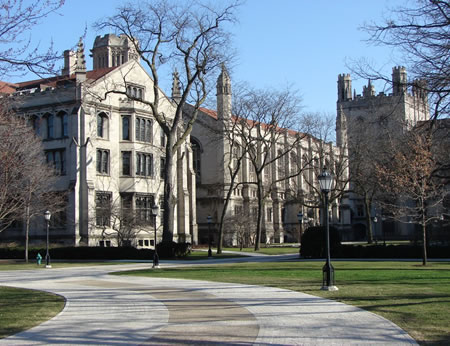
Photo: Main Quadrangle, University of Chicago, USA. Photo Credit: Luiz Gadelha Jr.
According to Chris Parr of Times Higher Education, despite the California Institute of Technology’s claim on the top spot for the fourth consecutive year, evidence is emerging of a decline in the power of US universities in the Times Higher Education World University Rankings 2014-2015.
And, according to him, despite the fact that Harvard (second), Stanford (fourth), the Massachusetts Institute of Technology (sixth), Princeton University (seventh), the University of California, Berkeley (eighth) and Yale University (joint ninth) all make the top 10, there is evidence of an overall decline for US universities, with significant losses further down the league table. This includes the University of Chicago, which slips from ninth to 11th.
The US has 74 universities in the top 200, down from 77 last year. Some 60 per cent of those institutions rank lower than they did 12 months ago, with an average fall of 5.34 places per university.
It is a similar story for Canada. While the University of Toronto retains 20th place and the University of Victoria joins the top 200 in joint 173rd place, all other Canadian top 200 universities have lost ground.
The UK, meanwhile, has lost three universities from the top 200 (the University of Reading, the University of Dundee and Newcastle University), and now has 29 top 200 institutions, down from 31.
Conversely, the leading Asian institutions continue to rise, and the continent now has 24 universities in the world top 200, four more than last year. Two Asian universities make the world top 25 (the University of Tokyo and the National University of Singapore), while six feature among the top 50.
“Western universities, in many cases starved of vital public funding, are losing ground,” said Phil Baty, THE rankings editor, who added that there was “something approaching a crisis” for US state institutions.
Philip Altbach, director of the Center for International Higher Education at Boston College, said that the “serious hit” in funding to the “great American public universities” had major implications for US science and competitiveness.
He added that on average Canada had a better higher education system than the US, without the “peaks nor the valleys” found among the ranking positions of American universities. “[Canada’s] top universities are excellent, but could easily be even better if they had the additional funding - and probably the competitive spirit - needed,” Dr Altbach said.
In Europe, Germany gains two new top 200 representatives (Eberhard Karls Universitat Tubingen and Technische Universitat Dresden), to overtake the Netherlands as the third most represented nation behind the US and the UK.
Times Higher Education World University Rankings 2014-15 — Top Twenty:
Rank — Institution — Country
- California Institute of Technology — US
- Harvard University — US
- University of Oxford — UK
- Stanford University — US
- University of Cambridge — UK
- Massachusetts Institute of Technology — US
- Princeton University — US
- University of California, Berkeley — US
- Imperial College London — UK
- Yale University — US
- University of Chicago — US
- University of California, Los Angeles (UCLA) — US
- ETH Zurich - Swiss Federal Institute of Technology Zurich — Switzerland
- Columbia University — US
- Johns Hopkins University — US
- University of Pennsylvania — US
- University of Michigan — US
- Duke University — US
- Cornell University — US
- University of Toronto — Canada
|GlobalGiants.Com|
Edited & Posted by Editor | 11:02 AM | Link to this Post
September 16, 2014
QS World University Rankings 2014/2015 Announced

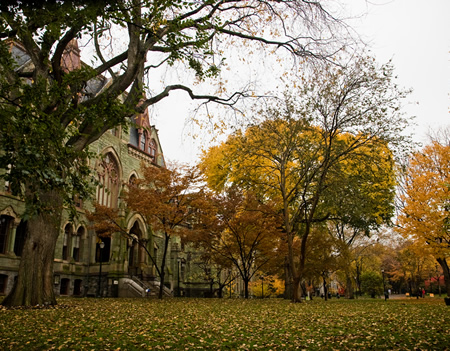
Photo: University of Pennsylvania in the fall. Photo Credit: Saikofish Lou.
The global emphasis on high-impact scientific and technological research is the key driver of leadership in the QS World University Rankings 2014 announced today in London.
MIT leads for the third year and increased its year-on-year citations per faculty by 14%. Imperial College also reported a 14% increase in this metric compared to 11% by Cambridge and 2% by Harvard. The average increase amongst the top 10 was 7%.
Caltech remains the world’s top university for research citations.
All the top ten institutions achieve excellence in academic reputation, employer reputation, student faculty ratio or measures of international faculty and students. The performance of Imperial College in citations per faculty has helped it become the biggest climber in the top 10, leapfrogging Harvard, UCL and Oxford to rank second equal in the world, tied with University of Cambridge.
QS World University Rankings 2014 — Top Ten
- Massachusetts Institute of Technology [MIT] (US)
- University of Cambridge (UK)
- Imperial College London [UCL] (UK)
- Harvard University (US)
- University of Oxford (UK)
- University College London (UK)
- Stanford University (US)
- California Institute of Technology [Caltech] (US)
- Princeton University (US)
- Yale University (US)
31 countries are represented in the top 200; The US is the dominant nation, with 51 institutions, ahead of the UK (29), Germany (13), The Netherlands (11), Canada (10), Japan (10) and Australia (8).
Following institutions from India have found a place among the top 800:
RANK — INSTITUTION
- 222 — Indian Institute of Technology Bombay (IITB)
- 235 — Indian Institute of Technology Delhi (IITD)
- 300 — Indian Institute of Technology Kanpur (IITK)
- 322 — Indian Institute of Technology Madras (IITM)
- 324 — Indian Institute of Technology Kharagpur (IITKGP)
- 421-430 — University of Delhi
- 461-470 — Indian Institute of Technology Roorkee (IITR)
- 551-600 — Indian Institute of Technology Guwahati (IITG)
- 551-600 — University of Mumbai
- 601-650 — University of Calcutta
- 701+ — Banaras Hindu University
- 701+ — University of Pune
- NA — Indian Institute of Science
- NA — Jawaharlal Nehru University
According to Ben Sowter, QS head of research, “Tech-focused institutions are the focal point of a global race for innovation. With budgets from public sources coming under strain, institutions seem more focused than ever on potentially lucrative research in science, technology and medicine.”
|GlobalGiants.Com|
Edited & Posted by Editor | 4:14 AM | Link to this Post
August 2, 2014
The United States and India Announce Institutional Partnership Grants 2014
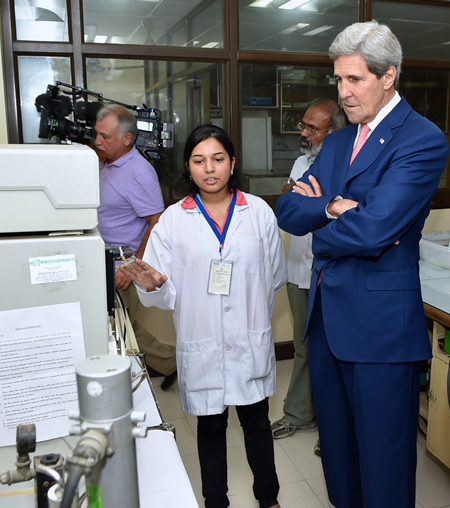
Photo: U.S. Secretary of State John Kerry listens to a student engaged in biomass research as he visits the Indian Institute of Technology in New Delhi, India, before a string of meetings as part of a Strategic Dialogue between the two countries on July 31, 2014. (U.S. State Department Photo).
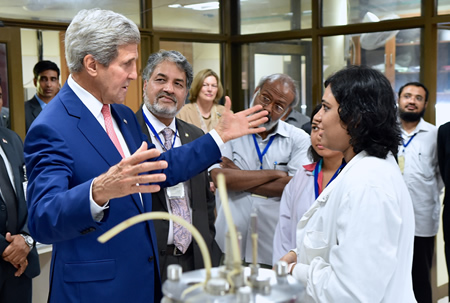
Photo: U.S. Secretary of State John Kerry speaks with a student engaged in biomass research as he visits the Indian Institute of Technology in New Delhi, India, before a string of meetings as part of a Strategic Dialogue between the two countries on July 31, 2014. (U.S. State Department Photo).
Obama-Singh 21st Century Knowledge Initiative has announced Third Round of Awards in a continuation of the educational partnership between India and the United States. The initiative aims to strengthen collaboration and build partnerships between American and Indian institutions of higher education. Each award can be utilized over a three-year period, with the aim of encouraging mutual understanding, educational reform, and economic growth, as well as the development of junior faculty at Indian and American institutions of higher learning.
2014 Grant Recipients
U.S.-led Partnerships:
• University of Illinois, College of Nursing, Chicago, IL
Partner Institution: Bel-Air College of Nursing, Panchgani, Maharashtra
Project Title: Building an effective partnership for innovative nursing education and research to advance public health
• Indiana University, Bloomington, IN
Partner Institution: Sankara Nethralaya, Chennai, Tamil Nadu
Project Title: Prevention of Corneal Blindness: Collaboration between IUSO and SN
• University of California, Berkeley (Center for South Asia Studies), CA
Partner Institution: Indian Institute of Technology-Bombay, Maharashtra
Project Title: Sustainable Indian Water Infrastructure Project (SIWIP): A Systems Approach
• Tufts University, Boston, MA
Partner Institution: Christian Medical College, Vellore, Tamil Nadu
Project Title: Capacity building for Medical Education in Bioethics in India
Indian-led Partnerships:
• Jawaharlal Nehru University, New Delhi
Partner Institution: Mississippi State University, MS
Project Title: Indo-U.S. Initiatives on Cleaner Energy and Water Research
• Dibrugarh University, Dibrugarh, Assam
Partner Institution: University of Louisiana at Lafayette, LA
Project Title: Foam-assisted CO2 Flooding for the Depleted Reservoirs of Upper Assam Basin and in Candidate Reservoirs in Louisiana
• Jawaharlal Technological University, Kakinada, Andhra Pradesh
Partner Institution: Chicago State University, Chicago, IL
Project Title: Promoting University-Industrial Cooperation, Creativity, Diversity and Entrepreneurship in Computer Science
• University of Calcutta, Kolkata, West Bengal
Partner Institution: Claflin University, Orangeburg, SC
Project Title: Promoting Eco-friendly Entrepreneurship Development for Women in West Bengal
|GlobalGiants.Com|
Edited & Posted by Editor | 1:01 PM | Link to this Post
June 30, 2014
CERN celebrates its 60th anniversary at UNESCO
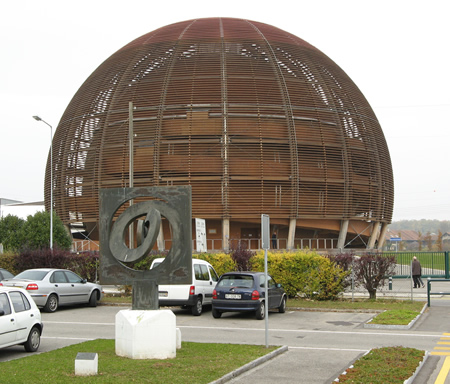
Photo: Globe of Science and Innovation, CERN, Geneva, Switzerland. Photo Credit: Nicola.


Photo: Shiva statue at CERN, Geneva, Switzerland, with the following inscription underneath:
(“O Omnipresent, the embodiment of all virtues, the creator of this cosmic universe, the king of dancers, who dances the Ananda Tandava in the twilight, I salute thee.”
Source: Verse No. 56, Sivanandalahari by Sri Adi Sankara.
Presented by: The Department of Atomic Energy, Government of India.)
Photo Credit: Skimaniac.
• Paris, 30 June - The European Organization for Nuclear Research (CERN) is organizing an event together with UNESCO to commemorate the 60th anniversary of the creation of CERN, at UNESCO headquarters in Paris, where the convention was originally signed in 1953, leading to the establishment of the largest research facility in the field of particle physics the following year.
The event, entitled ‘60 Years of Science for Peace’, will be opened by UNESCO Director General Irina Bokova and CERN Director General Rolf Heuer, among other prominent figures. It will bring together the Ministers of Foreign Affairs of several CERN Member States, researchers and members of the international scientific community, as well as representatives of UNESCO, CERN, European Space Agency (ESA) and European Southern Observatory (ESO) Member States.
The opening ceremony will be followed by a round table discussion on ‘Science for Peace’ with Alexei Grinbaum, researcher and philosopher of the French Atomic Energy and Alternative Energy Commission ; Fernando Quevedo, Director of the Abdus Salam International Centre for Theoretical Physics (Triestre, Italy) ; Zehra Sayers, co-president of the scientific advisory committee of SESAME (International Centre for Synchrotron Light for Experimental Science and Applications in the Middle East based in Amman, Jordan) and Jan Van Den Biesen, vice-president of Philips Research R&D programmes.
Based in Geneva, CERN was created in the aftermath of World War II, following a 4 year conflict that had turned European research in physics to ashes. The idea of a European scientific laboratory emerged during the European culture conference held in Lausanne (Switzerland) in 1949. The initial idea was to use fundamental research as a means to reach scientific excellence while rebuilding cooperation between states and fostering peace. The Convention establishing CERN was signed on 1 July 1953 in Paris, under the auspices of UNESCO, and came into effect in 1954. Today, sixty years later, it has become one the most striking examples of successful scientific cooperation in the world.
|GlobalGiants.Com|
Edited & Posted by Editor | 2:55 PM | Link to this Post
June 29, 2014
Wroclaw, Poland, named World Book Capital for 2016
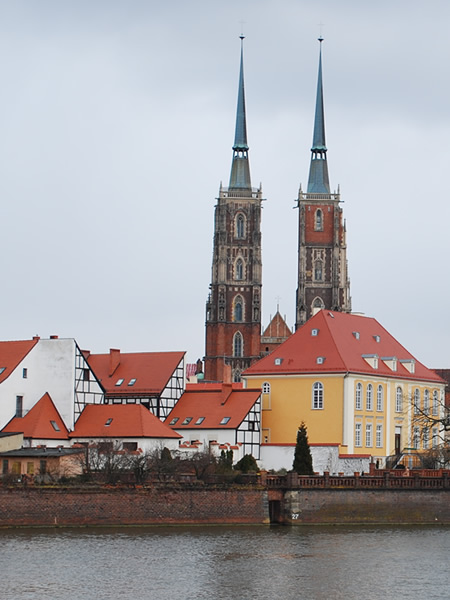
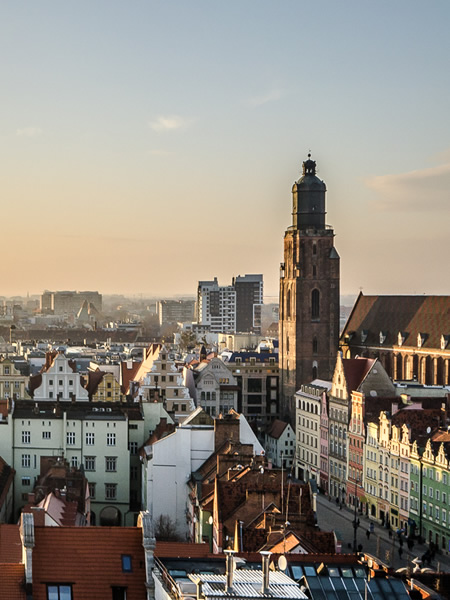
Photos: Wroclaw, Poland. Photos Credit: Ewelina, Maciek Lulko.
The city of Wroclaw (Poland) has been named World Book Capital for 2016. The decision was made by an international committee of experts on 24 June during a meeting at UNESCO’s headquarters in Paris.
The selection committee singled out Wroclaw “in light of the strong assets of its programme in terms of quality and variety” and in particular, “for its special focus on grass-root community involvement, as well as promotion of publishing, book-selling industries and libraries at regional and international levels”.
The Director-General of UNESCO, Irina Bokova, extended her congratulations to the city. “Civic leaders in Wroclaw have developed an excellent programme that will promote reading among the wider public all through the year,” she said. The Director-General also thanked the selection committee “for its valuable work in favor of the promotion of books and of reading, through a global initiative that highlights the commitment of cities from different regions of the world.”
Each year, the international organizations that represent the three major sectors of the book industry — the International Publishers Association (IPA), International Booksellers Federation (IBF) and the International Federation of Library Associations and Institutions (IFLA) — select the World Book Capital for a one-year period. The year starts on 23 April, World Book and Copyright Day, and brings together the city’s publishers, writers and literacy industry to promote and celebrate books and reading over the next 12 months.
New Delhi, India, got the honour to be the World Book Capital in 2003.
Wroclaw is the 16th city to be designated World Book Capital, after Madrid (2001), Alexandria (2002), New Delhi (2003), Antwerp (2004), Montreal (2005), Turin (2006), Bogota (2007), Amsterdam (2008), Beirut (2009), Ljubljana (2010), Buenos Aires (2011), Yerevan (2012), Bangkok (2013), Port Harcourt (2014) and Incheon (2015).
The city of Incheon (Republic of Korea) has already been designated World Book Capital 2015.
|GlobalGiants.Com|
Edited & Posted by Editor | 6:42 AM | Link to this Post
June 18, 2014
China Dominates the QS BRICS 2014 University Rankings
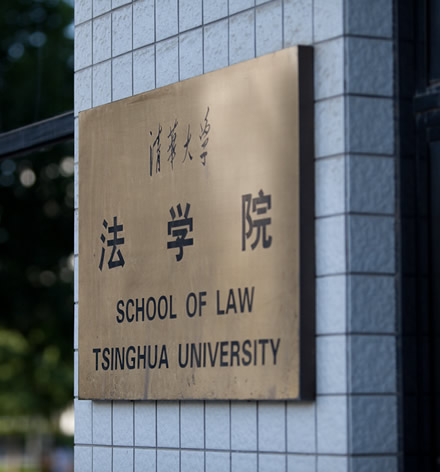
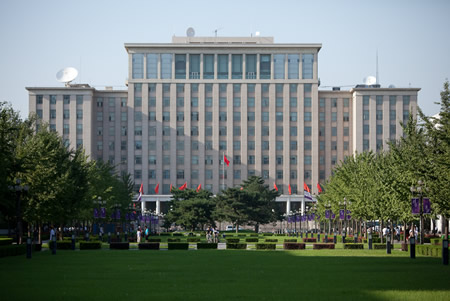
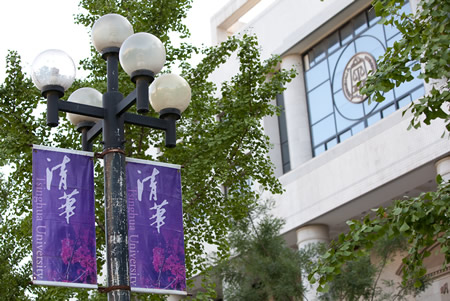
Photos: Tsinghua University Campus, Beijing, China. Photos Credit: Jens Schott Knudsen.
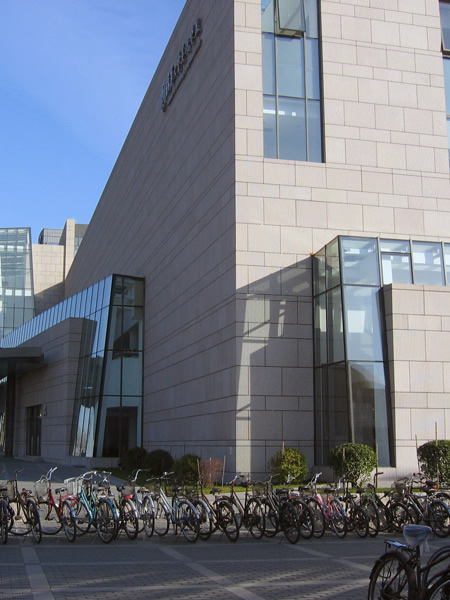
Photo: The Institute for Art and Design, Tsinghua University Campus, Beijing, China. Photo Credit: David Wiley.
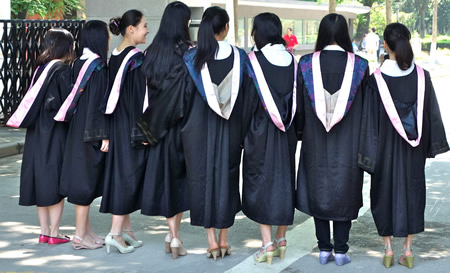
Photo: Graduation Day at Nanjing University, China. Photo Credit: Kevin Dooley.
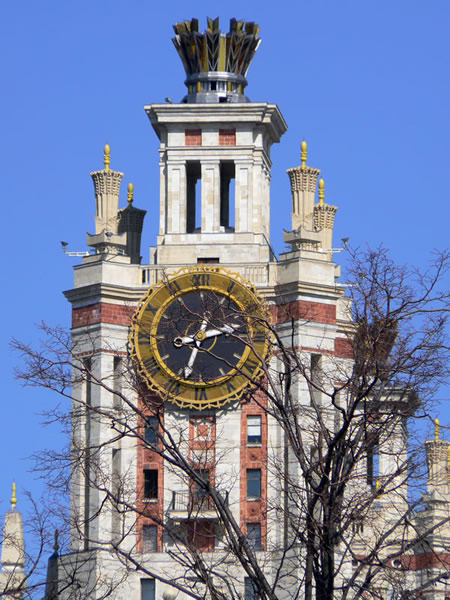
Photo: Tower Clock, Lomonosov Moscow State University Campus, Moscow, Russia. Photo Credit: Dmitry Kochetov.

Photo: Museum of Contemporary Art, Universidade de Sao Paulo (University of Sao Paulo), Sao Paulo, Brazil. Photo Credit: Fernando Stankuns.
QS BRICS 2014 University Rankings were published today in London.
QS BRICS University Rankings compare the Top 200 academic institutions in Brazil, Russia, India, China and South Africa. The latest rankings have identified China as the most likely of the BRICS nations to achieve its goal of developing world-class universities.
According to Ben Sowter, QS head of research, “The term BRICS has become shorthand for the idea that the world’s economic future is not in the hands of traditional players such as the US, Europe and Japan.” “To compete with the existing developed world, these fast growing economies need world-class university systems.”
China claims six of the top 10 places, ahead of Brazil (2), Russia (1) and South Africa (1). Russia with 53 institutions in the top 200 is second to China (71). While India is the only nation without a university in the top 10, though its five IIT’s make to the top 20.
BRICS - Top 10 - 2014
• TSINGHUA UNIVERSITY — CHINA
• PEKING UNIVERSITY — CHINA
• LOMONOSOV MOSCOW STATE UNIVERSITY — RUSSIA
• UNIVERSITY OF SCIENCE AND TECHNOLOGY OF CHINA — CHINA
• FUDAN UNIVERSITY — CHINA
• NANJING UNIVERSITY — CHINA
• UNIVERSIDADE DE SAO PAULO — BRAZIL
• SHANGHAI JIAO TONG UNIVERSITY — CHINA
• UNIVERSIDADE ESTADUAL DE CAMPINAS — BRAZIL
• UNIVERSITY OF CAPE TOWN — SOUTH AFRICA
“The development of Chinese higher education over the past 20 years has been nothing short of extraordinary,” adds Sowter. “Universities such as Tsinghua and Peking have now established themselves among the world’s major producers of scientific research.”
China has increased its research and development funding by an average of 18% per year since 2008. Its ‘C9 League’ institutions have been earmarked as challengers to the US ‘Ivy League’, and six of them make to the top 10 in today’s ranking.
Russia, on its part, has announced plans to achieve five universities in the global top 100 by 2020.
Commenting on India, Martin Ince, editor of the QS Higher Education World points out that “China’s big Asian rival, India, has little reason to draw comfort from these rankings. It has only 20 universities and institutions among the 200 we list here, compared to 71 in China, 53 in Russia, 45 in Brazil and 11 in South Africa.” “The Indian university system is strong on a national scale, but our data shows that it holds little attraction for globally mobile students and academics.”
View Here — QS BRICS 2014 University Rankings INDIA
Ben Sowter, head of QS Intelligence Unit, elucidates: “From India’s point of view, there have been notable improvements, too, from Manipal University, from Birla Institute of Technology and Science, and from Amity University, all of which have risen more than ten places since the first BRICS ranking. The biggest fall was at Panjab University (Chandigarh), which was close to the top 100 in 2013 (now in the 141-150 unranked section).”
Meanwhile, Ms. Smriti Irani, India’s new minister responsible for universities, has set a target of raising spending on education to 6% of GDP from less than 4% currently. She expects universities to improve and to align their courses closely with the jobs market. India has ambitions to establish 14 world-class universities under the government’s “brain gain” policy. India’s Prime Minister, Narendra Modi, was today presented the first copy of the QS BRICS 2014 University Rankings by Ms. Irani.
Ben Sowter rightly concludes, “At a time when government spending is stalling in much of the West, the BRICS nations have set their sights on developing world-class universities sooner rather than later.”
|GlobalGiants.Com|
Edited & Posted by Editor | 9:17 AM | Link to this Post
May 28, 2014
The World Heritage Committee to consider the inscription of 40 sites on UNESCO’s World Heritage List
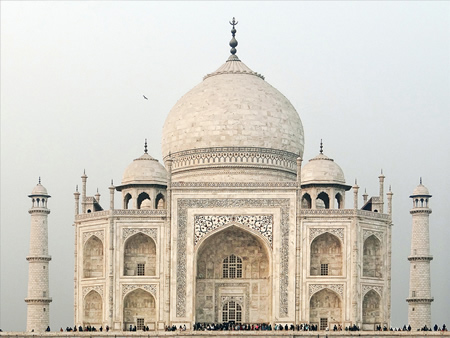
Photo: The Taj Mahal, Agra, India. The Taj Mahal is a UNESCO World Heritage Site. Photo Credit: Jean-Pierre Dalbera.
• The World Heritage Committee will consider the inscription of 40 sites on UNESCO’s World Heritage List when it meets in Doha (Qatar) from 15 to 25 June, 2014, UNESCO announced today at its headquarters in Paris, France.
More than 1200 delegates, experts and observers from around the world will participate in the meeting.
Sites to be considered include five that are extensions to sites already on the List. The state of conservation of existing World Heritage sites will also be reviewed during the session.
The following nominations by States Parties to the World Heritage List are expected to be examined during the session:
Natural Sites:
• Okavango Delta (Botswana)
• South China Karst (Phase II) (China)
• Stevns Klint (Denmark)
• Wadden Sea [extension] (Denmark and Germany)
• Tectono-volcanic Ensemble of the Chaine des Puys and Limagne Fault (France)
• Great Himalayan National Park (India)
• Mt. Hamiguitan Range Wildlife Sanctuary (Philippines)
• Bialowieza Forest [extension] (Belarus/Poland)
• Cat Ba Archipelago (Viet Nam).
Mixed Natural and Cultural Sites:
• Ancient Maya City and Protected Tropical Forests of Calakmul, Campeche [extension] (Mexico)
• Trang An Landscape Complex (Viet Nam).
Cultural Sites:
• Qhapaq Nan, Andean Road System (Argentina, Bolivia, Chile, Colombia, Ecuador, Peru)
• The Grand Canal (China)
• Precolumbian Chiefdom Settlements with Stone Spheres of the Diquis (Costa Rica)
• Sites of Great Moravia: The Slavonic Fortified Settlement at Mikulcice and the Church of St Margaret of Antioch at Kopcany (Czech Republic, Slovakia)
• Decorated Cave of Pont d’Arc, known as Grotte Chauvet-Pont d’Arc, Ardeche (France)
• Carolingian Westwork and Civitas Corvey (Germany)
• Tongo-Tengzuk Tallensi Cultural Landscape (Ghana)
• Rani-ki-Vav (The Queen’s Stepwell) at Patan, Gujarat (India)
• Sharhr-I Sokhta (Iran)
• Erbil Citadel (Iraq)
• Caves of Maresha and Bet-Guvrin in the Judean Lowlands as a Microcosm of the Land of the Caves (Israel)
• The Vineyard Landscape of Piedmont: Langhe-Roero and Monferrato (Italy)
• Tomioka Silk Mill and Related Sites (Japan)
• Silk Roads: Initial Section of the Silk Roads, the Routes Network of Tian-shan Corridor (Kyrgyzstan, China and Kazakhstan)
• Mount Mulanje Cultural Landscape (Malawi)
• Pyu Ancient Cities (Myanmar)
• Van Nellefabriek (Netherlands)
• Namhansanseong (Republic of Korea)
• Bolgar Historical and Archaeological Complex (Russian Federation)
• Historic Jeddah, the Gate to Makkah (Saudi Arabia)
• Cultural Landscape of Valle Salado de Anana (Spain)
• Jaen Cathedral (Extension of the “Renaissance Monumental Ensemble of Ubeda and Baeza”) (Spain)
• Silk Roads: Penjikent-Samarkand-Poykent Corridor, (Tajikistan and Uzbekistan)
• Bursa and Cumalikizik: the Birth of the Ottoman Empire (Turkey)
• Pergamon and its Multi-Layered Cultural Landscape (Turkey)
• Khor Dubai (Dubai Creek) (United Arab Emirates)
• Monumental Earthworks of Poverty Point (United States of America)
• Barotse Cultural Landscape (Zambia).
The proposed inscription of Palestine: Land of Olives and Vines - Cultural Landscape of Southern Jerusalem, Battir, will be reviewed by the Committee under the emergency procedure applied to sites facing serious dangers.
India has 30 properties inscribed on the World Heritage List. These include:
• Ajanta Caves,
• Elephanta Caves,
• Ellora Caves,
• Fatehpur Sikri,
• Mountain Railways of India,
• The Taj Mahal,
• Sun Temple, Konarak, and
• Jantar Mantar, Jaipur (among others).
Properties submitted by India on the Tentative List include:
• Ancient Buddhist Site, Sarnath, Varanasi, Uttar Pradesh,
• Sri Harimandir Sahib, Amritsar, Punjab,
• Urban and Architectural Work of Le Corbusier in Chandigarh,
• Churchgate - Extension to Mumbai CST,
• Mughal Gardens in Kashmir,
• Chilika Lake,
• Delhi - A Heritage City,
• Historic city of Ahmadabad, and
• The Victorian & Art Deco Ensemble of Mumbai (among others).
A “Tentative List” is an inventory of those properties which each State Party intends to consider for nomination.
• UNESCO encourages States Parties to submit their Tentative Lists — properties which they consider to be cultural and/or natural heritage of outstanding universal value and therefore suitable for inscription on the World Heritage List.
• States Parties are encouraged to prepare their Tentative Lists with the participation of a wide variety of stakeholders, including site managers, local and regional governments, local communities, NGOs and other interested parties and partners.
|GlobalGiants.Com|
Edited & Posted by Editor | 1:01 AM | Link to this Post
May 13, 2014
QS University Rankings: Asia — Top Universities 2014


National University of Singapore (NUS) is named as Asia’s top institution for the first time in the QS University Rankings: Asia 2014 published today. The rankings reflect a swing in the balance of power, as Singapore and Korea overtake the traditionally dominant Japan and Hong Kong.
NUS’s success is mirrored by Nanyang Technological University (NTU), which climbs to 7th, its highest ever position. Korea’s KAIST climbs from sixth to second place, while Seoul National University (4th) and Postech (9th) also make the top 10.
Thirteen of the Chinese top 20 institutions have improved their position this year, a surge in research citations. Peking University slips three places to 7th, while Tsinghua University remains 14th.
“Government investment in scientific research is starting to pay dividends, with the majority of Chinese institutions increasing both the volume and impact of their research in recent years,” says QS head of research Ben Sowter. “However, in terms of citations Peking and Tsinghua are still playing catch-up with institutions such as National University of Singapore and University of Hong Kong.”
India’s ranked institutions rise to 17 from just 11 last year yet seven of its top eight institutions drop. IIT Delhi is the top performer at 38th. Growing interest in international rankings is reflected in a sharp increase in the number of Indian institutions featuring in the new Asian Universities Ranking published by QS.
India is still waiting for a breakthrough at the top of the rankings, with the latest table showing a marginal decline in the positions occupied by most of the country’s leading institutions. But an increase of more than 50 per cent in India’s overall representation offers hopeful signs for the future.
As in the previous editions of the ranking, the Indian Institutes of Technology lead the way. IIT Delhi holds on to 38th place, pulling clear of IIT Bombay in 41st. Five other IITs feature in the top 100, led by Kanpur and Madras just outside the top 50.
Amongst traditional universities, University of Delhi takes the lead at 81, having slipped one place since last year. It is ranked in the top 25 in Asia by employers and the top 40 by academics, but is handicapped in some other indicators by its large size and low levels of international faculty and student exchange which brings down its overall ranking. Only the University of Calcutta ranks highly on students’ exchanges, coming second in Asia for outbound exchanges and 52nd for inbound.
In the latest Asian ranking, Banaras Hindu University, Panjab, Manipal and Amity universities, Birla Institute of Technology and Science, and the Indian Institute of Information Technology all appear for the first time.
The Indian Centre for Assessment and Accreditation (ICAA) is hosting the launch of the QS University Rankings: Asia in New Delhi. At the ICAA Rankings & Excellence Dialogue, MHRD Secretary Ashok Thakur said that India must create 40 million university places to meet demand. “We can’t afford to miss out on India’s demographic dividend,” he said. “But it’s not just about numbers, it’s about quality. Indian institutions must no longer hide behind the ‘excuse’ that the global ranking metrics and indicators are not suited to them. We must play the same game that the rest of the world is playing,” he said.
|GlobalGiants.Com|
Edited & Posted by Editor | 10:35 PM | Link to this Post
March 6, 2014
World University Reputation Rankings 2014 dominated by prestige brands from US and UK
Universities from just two countries - the US and the UK - comprise the top 10 of the Times Higher Education World Reputation Rankings 2014.
A group of six “super-brands” holds a clear advantage over the rest, with Harvard University consolidating its position at the top of the table.
• This ranking lists universities on the basis of their reputation and prestige.
The Massachusetts Institute of Technology (MIT), Stanford University, the University of Cambridge, the University of Oxford and the University of California, Berkeley complete the top six, with Princeton University, Yale University, the California Institute of Technology (Caltech) and the University of California, Los Angeles (UCLA) just behind.
The University of Tokyo, the only institution from outside the US or the UK to make the top 10 last year, drops two places to 11th.
The US and the UK are followed by Germany, which has six institutions in the top 100. France loses two representatives, leaving it with two in the table, and the Netherlands also loses ground as Wageningen University and Research Centre drops out.
Australia, which saw two universities enter the top 100 last year, slips back, with Monash University - a new entrant in 2013 - exiting the table, leaving the country with five representatives.
In Asia, Japan remains the strongest performer, with five representatives. China’s top-ranked institution, Tsinghua University, slips one place to 36th but Peking University climbs four places to 41st. No higher education institute from India finds place among top 200 reputed universities of the world.
Compiled by Thomson Reuters, the World Reputation Rankings 2014 are based on responses from about 10,500 leading academics in 133 countries, who were asked to nominate up to 15 of the best institutions in their field of expertise.
“A university’s reputation for academic excellence is absolutely vital to its success,” said THE rankings editor Phil Baty. “While reputation is based on subjective opinion, in this case it is the informed, expert opinion of those in the know — experienced scholars from around the world.”
|GlobalGiants.Com|
Edited & Posted by Editor | 4:40 AM | Link to this Post
January 14, 2014
STUDENT ACADEMY AWARDS 2014 COMPETITION NOW UNDERWAY
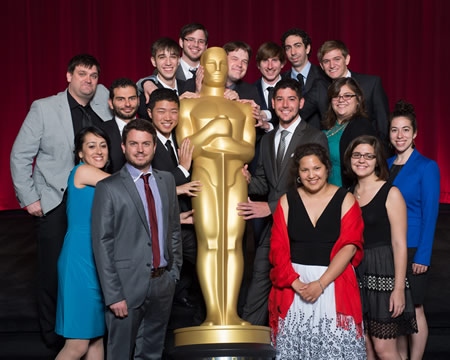
Photo: The Academy of Motion Picture Arts and Sciences presented its 40th Annual Student Academy Awards on Saturday, June 8, in Beverly Hills. Pictured (left to right): John Mattiuzzi, Talkhon Hamzavi, David Aristizabal, Brian Schwarz, Eusong Lee, Perry Janes, Kevin Herron, Jonathan Langager, Wouter Bouvijn, Rafael Cortina, Mauro Mueller, Kristina Yee, Daniel Koehler, Ashley Graham, Lindsey St. Pierre and Rachel Loube. Photo © Matt Petit/Academy of Motion Picture Arts and Sciences.
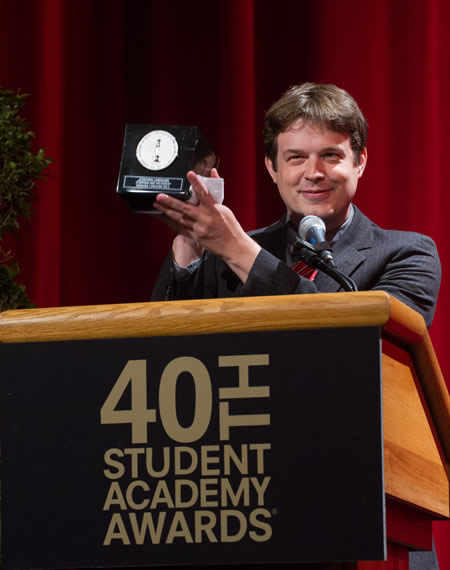
Photo: Jonathan Langager, winner of the silver medal in the narrative film category during the 40th Annual Student Academy Awards on Saturday, June 8, in Beverly Hills. Photo © Todd Wawrychuk/Academy of Motion Picture Arts and Sciences.

Photo: Animated film winner Kevin Herron as the 2013 Student Academy Awards winners toured the Academy Film Archive, on Friday July 7, 2013. Photo © Matt Petit/Academy of Motion Picture Arts and Sciences.
• The Academy of Motion Picture Arts and Sciences is now accepting applications for its 2014 Student Academy Awards competition.
Past Student Academy Award winners have gone on to receive 46 Oscar nominations and have won or shared eight awards. Winners include Pete Docter, John Lasseter, Spike Lee, Trey Parker and Robert Zemeckis.
Gold, Silver and Bronze Medal awards, along with cash prizes, may be presented to student filmmakers in the following categories: Alternative, Animation, Narrative, Documentary and Foreign Film.
The U.S. competition is open to all full-time college and university students at accredited institutions, whose films are made within the curricular structure of a film program or class at their respective schools. For 2014, the Academy has again limited the accepted accreditation agencies for U.S. institutions to the following: Middle States Association of Colleges and Schools; New England Association of Schools and Colleges; North Central Association of Colleges and Schools; Northwest Commission on Colleges and Universities; Western Association of Schools and Colleges; and the Southern Association of Colleges and Schools. U.S. entries must be submitted by Tuesday, April 1, 2014.
In the Foreign Film category, entries are accepted only from full-time college and university students attending schools that are located outside the borders of the United States and are members of the international film school organization CILECT (www.cilect.org) [Full members of CILECT are institutions such as Film and Television Institute of India (FTII)]. The deadline to submit a foreign student film for consideration is Friday, March 21, 2014.
The 41st Annual Student Academy Awards presentation will be held in June at the Academy’s Samuel Goldwyn Theater in Beverly Hills.
The Academy established the Student Academy Awards in 1972 to support and encourage excellence in filmmaking at the collegiate level.
|GlobalGiants.Com|
Edited & Posted by Editor | 8:31 AM | Link to this Post
November 27, 2013
MBA Employers Name World's Top 200 Business Schools

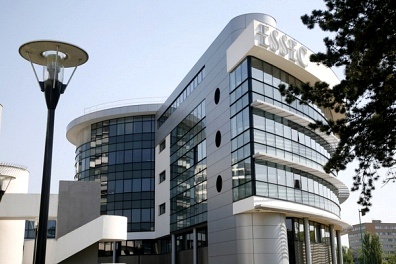
Published today, the QS Global Business Schools Report 2013/14 provides an alternative to traditional MBA rankings by highlighting the value of MBA programs around the world according to the qualification’s end consumer: the MBA employer.
The report is based on 4,318 responses from recruiters who actively hire MBAs, making it the largest survey of its kind.
Five schools received the maximum score for employer recognition, identifying them as the leading schools in their region: Harvard and Stanford (North America), INSEAD and London Business School (Europe), and again INSEAD (Asia-Pacific).
The report points to a leading cluster of 33 ‘elite global’ business schools spread across North America (18), Europe (13) and Asia-Pacific (2).
Region — 2013/14 Position — Institution — Country
North America
1 Harvard US
2 Stanford US
3 The Wharton School US
Europe
1 INSEAD France
2 London Business School UK
3 IE Business School Spain
Asia-Pacific
1 INSEAD Singapore
2 Indian Institute of Management (IIM) Ahmedabad India
3 University of Melbourne Australia
Latin America
1 Tecnologico de Monterrey Mexico
2 Pontificia Universidad Catolica de Chile Chile
3 Business School Sao Paulo Brazil
Middle East and Africa
1 University of Cape Town South Africa
2 University of Witwatersrand South Africa
3 American University of Sharjah UAE
The US dominates the accompanying rankings in ten MBA subject specializations: Finance; Strategy; Innovation; Leadership; Marketing; Entrepreneurship; Corporate Social Responsibility; Information Management; Operation Management and International Management.
Harvard tops five of the ten subjects, with INSEAD; Kellogg; MIT Sloan; Stanford and Wharton topping the others.
|GlobalGiants.Com|
Edited & Posted by Editor | 11:57 AM | Link to this Post
November 21, 2013
Paris Tops QS Best Student Cities Rankings 2014

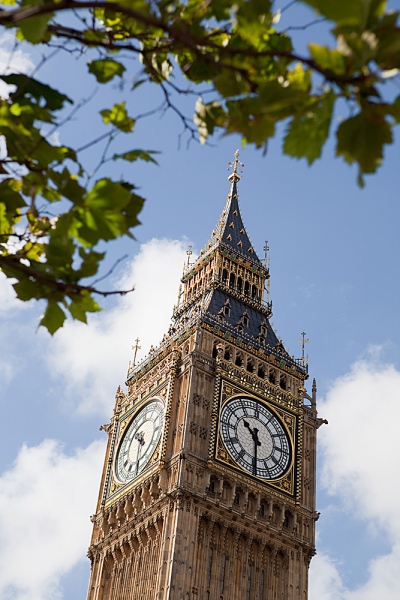
Photos: (From Top) Paris, London.
Paris has once again topped the annual QS Best Student Cities, a ranking of the world’s top cities for students, released today. London was two points behind, narrowly missing the top spot.
The ranking, compiled by the team behind the annual QS World University Rankings, is based on five key pillars, which are then broken down into individual criteria: university rankings; student mix; quality of living; employer activity and affordability.
Two pre-requisites have been established to identify the cities evaluated in this exercise. The first is that each city must have a population of over 250,000, the second that it must be home to at least two ranked institutions in the QS World University Rankings. 98 cities in the world qualify on this basis, 50 have been published.
This year, the number of criteria has increased from 12 to 14, adding in the Globalization and World Cities Index as an indicator for “quality of living ” with a focus on the cities’ influence in the global arena.
Thirty countries are represented with the most cities in the US (7), followed by Australia (6), Canada (3) and UK (3).
The new countries represented in the top 50 are Norway, with Oslo (48), New Zealand, with Auckland (18) and Czech Republic with Prague (45).
QS Best Student Cities 2014
RANK — CITY
1 — Paris
2 — London
3 — Singapore
4 — Sydney
5 — Melbourne
6 — Zurich
7 — Hong Kong
8 — Boston
9 — Montreal
10 — Munich
11 — Berlin
12 — San Francisco
13 — Toronto
14 — Seoul
15 — Dublin
16 — Vienna
17 — Tokyo
18 — Auckland
19 — Beijing
20 — Copenhagen
21 — New York
22 — Vancouver
23 — Chicago
24 — Barcelona
25 — Milan
26 — Brisbane
27 — Stockholm
28 — Taipei
29 — Manchester
30 — Perth
31 — Madrid
32 — Edinburgh
33 — Brussels
34 — Buenos Aires
35 — Shanghai
36 — Amsterdam
37 — Canberra
38 — Adelaide
39 — Los Angeles
40 — Moscow
41 — Lyon
42 — Washington DC
43 — Kuala Lumpur
44 — Philadelphia
45 — Prague
46 — Mexico City
47 — Helsinki
48 — Oslo
49 — Santiago
50 — Kyoto
Ben Sowter, head of research at QS says: “With students becoming increasingly internationally-mobile, our aim is to widen students’ horizons, highlighting the appeal of cities which they may not have previously considered as a potential study destination.”
|GlobalGiants.Com|
Edited & Posted by Editor | 3:31 AM | Link to this Post
October 2, 2013
IBM Teams With Leading Universities to Advance Research in Cognitive Systems

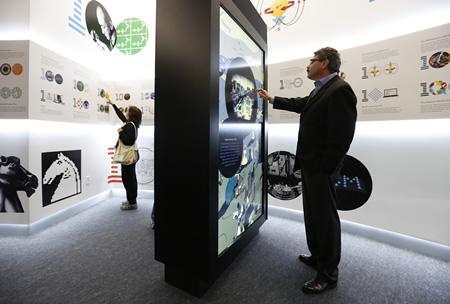
Photo: On February 20, 2013, IBM inaugurated its IBM THINK exhibit at INNOVENTIONS West at Epcot at Walt Disney World Resort. The exhibit shows visitors how technology and systematic inquiry lead to progress and innovation. Shown here is Lee Green, IBM VP Strategic Design and Brand Experience, who designed the exhibit. (Credit: IBM/Ralph Appelbaum Associates).
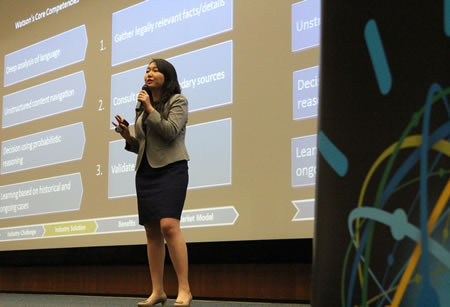
Photo: Student presenter at the IBM Watson Case Competition hosted at USC (Credit: IBM/Ralph Cheung).
YORKTOWN HEIGHTS, N.Y., Oct. 2, 2013 — IBM today announced a collaborative research initiative with four leading universities to advance the development and deployment of cognitive computing systems - systems like IBM Watson that can learn, reason and help human experts make complex decisions involving extraordinary volumes of fast-moving data.
Faculty at the four schools — Carnegie Mellon University, the Massachusetts Institute of Technology, New York University and Rensselaer Polytechnic Institute — will study enabling technologies and methods for building a new class of systems that better enable people to interact with Big Data in what IBM has identified as a new era of computing.
“IBM has demonstrated with Watson that cognitive computing is real and delivering value today,” said Zachary Lemnios, vice president of strategy for IBM Research. “It is already starting to transform the ways clients navigate big data and is creating new insights in healthcare, how research can be conducted and how companies can support their customers. But much additional research is needed to identify the systems, architectures and process technologies to support a new computing model that enables systems and people to work together across any domain of expertise.”
The research initiative was announced at a colloquium held at the Thomas J. Watson Research Center attended by nearly 200 leading academics, IBM clients and IBM researchers to begin a dialog that deepens the understanding of cognitive systems and identifies additional areas of research to pursue. These initial university collaborators will help lay the foundation for a Cognitive Systems Institute that IBM envisions will comprise universities, research institutes and IBM clients.
The initial research topics for exploration announced today are:
MIT - How socio-technical tools and applications can boost the collective performance of moderate-sized groups of humans engaged in collaborative tasks such as decision making.
RPI - How advances in processing power, data availability, and algorithmic techniques can enable the practical application of a variety of artificial intelligence techniques.
CMU - How systems should be architected to support intelligent, natural interaction with all kinds of information in support of complex human tasks.
NYU - How deep learning is impacting many areas of science where automated pattern recognition is essential.
“I believe that cognitive systems technologies will make it possible to connect people and computers in new ways so that—collectively—they can act more intelligently than any person, group, or computer has ever done before,” said Thomas Malone, Director of the MIT Center for Collective Intelligence and the Patrick J. McGovern Professor of Management, MIT Sloan School of Management. “I am excited to be working with IBM and these other universities to understand better how to harness these new forms of collective intelligence.”
“With the explosion of information and the advances in semantic data tools, we are excited to participate in this collaboration to bring the best of human and computing capabilities together in this new era of cognitive systems,” said Selmer Bringsjord, Professor and Head of the Department of Cognitive Science at Rensselaer Polytechnic Institute.
“The cost-effective creation of cognitive systems for complex analytic tasks will require fundamental advances in the rapid construction, optimization, and constant adaptation of large ensembles of analytic components. Personalized information agents will rapidly adapt and optimize their task performance based on direct interaction with the end user. I am excited that CMU will be teaming with IBM, MIT, RPI and NYU to explore the future of software architecture for cognitive systems,” said Eric Nyberg, Professor at the Language Technologies Institute at Carnegie Mellon University.
“NYU’s research into neural networks has the potential to revolutionize how we think about machines and the role they play in our everyday lives. NYU has a long history of helping create some of the work’s most important technological breakthroughs, so we are honored to be among the universities collaborating on this research initiative into cognitive computing systems,” said Paul Horn, Senior Vice Provost for Research at New York University. “As a research university at the forefront of technology and innovation, we look forward to working with IBM and our fellow institutions to promote basic research into the next era of computing.”
|GlobalGiants.Com|
“If I have done the public any service, it is due to my patient thought.”
— Isaac Newton.
Edited & Posted by Editor | 1:10 PM | Link to this Post
September 10, 2013
QS World University Rankings 2013 Announced

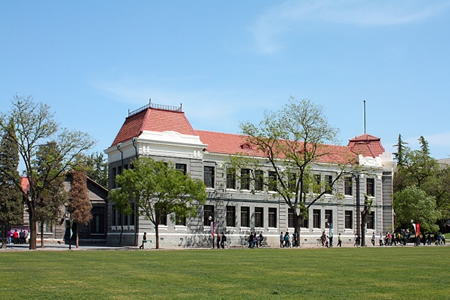

London, September 9, 2013 — QS has announced the tenth edition of its annual World University Rankings.
MIT beats Harvard and Cambridge to retain the top spot.
The US takes 11 of the top 20 positions, but its dominance has eroded since the financial crisis. Of the 83 US universities in the top 400, 64 rank lower than in 2007/8.
• The 43 US public universities in the top 400 have lost an average of 20 places since 2007/8, following successive government funding cuts.
In contrast, 70% of the 62 Asian institutions in the top 400 rank higher than in 2007, yet still no Asian institution in the top 20.
GLOBAL HIGHLIGHTS
• International student intake up 9% at top 100 universities.
• US takes top 10 places for research citations.
• Record survey responses: 62,094 academics and 27,957 employers.
• 800+ universities ranked.
REGIONAL HIGHLIGHTS
• UK: Four institutions in top 10; Oxford and Cambridge 1st and 2nd for employer reputation.
• Australia : Melbourne (31st) catching up with ANU (27th).
• Asia : National University of Singapore (24th) overtakes University of Hong Kong (26th). No Indian university in world’s top 200.
• Canada : Toronto (17th) overtakes McGill (21st).
• Continental Europe : ETH Zurich (12th) and EPFL Lausanne (19th=) lead as nine of region’s top 10 maintain or improve position.
• Nordic Countries: University of Copenhagen (45th) leads as twenty rise.
• Latin America : Universidade de Sao Paulo (127th) leads, nine of region’s top ten rise.
• Africa/ME: 33 in top 800, led by King Fahd University (216th).
GLOBAL TOP TWENTY
1. Massachusetts Institute of Technology (MIT)
2. Harvard University
3. University of Cambridge
4. University College London (UCL)
5. Imperial College London
6. University of Oxford
7. Stanford University
8. Yale University
9. University of Chicago
10=. California Institute of Technology (Caltech)
10=. Princeton University
12. Eth Zurich (Swiss Federal Institute of Technology)
13. University of Pennsylvania
14. Columbia University
15. Cornell University
16. Johns Hopkins University
17=. University of Edinburgh
17=. University of Toronto
19=. Ecole Polytechnique Federale de Lausanne
19=. King’s College London
Researchers say austerity measures in the wake of the recession have contributed to an “affordability crisis” for students at leading institutions.
“The decline in affordable publicly funded education and the increasing dominance of private institutions means many students may now risk being priced out of a world-class education,” says QS head of research Ben Sowter.
|GlobalGiants.Com|
Edited & Posted by Editor | 11:09 AM | Link to this Post
June 25, 2013
The United States and India Announce Awards Connecting Universities to Solve Global Challenges
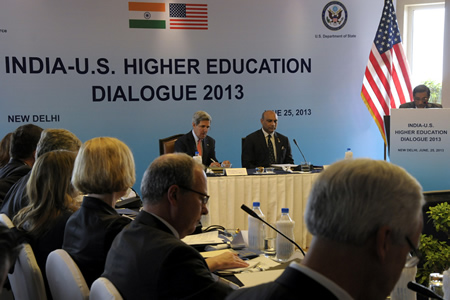
Photo: U.S. Secretary of State John Kerry opens a Higher Education Dialogue in New Delhi, India, on June 25, 2013. State Department Photo.
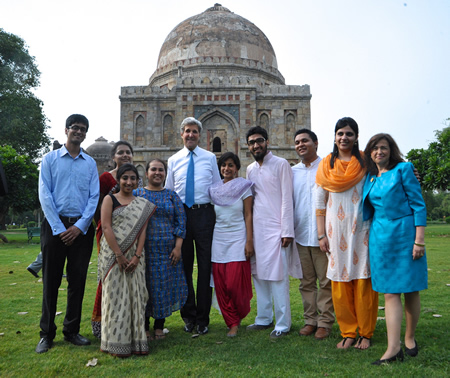
Photo: U.S. Secretary of State John Kerry poses for a photo with young Indian leaders who have participated in programs in the United States as he arrives at Lodi Gardens in New Delhi, India, on June 24, 2013. State Department Photo.
In a continuation of the educational partnership between India and the United States, the U.S. State Department has announced eight institutional partnership projects for the second round of 21st Century Knowledge Initiative awards:
U.S.-led Partnerships:
Harvard School of Public Health
Project Title: Harvard-India Nutrition Initiative
Partner Institution: St. Johns Research Institute, Bangalore
Ohio State University
Project Title: The STEM Faculty Project: Training the Next Generation of STEM Faculty at Higher Education Institutions in India
Partner Institution: Aligarh Muslim University
University of Massachusetts, Amherst
Project Title: Inclusive Universities: Linking Diversity, Equity and Excellence for the 21st Century
Partner Institution: University of Pune
University of North Carolina, Chapel Hill
Project Title: Partnering for Success: Advancing Sustainability Research and Education in India
Partner Institution: Indian Institute of Management, Bangalore
Indian-led Partnerships:
Annamalai University
Project Title: Tamil Nadu Energy Futures: Mapping Uncertainties and Risks
Partner Institution: Tennessee Technological University
Assam Agricultural University
Project Title: Engineering ADP - Glucose Pyrophosphorylase (AGPase) enzymes for heat tolerance in rice
Partner Institution: Washington State University
Avinashilingam Institute for Home Science and Higher Education for Women
Project Title: A Sustainable ‘Response to Intervention’ model for successful inclusion of children with disabilities - A India-US Partnership
Partner Institution: University of Minnesota, Minneapolis
National Institute of Technology - Trichy
Project Title: Cognitive based Curriculum Development Tool for emerging areas of Computer Engineering and Management Studies for improving Teaching-Learning Process
Partner Institution: University of Nevada, Las Vegas
Prime Minister Manmohan Singh of India and President Barack Obama of USA had announced the Obama-Singh Initiative in November 2009 as an affirmation of their commitment to building an enhanced India-U.S. partnership in education. The next request for proposals for the Obama-Singh Initiative grants will be announced in July 2013.
|GlobalGiants.Com|
Edited & Posted by Editor | 2:18 PM | Link to this Post