
















July 1, 2016
UNESCO World Heritage Committee to Meet & Examine Nominations in Istanbul, Turkey, 10 to 20 July, 2016
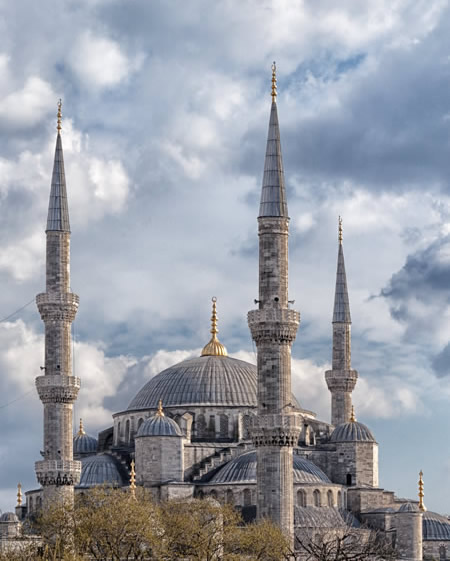
Photo: Istanbul, Turkey. UNESCO World Heritage Committee would meet & examine nominations in Istanbul, Turkey, 10 to 20 July, 2016. Image Credit & Copyright © Jeremy Brooks.
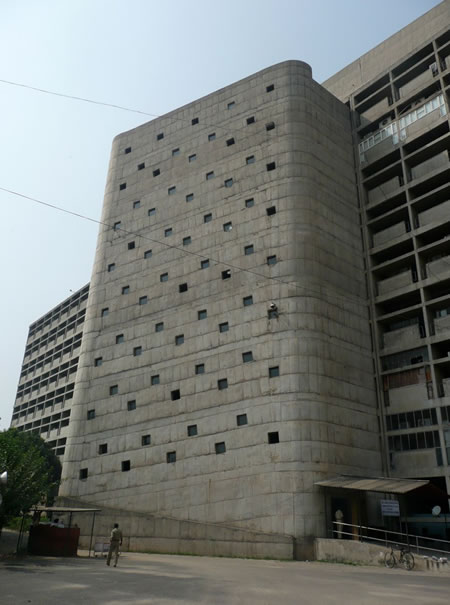
Photo: Secretariat Building (part of Capitol Complex), Chandigarh, India - Le Corbusier. UNESCO World Heritage Committee would examine Chandigarh Capitol Complex under the following nomination (jointly filed by seven countries): “The Architectural Work of Le Corbusier, an Outstanding Contribution to the Modern Movement (Argentina, Belgium, France, Germany, India, Japan, Switzerland)”. Image Credit & Copyright © David Quinn.
The World Heritage Committee will examine proposals to inscribe 29 sites on UNESCO’s World Heritage List during its 40th session (10 to 20 July, 2016), which will be chaired by Ambassador Lale Ulker, General Director for Overseas Promotion and Cultural Affairs at the Turkish Ministry of Foreign Affairs. The session will be held at the Istanbul Congress Centre.
The Committee will examine the nomination of nine natural, 16 cultural and four mixed sites, i.e., properties that are outstanding both for their natural and cultural characteristics. It will also examine the state of conservation of 108 sites already on the World Heritage List and of 48 sites on the World Heritage in Danger List.
The Following Nominations will be Examined:
Natural Sites:
- Mistaken Point (Canada)
- Hubei Shennongjia (China)
- Techno-volcanic Ensemble of the Chaîne des Puys and Limagne Fault (France)
- Lut Desert (Islamic Republic of Iran)
- Western Tien Shan (Kazakhstan, Kyrgyzstan, Uzbekistan)
- Archipiélago de Revillagigedo (Mexico)
- Sanganeb Marine National Park and Dungonab Bay—Mukkawar Island National Park (Sudan)
- Kaeng Krachan Forest Complex (Thailand)
- Mountain Ecosystems of Koytendag (Turkmenistan)
Mixed Sites (Natural and Cultural):
- Pimachiowin Aki (Canada)
- Ennedi Massif: Natural and Cultural Landscape (Chad)
- Khangchendzonga National Park (India)
- The Ahwar of Southern Iraq: Refuge of Biodiversity and the Relict Lanscape of the Mesopotamian Cities (Iraq)
Cultural Sites:
- Antigua Naval Dockyard and Related Archaeological Sites (Antigua and Barbuda)
- The Architectural Work of Le Corbusier, an Outstanding Contribution to the Modern Movement (Argentina, Belgium, France, Germany, India, Japan, Switzerland)
- Stecci—Medieval Tombstones (Bosnia and Herzegovina, Croatia, Montenegro, Serbia)
- Pampulha Modern Ensemble (Brazil)
- Zuojiang Huashan Rock Art Cultural Landscape (China)
- Roman Urbanism of the Zadar Peninsula with the Monumental Complex of the Forum (Croatia)
- Archaeological Site of Philippi (Greece)
- Excavated Remains of Nalanda Mahavihara (India)
- Persian Qanat (Islamic Republic of Iran)
- Nan Madol: Ceremonial Centre of Eastern Micronesia (Federated States of Micronesia)
- Archaeological Site and Historic Centre of Panama City [Significant boundary modification of the Archaeological Site of Panama Viejo and Historic District of Panama] (Panama)
- Antequera Dolmens Site (Spain)
- Phu Phrabat Historical Park (Thailand)
- Archaeological site of Ani (Turkey)
- Gibraltar Neanderthal Caves and Environments (United Kingdom)
- Key Works of Modern Architecture by Frank Lloyd Wright (United States of America)
Sites Proposed for Danger Listing:
- Dja Faunal Reserve (Cameroon)
- Talamanca Range—La Amistad Reserves / La Amistad National Park (Costa Rica/Panama)
- Lower Valley of the Omo (Ethiopia)
- Old Towns of Djenne (Mali)
- Kathmandu Valley (Nepal)
- Historic Centre of Shakhrisyabz (Uzbekistan)
- Dong Phayayen-Khao Yai Forest Complex (Thailand)
From 29 June to 11 July, Istanbul will host a World Heritage Youth Forum, which will bring together young people from different parts of the world who are committed to the protection of heritage. They will adopt a Declaration which will be presented to the Committee during its opening session.
|GlobalGiants.Com|


Edited & Posted by Editor | 12:06 AM | Link to this Post
June 19, 2016
Internationalization of Higher Education: The Enhanced Role of a Public University in Contemporary Academic Environment

Public Universities play a key role in the transformation of the societies they represent and serve.
Thanks to Information Technology, Higher Education is fast becoming internationalized in all disciplines, and Public Universities, all over the world, have started to recognize this fact.
• “Think Globally, Act Locally” is now the norm here as well. Today, a public university with a penchant for seeking flattery from the locals, would find itself sailed into choppy waters.
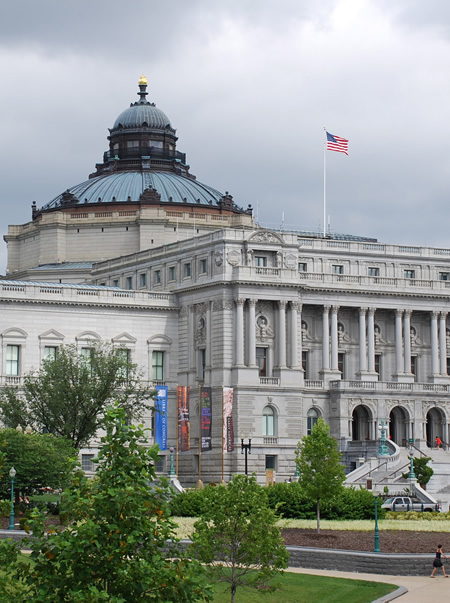
Photo: Library of Congress, Washington, DC. Library of Congress houses the United States Copyright Office. Image Credit: Adam Fagen.
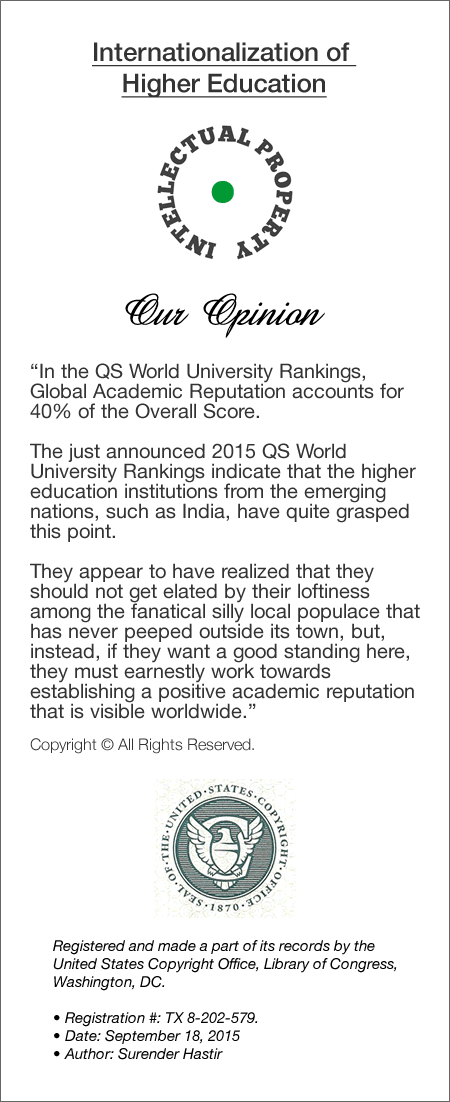
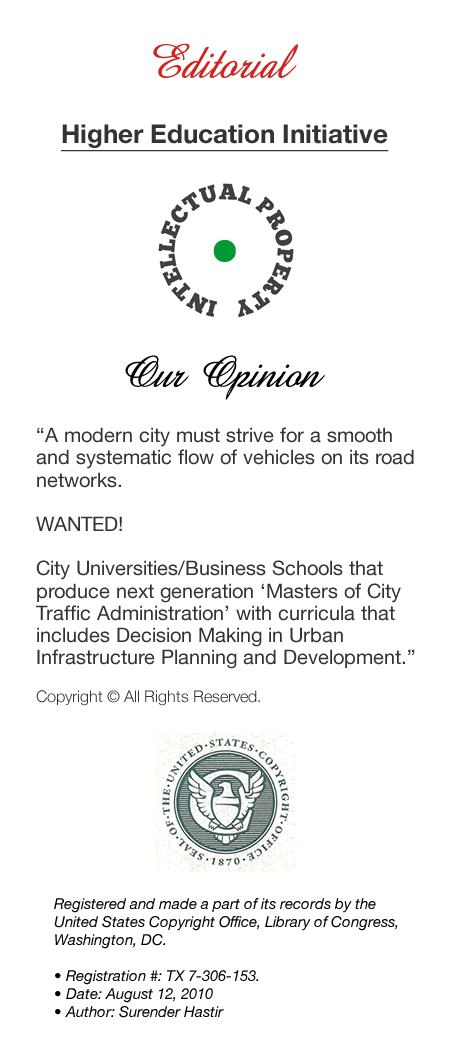
Our following succinct observation reflects the enhanced role of a public university in contemporary academic environment. This observation has been determined to be copyrightable and has been registered and made a part of its records by the United States Copyright Office, Library of Congress, Washington, DC.

|GlobalGiants.Com|
Edited & Posted by Editor | 12:36 PM | Link to this Post
June 16, 2016
Revealed: Asia's 350 Best Universities. China Edges Out Japan in Battle for Regional Superiority

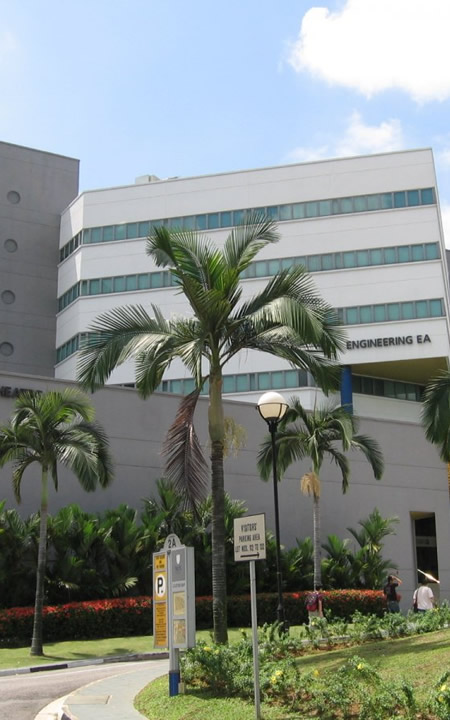
Photo: A building at National University of Singapore (NUS). National University of Singapore (NUS) has been declared Asia’s Finest University in 2016 by QS. Image Credit: oncampus.ru.
LONDON — Quacquarelli Symonds (QS), global higher education analysts, today released the QS University Ranking: Asia 2016.
National University of Singapore (NUS) is established as Asia’s finest university for the third consecutive year. It is followed by the University of Hong Kong. Nanyang Technological University rises one place to the podium, taking the bronze medal. While, in overall performance, China remains the preeminent nation, ahead of Japan.
Commenting on this QS Ranking, National University of Singapore (NUS) President Tan Chorh Chuan said: “Our priority is preparing future-ready graduates and developing top talent, driving innovation and forging strategic collaborations with academic and industry partners, and delivering impact from world-class research. I am heartened that our work is also reflected by NUS continued progress in the rankings.”
In this year’s QS Asia University Ranking:
- 17 nations or territories are featured;
- Hong Kong dominates the top ten with four institutions ranked;
- China, Singapore, and South Korea feature two universities apiece in the top 10;
- China has 82 universities among the 350 ranked, Japan has 74,
- South Korea 54, Taiwan 34, India 23, and Malaysia 20;
- There are 13 Thai universities in the rankings, 11 Indonesian, 10 Pakistani, 8 Filipino and five Vietnamese.
- Bangladesh and Sri Lanka have two apiece; Brunei and Macao one apiece.
- This year’s QS University Rankings: Asia are the largest-ever rankings for the region.
QS University Rankings 2016 (Asia): Top 20
2016 Rank — Institution — Country/Territory
- 1 — National University of Singapore — Singapore
- 2 — University of Hong Kong — Hong Kong
- 3 — Nanyang Technological University — Singapore
- 4 — The Hong Kong University of Science and Technology — Hong Kong
- 5 — Tsinghua University — China
- 6 — KAIST - Korea Advanced Institute of Science and Technology — South Korea
- 7 — City University of Hong Kong — Hong Kong
- 8 — The Chinese University of Hong Kong — Hong Kong
- 9 — Peking University — China
- 10 — Seoul National University — South Korea
- 11 — Fudan University — China
- 12 — POSTECH — South Korea
- 13 — The University of Tokyo — Japan
- 14 — Tokyo Institute of Technology — Japan
- 15 — Kyoto University — Japan
- 16 — Korea University — South Korea
- 17 — Osaka University — Japan
- 18 — Yonsei University — South Korea
- 19 — Sungkyunkwan University — South Korea
- 20 — Tohoku University — Japan
QS University Rankings 2016 (Asia): India
2016 Rank — Institution
- 33 — Indian Institute of Science (IISc), Bangalore
- 35 — Indian Institute of Technology Bombay (IITB)
- 36 — Indian Institute of Technology Delhi (IITD)
- 43 — Indian Institute of Technology Madras (IITM)
- 48 — Indian Institute of Technology Kanpur (IITK)
- 51 — Indian Institute of Technology Kharagpur (IIT-KGP)
- 66 — University of Delhi
- 78 — Indian Institute of Technology Roorkee (IITR)
- 94 — Indian Institute of Technology Guwahati (IITG)
- 108 — University of Calcutta
- 145 — University of Mumbai
- 155 — Banaras Hindu University
- 169 — Amrita Vishwa Vidyapeetham (Amrita University)
- 176 — University of Pune
- 178 — Birla Institute of Technology and Science, Pilani
- 195 — Amity University
- 200 — Manipal Academy of Higher Education
- 231-240 — Indian Institute of Technology, Hyderabad
- 251-300 — Anna University
- 251-300 — Panjab University, Chandigarh
- 301-350 — Indian Institute of Information Technology (IIIT), Allahabad
- 301-350 — Andhra University
- 301-350 — Pondicherry University
QS University Rankings 2016 (Asia): Pakistan
2016 Rank — Institution
- 111 — Lahore University of Management Sciences (LUMS)
- 112 — National University of Sciences And Technology (NUST), Islamabad
- 149 — Quaid-i-Azam University
- 149 — Pakistan Institute of Engineering and Applied Sciences (PIEAS)
- 183 — Aga Khan University
- 201-210 — University of Karachi
- 221-230 — Punjab University, Lahore
- 231-240 — COMSATS Institute of Information Technology
- 241-250 — University of Engineering & Technology (UET), Lahore
- 301-350 — University of Agriculture, Faisalabad
QS University Rankings 2016 (Asia): Bangladesh
2016 Rank — Institution
- 109 — University of Dhaka
- 159 — Bangladesh University of Engineering and Technology
|GlobalGiants.Com|
Edited & Posted by Editor | 4:43 AM | Link to this Post
June 8, 2016
UNESCO Creative Cities Network focuses on Creativity and Sustainable Urban Development at Beijing Summit
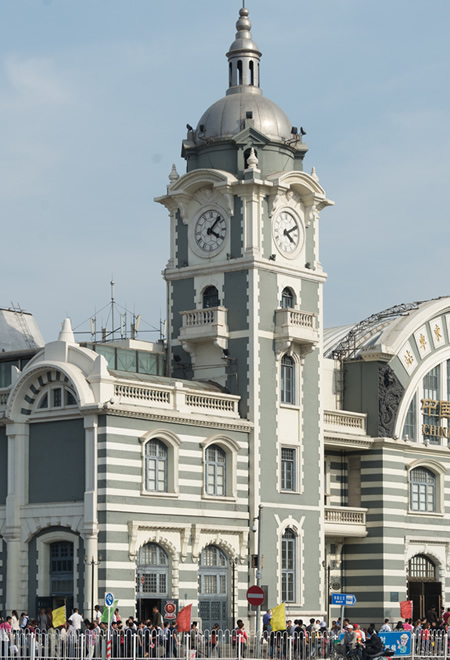
Photo: Beijing, China. Image Credit: Xiquinho Silva.
Beijing, China — On June 6, the Director-General of UNESCO, Irina Bokova, opened the UNESCO Creative Cities Network Summit (6 - 8 June 2016) with Wang Anshun, Mayor of Beijing, and Yuan Guiren, Minister of Education of the People’s Republic of China.
More than one hundred participants from all over the world attended the Summit, including mayors and policy-makers of the UNESCO Creative Cities Network, academics, and experts. The event served as a dialogue and discussion platform for the implementation of the international development agenda focusing on research and policy-making to explore effective ways to integrate culture and creativity in local development strategies.
The UNESCO Creative Cities Network comprises 116 cities from 54 countries, covering Crafts and Folk Art, Design, Film, Gastronomy, Literature, Music, and Media Arts, and aims to foster international cooperation with and between cities committed to investing in creativity as a driver for sustainable urban development, social inclusion, and cultural vibrancy.
|GlobalGiants.Com|
Edited & Posted by Editor | 3:45 AM | Link to this Post
April 29, 2016
UN Secretary-General appoints 12 new members to UN University Council
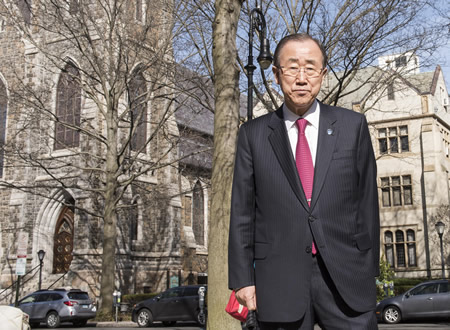

Photo: UN Secretary-General Ban Ki-moon at Yale University in New Haven, Connecticut, where he addressed the “Global Colloquium of University Presidents” on the topic “Preservation of Cultural Heritage: Challenges and Strategies”. 12 April 2016. New Haven, United States. UN Photo/Mark Garten.
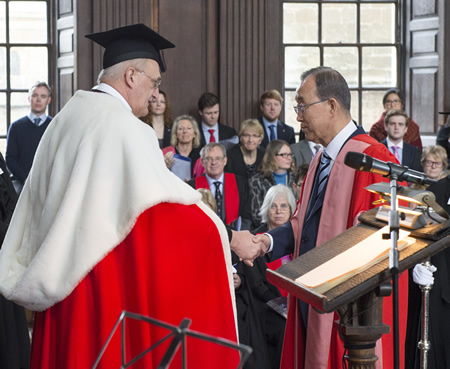
Photo: UN Secretary-General Ban Ki-moon (centre right) with Professor Sir Leszek Borysiewicz, Vice-Chancellor of the University of Cambridge, during a ceremony where he received an honorary degree of Doctor of Law from the University of Cambridge in recognition of his humanitarian work, support for women’s rights, and achievements in pursuit of global peace and security. 03 February 2016. Cambridge, United Kingdom. UN Photo/Eskinder Debebe.
28 April 2016 - United Nations Secretary-General Ban Ki-moon and Director-General Irina Bokova of the UN Educational Scientific and Cultural Organization (UNESCO) have appointed 12 new members to the governing UN University (UNU) Council.
The new appointees, who will take office as of 3 May, replace the outgoing 2010-2016 cohort of UNU Council members and will serve for terms of either three or six years.
The main functions of the Council are to formulate the principles and policies of the UNU, govern its operations, and consider and approve its biennial budget and work programme.
Appointed members of the UNU Council serve in their individual capacity - not as representatives of their country’s Government - and are selected with the aim of achieving a geographic and gender balance, with due regard for major academic, scientific, educational and cultural trends, as well as each member’s fields of expertise.
The new members of the UNU Council are:
- Ernest Aryeetey (Ghana), Vice-Chancellor, University of Ghana
- Carlos Henrique de Brito Cruz (Brazil), Scientific Director, Sao Paulo Research Foundation, and Professor, Gleb Wataghin Physics Institute, State University of Campinas
- Simon Chesterman (Australia), Dean, Faculty of Law, National University of Singapore
- Elizabeth Cousens (USA), Deputy Chief Executive Officer, United Nations Foundation
- Isabel Guerrero Pulgar (Chile), Director, IMAGO Global Grassroots, and lecturer at Harvard and MIT
- Angela Kane (Germany), Senior Fellow, Vienna Centre for Non-Proliferation and Disarmament, and Professor, SciencesPo, Paris
- Segenet Kelemu (Ethiopia), Director General and CEO, International Centre of Insect Physiology and Ecology
- Bassma Kodmani (Syria), Executive Director, Arab Reform Initiative
- Radha Kumar (India), Director General, Delhi Policy Group
- Irena Lipowicz (Poland), Professor, Cardinal Stefan Wyszynski University (Warsaw)
- Tsuneo Nishida (Japan), Director, Institute for Peace Science, Hiroshima University, and Director, Toho Zinc Co., Ltd.
- Lan Xue (China), Dean, School of Public Policy and Management, Tsinghua University, and Director, China Institute for S&T Policy
|GlobalGiants.Com|
“Education is the leading of human souls to what is best, and making what is best out of them.”
“The first duty of government is to see that people have food, fuel, and clothes. The second, that they have means of moral and intellectual education.”
“Modern education has devoted itself to the teaching of impudence, and then we complain that we can no longer control our mobs.”
— JOHN RUSKIN.
Edited & Posted by Editor | 5:21 AM | Link to this Post
April 22, 2016
United Nations Headquarters: Signing Ceremony for Agreement on Climate Change

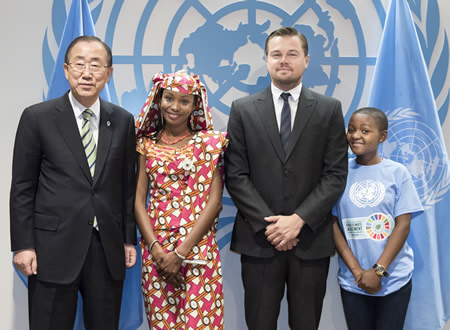
Photo: UN Secretary-General Ban Ki-moon hosted a signing ceremony for the Paris Agreement on Climate Change on 22 April at the United Nations. More than 165 Member States are attending the signing ceremony, including an estimated 60 Heads of State and Heads of Government.
Mr. Ban poses for a group photo with three of the speakers who addressed the opening segment of the signature ceremony. From left: Hindou Oumarou Ibrahim (from Chad), civil society representative; UN Messenger of Peace Leonardo DiCaprio; Getrude Clement, 16-year-old radio reporter from Tanzania and youth representative and climate advocate with the UN Children’s Fund (UNICEF). 22 April 2016. United Nations, New York. UN Photo/Mark Garten.
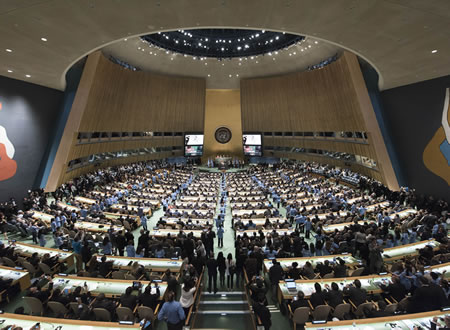
Photo: A wide view of the General Assembly at the opening of today’s signing ceremony for the Paris Agreement on Climate Change. More than 165 Member States are attending the signing ceremony, including an estimated 60 Heads of States and Heads of Governments, setting a new record for countries signing an international agreement on a single day. 22 April 2016. United Nations, New York. UN Photo/Mark Garten.
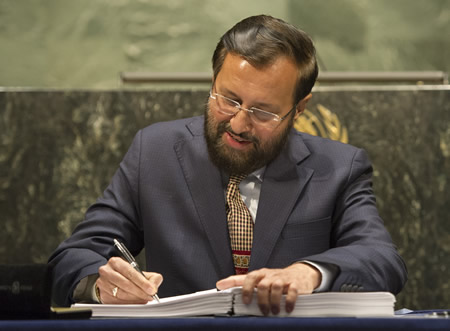
Photo: Prakash Javadekar, Minister of Environment, Forests and Climate Change of India, signs the Paris Agreement. 22 April 2016. United Nations, New York. UN Photo/Rick Bajornas.
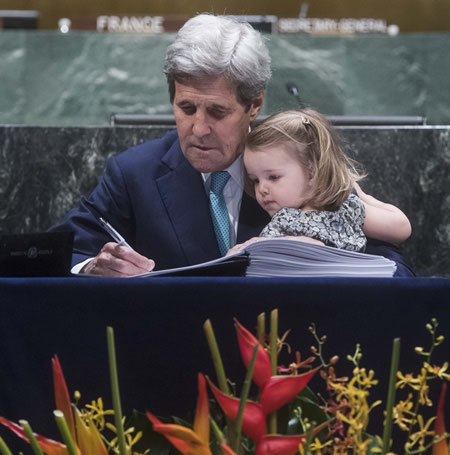
Photo: United States Secretary of State, John Kerry, with grand-daughter in tow, signs the Paris Agreement. 22 April 2016. United Nations, New York. UN Photo/Amanda Voisard.
|GlobalGiants.Com|
Edited & Posted by Editor | 3:48 PM | Link to this Post
April 13, 2016
United Nations begins informal briefings to select next Secretary-General
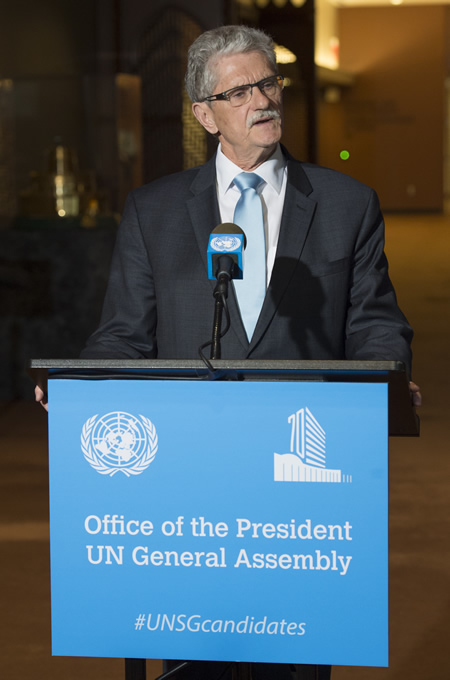
Photo: Mogens Lykketoft, President of the seventieth session of the UN General Assembly, briefs journalists on the selection process for the next Secretary-General of the UN. The Assembly is holding informal dialogues with eight candidates for the position on 12-14 April. 12 April 2016. United Nations, New York. UN Photo/Eskinder Debebe.
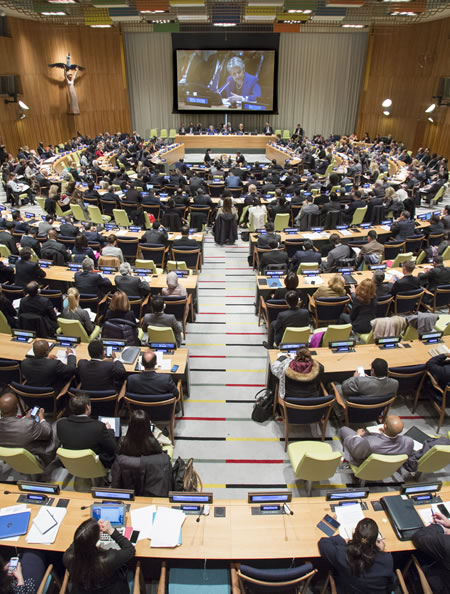
Photo: A cross-section view of the Trusteeship Council Chamber of the UN General Assembly, as Irina Bokova (Bulgaria), current Director General of the United Nations Educational, Scientific and Cultural Organization (UNESCO), delivers her presentation to Member States regarding her candidacy for the Next UN Secretary-General. The UN General Assembly is holding informal dialogues on 12-14 April with the eight candidates for the position of the next Secretary-General of the United Nations. 12 April 2016. United Nations, New York. UN Photo/Manuel Elias.
United Nations, New York, 12 April 2016: Kicking off what he has called a “new and transparent process,” UN General Assembly President Mogens Lykketoft today opened informal dialogues with candidates for the next United Nations Secretary-General.
“We are sailing into uncharted waters here,” said Mr. Lykketoft addressing the press ahead of the start of the informal dialogues.
Calling the process a “potential game-changing exercise,” he said the informal briefings were part of a “very transparent, very interesting discussion about the future of the United Nations.”
Over the course of the next three days, the official candidates - currently eight of them - will answer questions related to promoting sustainable development, how to improve efforts to create peace, how to protect human rights, how to deal with huge humanitarian catastrophes, and how to resolve challenges defined by the 2030 Agenda for Sustainable Development.
At the end of the process, Mr. Lykketoft said, expressing his personal view, one single candidate could emerge, making it difficult for the Security Council - which is tasked with making the official selection, as stated in the UN Charter - to choose another candidate.
Defining some of the qualities in who would be the “best person” for the job, Mr. Lykketoft stressed independence, strong moral authority, great political and diplomatic skills, and some experience in being at the head of a huge administration.
As part of the informal dialogues, each candidate will have a televised and webcast two-hour timeslot, starting with a short oral presentation. Representatives from Member States will then ask questions, followed by the President of the General Assembly, who will ask a few of the more than 1,000 questions submitted by the general public on social media under the hashtag #UNSGcandidates.
Opening the dialogues, Mr. Lykketoft underscored that as the UN grapples with multiple crises and deals with “fundamental questions regarding its own role and performance,” finding the best candidate to succeed Secretary-General Ban Ki-moon is “absolutely crucial.”
“Much of what we are embarking on today is without precedent at the UN,” he stressed.
|GlobalGiants.Com|
“The heaven for height, and the earth for depth, and the heart of kings is unsearchable.”
— Proverbs of Solomon 25:3.
“The earth has a limit,
The mountains, the sea;
The deep thoughts of kings are
Without boundary.”— The Panchatantra.
Edited & Posted by Editor | 12:14 PM | Link to this Post
April 4, 2016
India's Union Human Resource Development Ministry Ranks Universities of India for the First Time
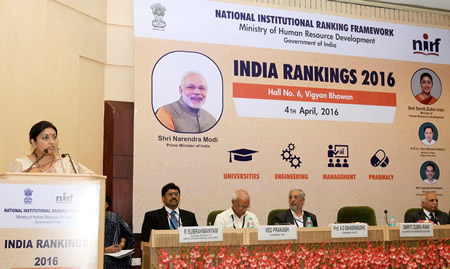
Photo: India’s Minister for Human Resource Development, Smriti Irani, addressing the gathering at the release of the India Ranking Report 2016, in New Delhi, on April 04, 2016. India Rankings 2016 is a first-of-its-kind indigenous survey of India’s higher educational institutions commissioned by the Union Human Resource Development Ministry. Image provided by the Press Information Bureau, Government of India.
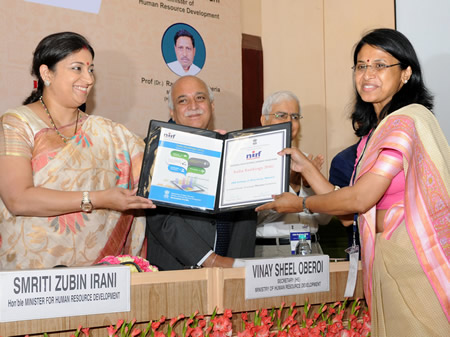
Photo: India’s Minister for Human Resource Development, Smriti Irani, releasing the India Rankings 2016, at a function, in New Delhi, on April 04, 2016. India Rankings 2016 is a first-of-its-kind indigenous survey of India’s higher educational institutions commissioned by the Union Human Resource Development Ministry. Image provided by the Press Information Bureau, Government of India.
Indian Union Minister of Human Resource Development, Smriti Zubin Irani, released the India Rankings 2016 and dedicated India’s first ranking to the nation in New Delhi today. While releasing the India Rankings 2016 she said that history has been made as National Institutional Ranking framework (NIRF) is the first of its kind. She said that one of the biggest challenges in the higher education sector have been that citizens who engage with these institutions feel that there is no level playing field in terms of transparency and the data that they need from these institutions with regard to the choices they, specially the students, need to make. The Ministry of HRD, she said, has been able to spearhead many a changes in the field of education sector and slowly and steadily the steps taken by the Ministry are bearing fruits.
The Minister said this kind of ranking would empower citizens as it would endow them with the power as to how they observe the institutions to be. Some 60000 observers gave their views about how our present institutions are. She added that these rankings would also help in reaching benchmark of international excellence. The rankings will also help students make informed choices about the institutions they want to join. The Minister added that to ensure a third party validation of the data that we have received and analyzed, the agency like Elsevier was engaged.
India Rankings 2016 is the country’s first exercise to rank the higher educational institutions in the country based on objective, identifiable parameters. This follows the launch of National Institutional Ranking Framework (NIRF) on 29th September, 2015.
The rankings are arrived at after detailed analysis and validation of the data submitted by more than 3,600 higher educational institutions in the country classified in 6 categories. These ranking follow an Indian approach, where academic institute will be assessed on parameters, including teaching-learning; research; collaborative practice and professional performance; graduate outcomes; placements; outreach and inclusive action and peer group perception. Each of these has been further subdivided into nearly 20 sub criteria to comprehensively assess an institution.
The rankings are a step towards bringing the Indian institutes on a global platform.
#IndiaRankings2016 Top Ten Institutions - Indian Rankings 2016 - University https://t.co/C3jRy3fVXS
— Global Giants (@GlobalGiants) April 4, 2016
Top Ten Institutions
- Indian Institute of Science Banglore
- Institute of Chemical Technology, Mumbai,
- Jawaharlal Nehru University, Delhi
- University of Hyderabad, Hyderabad
- Tezpur University, Tezpur, Assam.
- University of Delhi, Delhi.
- Banaras Hindu University, Uttar Pradesh
- Indian Institute of Space Science And Technology, Kerala.
- Birla Institute of Technology & Science, Pilani, Rajasthan
- Aligarh Muslim University
|GlobalGiants.Com|
Edited & Posted by Editor | 5:47 AM | Link to this Post
April 3, 2016
Nuclear Security Summit 2016, Washington, DC

Photo: The 2016 Nuclear Security Summit provided a forum for heads of state and foreign ministers to reinforce the commitment to secure nuclear material. Washington, DC. April 1, 2016. Image Credit: Ben Solomon/U.S. Department of State. Copyright © NSS 2016.
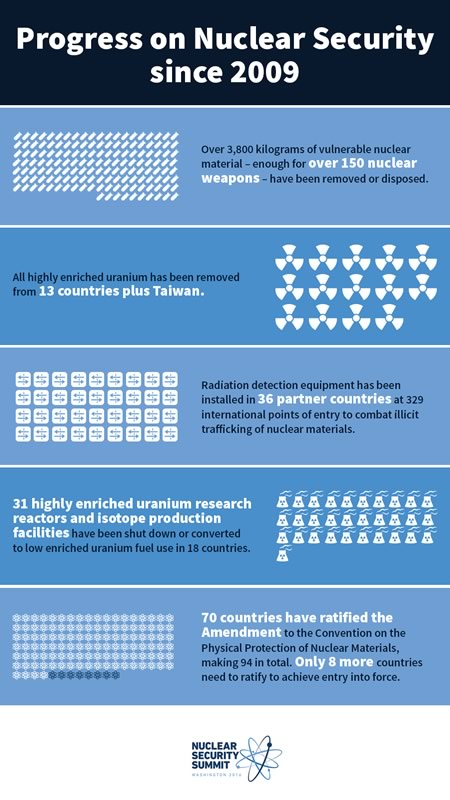
Photo: Progress on Nuclear Security Since 2009. Image Credit & Copyright © NSS 2016.
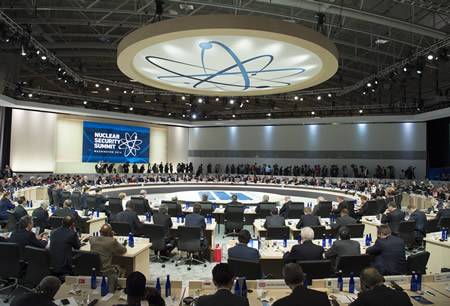
Photo: A wide view of the opening session of the Nuclear Security Summit hosted by the United States. 01 April 2016. Washington, DC, United States. UN Photo/Eskinder Debebe.
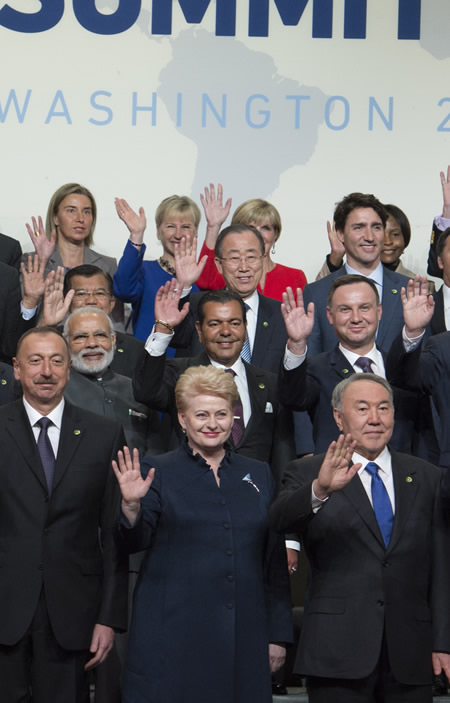
Photo: A cross section of world leaders, including UN Secretary-General Ban Ki-moon (centre, third row), pose for a group photo during the Nuclear Security Summit, hosted by the United States in Washington, D.C. 01 April 2016. Washington, DC, United States. UN Photo/Eskinder Debebe.
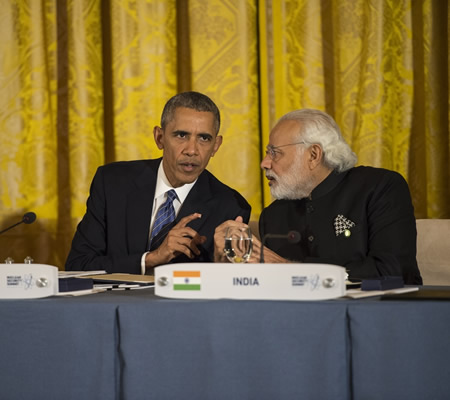
Photo: Prime Minister Modi, head of delegation from India, with President Obama at the White House for Nuclear Security Summit in Washington, D.C., on March 31, 2016. Image Credit: Ben Solomon/U.S. Department of State. Copyright © NSS 2016.
On March 31 and April 1, President Obama hosted the 2016 Nuclear Security Summit in Washington, DC. This was the fourth and final in a series of Summits that have brought together leaders from more than fifty countries and four international organizations to highlight accomplishments and make new commitments towards reducing the threat of nuclear terrorism.
Through the Summit Process, the international community has strengthened the international organizations, institutions and multilateral legal instruments that make up the nuclear security architecture, and improved coordination among them.
|GlobalGiants.Com|

“I do not know with what weapons World War III will be fought, but World War IV will be fought with sticks and stones.”
— Albert Einstein
“And they shall beat their swords into plowshares, and their spears into pruninghooks: nation shall not lift up sword against nation, neither shall they learn war any more…”
“The wolf also shall dwell with the lamb, and the leopard shall lie down with the kid; and the calf and the young lion and the fatling together; and a little child shall lead them.”
— Isaiah 2:4, 11:6
Edited & Posted by Editor | 4:18 AM | Link to this Post
January 26, 2016
New Permanent Representative of India Presents Credentials to UN Secretary General
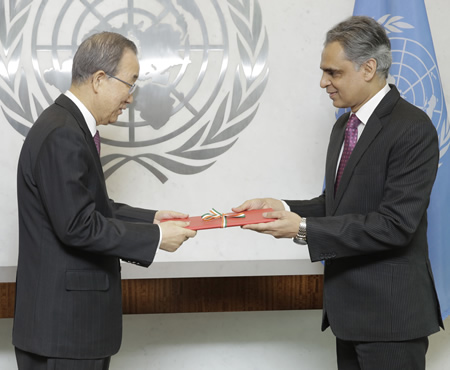
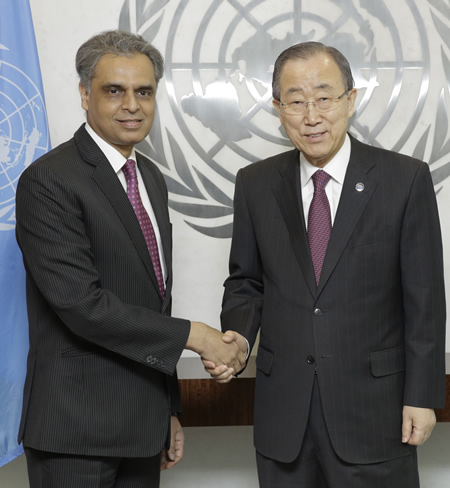
Photos: Syed Akbaruddin, the new Permanent Representative of India to the United Nations, presents his credentials to Secretary-General Ban Ki-moon. 25 January 2016. United Nations, New York. UN Photos/Evan Schneider.
|GlobalGiants.Com|
Edited & Posted by Editor | 11:34 AM | Link to this Post
January 23, 2016
World Economic Forum Announces New Board of Trustees
Photo: The WEF Logo is seen in the congress centre during the Annual Meeting 2016 of the World Economic Forum in Davos, Switzerland, January 20, 2016. Image provided by & copyright © World Economic Forum. Photographer: Michael Buholzer.
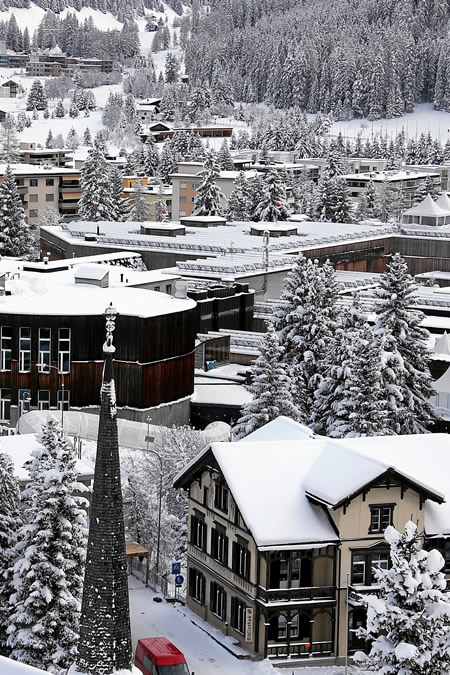
Photo: Congress Centre before the Opening of the Annual Meeting 2016 of the World Economic Forum in Davos, Switzerland, January 14, 2016. Image provided by & copyright © World Economic Forum. Photographer: Andy Mettler.
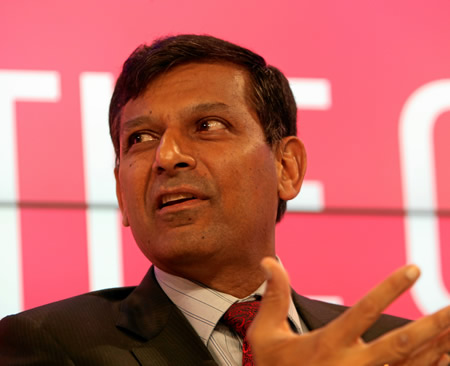
Photo: Raghuram G. Rajan, Governor of the Reserve Bank of India, speaks during the televised session ‘The Growth Illusion’ at the Annual Meeting 2016 of the World Economic Forum in Davos, Switzerland, January 20, 2016. Image provided by & copyright © World Economic Forum. Photographer: Monika Flueckiger.
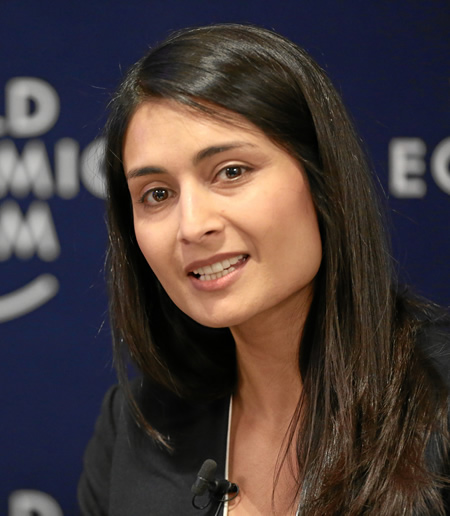
Photo: Saadia Zahidi, Head of Employment and Gender Initiatives, Member of the Executive Committee, World Economic Forum, is captured during the session ‘The Gender Impact of the Fourth Industrial Revolution’ at the Annual Meeting 2016 of the World Economic Forum in Davos, Switzerland, January 21, 2016. Image provided by & copyright © World Economic Forum. Photographer: Jolanda Flubacher.
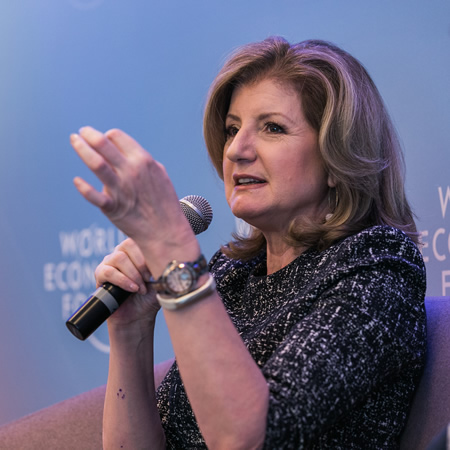
Photo: Arianna Huffington, President and Editor-in-Chief, Huffington Post Media Group, USA, speaking at the Annual Meeting 2016 of the World Economic Forum in Davos, January 20, 2016. Image provided by & copyright © World Economic Forum. Photographer: Benedikt von Loebell.
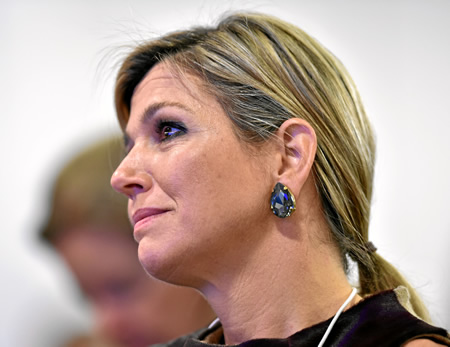
Photo: H.M. Queen Maxima of the Netherlands, United Nations Secretary-General’s Special Advocate for Inclusive Finance, is captured during the session ‘Fostering Financial Inclusion’ at the Annual Meeting 2016 of the World Economic Forum in Davos, Switzerland, January 22, 2016. Image provided by & copyright © World Economic Forum. Photographer: Michael Buholzer.
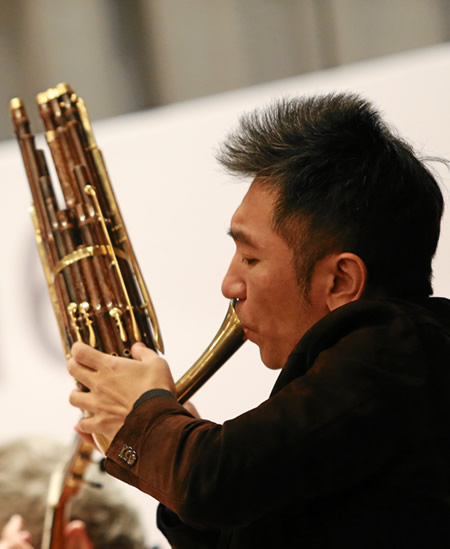
Photo: A musician is captured during the open forum workshop ‘Making Music across Borders with Yo-Yo Ma’ during the Annual Meeting 2016 of the World Economic Forum in Davos, Switzerland, January 20, 2016. Image provided by & copyright © World Economic Forum. Photographer: Monika Flueckiger.
Davos-Klosters, Switzerland, 23 January 2016 - The Board of Trustees of the World Economic Forum yesterday elected Jim Yong Kim, President, The World Bank, Washington DC; and Marc R. Benioff, Chairman and Chief Executive Officer, Salesforce, USA, as its new members.
As of 22 January 2016, the Members of the Board of Trustees of the World Economic Forum are:
- Klaus SCHWAB, Chairman of the Board of Trustees
- Patrick AEBISCHER, President, Swiss Federal Institute of Technology of Lausanne, Switzerland
- H.M. Queen Rania AL ABDULLAH of the Hashemite Kingdom of Jordan
- Mukesh AMBANI, Chairman and Managing Director, Reliance Industries, India
- Marc R. BENIOFF, Chairman and Chief Executive Officer, Salesforce, USA
- Peter BRABECK-LETMATHE, Chairman of the Board, Nestle, Switzerland
- Mark CARNEY, Chairman, Financial Stability Board; Governor of the Bank of England
- Katherine GARRETT-COX, CBE, Chief Executive Officer, Alliance Trust Plc, United Kingdom
- Orit GADIESH, Chairman, Bain & Company, USA
- Al GORE, Vice-President of the United States (1993-2001); Chairman and Co-Founder, Generation Investment Management, USA
- Herman GREF, Chairman of the Board and Chief Executive Officer, Sberbank, Russian Federation
- Angel GURRÍA, Secretary-General, Organisation for Economic Co-operation and Development (OECD), Paris
- Susan HOCKFIELD, President Emerita and Professor, Massachusetts Institute of Technology (MIT), USA
- Jim Yong KIM, President, The World Bank, Washington DC
- Klaus KLEINFELD, Chairman and Chief Executive, Alcoa Inc., USA
- Christine LAGARDE, Managing Director, International Monetary Fund, Washington DC
- Jack MA, Executive Chairman, Alibaba Group, People’s Republic of China
- Peter MAURER, President, International Committee of the Red Cross (ICRC), Switzerland
- Luis MORENO, President, Inter-American Development Bank, Washington DC
- Indra NOOYI, Chairman and Chief Executive Officer, PepsiCo, USA
- Joe SCHOENDORF, Venture Partner, Accel Partners, USA
- Jim Hagemann SNABE, Member of the Board, SAP AG, Siemens AG, Allianz SE, Germany
- Heizo TAKENAKA, Director, Global Security Research Institute, Keio University, Japan; Minister of State for Economic and Fiscal Policy of Japan (2002-2006)
- George YEO, Chancellor, Nalanda University; Minister of Foreign Affairs of Singapore (2004-2011)
- Min ZHU, Deputy Managing Director, International Monetary Fund, Washington DC
Over 2,500 leaders from business, government, international organizations, civil society, academia, media and the arts are participating in the 46th World Economic Forum Annual Meeting in Davos-Klosters, Switzerland, on 20-23 January, 2016.
|GlobalGiants.Com|
Edited & Posted by Editor | 1:22 PM | Link to this Post
December 11, 2015
47 cities join the UNESCO Creative Cities Network


Photo: Starstruck. Austin, Texas. Austin has just been designated UNESCO Creative City of Media Arts. Photographer, Image Credit & Copyright © Thomas Hawk.
Paris, 11 December 2015 - UNESCO Director-General, Irina Bokova, has announced the designation of 47 cities from 33 countries as new members of the UNESCO Creative Cities Network. The results of this year’s Call bears witness to the Network’s enhanced diversity and geographical representation with 22 cities from countries not previously represented.
The UNESCO Creative Cities Network has welcomed the following cities within its seven creative fields (Crafts and Folk Art, Design, Film, Gastronomy, Literature, Media Arts and Music):
- Adelaide (Australia) - Music
- Al-Ahsa (Saudi Arabia) - Crafts and Folk Art
- Austin (United States of America) - Media Arts
- Baghdad (Iraq) - Literature
- Bamiyan (Afghanistan) - Crafts and Folk Art
- Bandung (Indonesia) - Design
- Barcelona (Spain) - Literature
- Belem (Brazil) - Gastronomy
- Bergen (Norway) - Gastronomy
- Bitola (The former Yugoslav Republic of Macedonia) - Film
- Budapest (Hungary) - Design
- Burgos (Spain) - Gastronomy
- Denia (Spain) - Gastronomy
- Detroit (United States of America) - Design
- Duran (Ecuador) - Crafts and Folk Art
- Ensenada (Mexico) - Gastronomy
- Gaziantep (Turkey) - Gastronomy
- Idanha-a-Nova (Portugal) - Music
- Isfahan (Iran [Islamic Republic of]) - Crafts and Folk Art
- Jaipur (India) - Crafts and Folk Art
- Katowice (Poland) - Music
- Kaunas (Lithuania) - Design
- Kingston (Jamaica) - Music
- Kinshasa (Democratic Republic of the Congo) - Music
- Liverpool (United Kingdom of Great Britain and Northern Ireland) - Music
- Ljubljana (Slovenia) - Literature
- Lubumbashi (Democratic Republic of the Congo) - Crafts and Folk Art
- Lviv (Ukraine) - Literature
- Medellín (Colombia) - Music
- Montevideo (Uruguay) - Literature
- Nottingham (United Kingdom of Great Britain and Northern Ireland) - Literature
- Obidos (Portugal) - Literature
- Parma (Italy) - Gastronomy
- Phuket (Thailand) - Gastronomy
- Puebla (Mexico) - Design
- Rasht (Iran [Islamic Republic of]) - Gastronomy
- Rome (Italy) - Film
- Salvador (Brazil) - Music
- San Cristobal de las Casas (Mexico) - Crafts and Folk Art
- Santos (Brazil) - Film
- Sasayama (Japan) - Crafts and Folk Art
- Singapore (Singapore) - Design
- Tartu (Estonia) - Literature
- Tongyeong (Republic of Korea) - Music
- Tucson (United States of America) - Gastronomy
- Ulyanovsk (Russian Federation) - Literature
- Varanasi (India) - Music
For the very first time, two Indian cities — Varanasi and Jaipur — have joined UNESCO Creative Cities Network. This is a historic first for India in this elite global compact.
Launched in 2004, the Network now comprises 116 cities worldwide. It aims to foster international cooperation with and between cities committed to investing in creativity as a driver for sustainable urban development, social inclusion and cultural vibrancy.
By joining the Network, cities commit to collaborate and develop partnerships with a view to promoting creativity and cultural industries, to share best practices, to strengthen participation in cultural life, and to integrate culture in economic and social development strategies and plans.
|GlobalGiants.Com|
Edited & Posted by Editor | 3:14 PM | Link to this Post
December 5, 2015
Create World Class Universities through Collaboration, Cooperation, and Communication — President of India
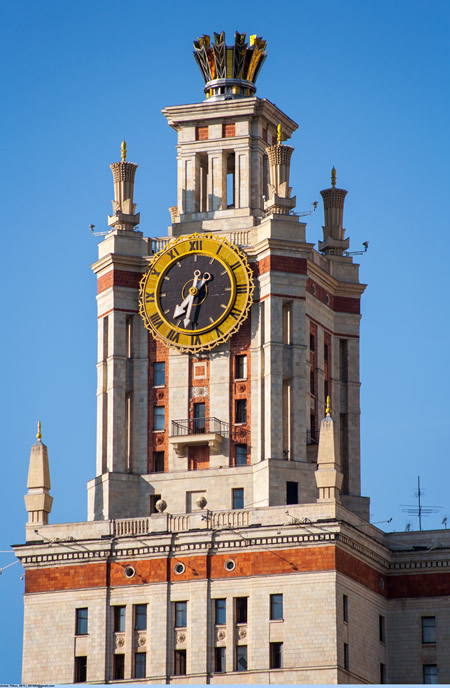
Photo: Clock Tower at the Main Building of Moscow State University. Image Credit: Nickolas Titkov.
New Delhi, India - December 3, 2015 - The President of India, Mr. Pranab Mukherjee, addressed the delegates of the Times Higher Education BRICS and Emerging Economies’ Universities Summit, 2015 at Rashtrapati Bhavan (Presidential Palace) in New Delhi.
Speaking on the occasion, the President said that in today’s era of globalization, which rests on the pillars of Collaboration, Cooperation and Communication, there are ample opportunities to use these “3Cs” to create many world class universities. The combined strength of the five BRICS nations can develop an educational eco-system for their citizens as well as for the world citizens.
The President said that the quality of education has a direct co-relation with inclusive growth and development. Emerging economies facing the challenge of meeting the developmental aspirations of their citizens must build an educational system comparable to the best in the world. A serious discourse on how to address the quality concerns in higher education should therefore begin at the earliest.
• The President emphasized that the higher education sector in India must align itself with the global education sector. A world class university in today’s time is one that can address the global problems of society having the entire world as its constituency.
The President said that to meet bench-marks, institutions need to provide greater emphasis on quality research that is recognized globally. This would help in their efforts to become world-class. What is needed further is for such aspiring universities to reach out, communicate, exchange and encourage mobility of persons and ideas across the globe. Adopting a world-view would help an institution getting accepted by the global community of higher education. Over and above a focused attention on cutting-edge research and an international orientation, world-class universities must possess other enviable features. Some of them are high quality faculty members, meritorious students, an encouraging teaching learning environment, a high level of resource availability, sound infrastructure, and existence of considerable autonomy and robust governance structure. Presence of these elements in an institution would automatically reflect in higher international rankings.
On the occasion, the President received the first copy of Times Higher Education BRICS & Emerging Economies Rankings 2016. The report was released by Mr. Phil Baty, Editor, Times Higher Education World University Rankings.
The 2016 rankings include 200 institutions from 35 countries. China dominates the rankings, with its institutions occupying first and second places, half the Top 10 and 39 places in the Top 200.
BRICS & Emerging Economies Rankings 2016 Results: Top 10
- Peking University — China
- Tsinghua University — China
- Lomonosov Moscow State University — Russian Federation
- University of Cape Town — South Africa
- National Taiwan University — Taiwan
- University of the Witwatersrand — South Africa
- University of Science and Technology of China — China
- Zhejiang University — China
- University of Sao Paulo — Brazil
- Shanghai Jiao Tong University — China
Universities from India
Institution — BRICS Rank
- Indian Institute of Science — 16
- Indian Institute of Technology, Bombay — 29
- Indian Institute of Technology, Madras — 36
- Indian Institute of Technology, Delhi — 37
- Indian Institute of Technology, Kharagpur — 45
- Indian Institute of Technology, Roorkee — 48
- Jadavpur University — 80
- Indian Institute of Technology, Guwahati — 83
- Indian Institute of Technology, Kanpur — 95
- Panjab University — 121
- Savitribai Phule Pune University — 127
- University of Calcutta — 137
- Aligarh Muslim University — 150
- University of Delhi — 154
- Amrita University — 181
- Andhra University — 193
|GlobalGiants.Com|
• The President of India’s observation above coincides with our corresponding one below:
Edited & Posted by Editor | 2:58 AM | Link to this Post
November 30, 2015
Paris Climate Change Conference — COP21
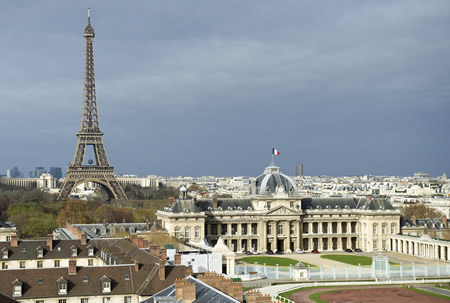
Photo: A view of the Ecole Militaire (Military School) and the Eiffel Tower from the Headquarters of the UN Educational, Scientific and Cultural Organization (UNESCO), in Paris, France. The UN Secretary-General will be attending the UN Climate Change Conference (COP21), taking place in Paris from 30 November - 11 December 2015. 29 November 2015. Paris, France. UN Photo/Rick Bajornas.
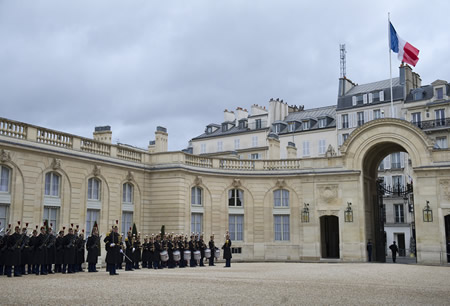
Photo: A view of the Elysee Palace, in Paris, France, where UN Secretary-General Ban Ki-moon is meeting with Francois Hollande, President of France, ahead of this year’s UN Climate Change Conference (COP21), taking place in Paris from 30 November - 11 December 2015. UN Photo/Rick Bajornas.
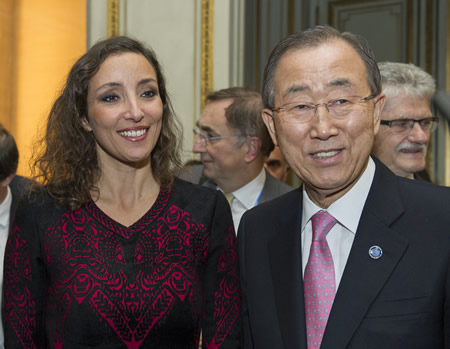
Photo: UN Secretary-General Ban Ki-moon (right) poses for a photo with the artist Naziha Mestaoui, at the special event, “One Heart One Tree: Lighting of the Eiffel Tower”, taking place on the eve of the Paris Climate Change Conference (COP21).
1 Heart 1 Tree is an interactive artwork created by Ms. Mestaoui that allows people around the world to plant virtual trees on the Eiffel Tower that grow at the rate of each individual’s heartbeat. For every digital tree planted, a real tree will be planted through reforestation programs all over the world. 29 November 2015. Paris, France. UN Photo/Rick Bajornas.
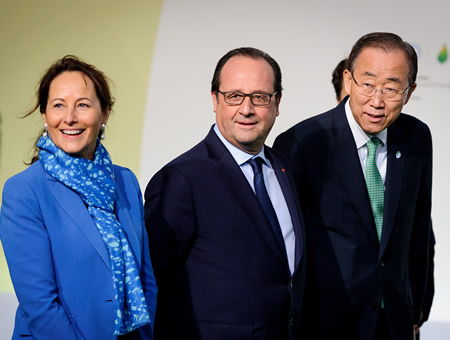
Photo: Paris, France. November 30, 2015. UN Conference on Climate Change - COP21. Arrival of Heads of States and Governments at Le Bourget Airport. Welcome by Francois Hollande, President of France, and Ban Ki-moon, Secretary General of the United Nations. On the left is Segolene Royal, Minister of Ecology, Sustainable Development and Energy, France. Image Credit: COP Paris 2015.
|GlobalGiants.Com|
Edited & Posted by Editor | 3:45 AM | Link to this Post
November 18, 2015
French President Francois Hollande invokes the unity of all cultures at UNESCO’s Leaders’ Forum
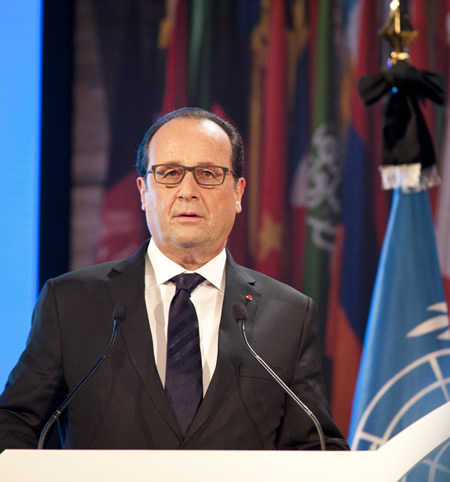
Photo: Mr Francois Hollande, President of France, participates in UNESCO’s Leaders’ Forum. Paris, France. November 17, 2015. © UNESCO/Nora Houguenade.
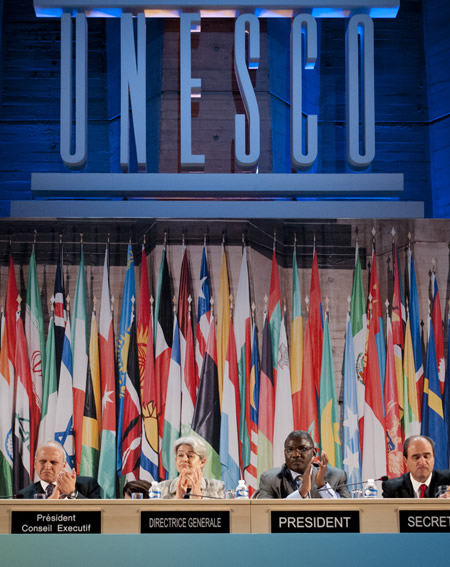
Photo: Opening of the 38th session of the General Conference of UNESCO. Paris, France. November 16, 2015. © UNESCO/N. Houguenade.

Photo: Japanese Tea Ceremony celebrating the 70th Anniversary of UNESCO. Paris, France. November 13, 2015. © UNESCO/P. Chiang-Joo.
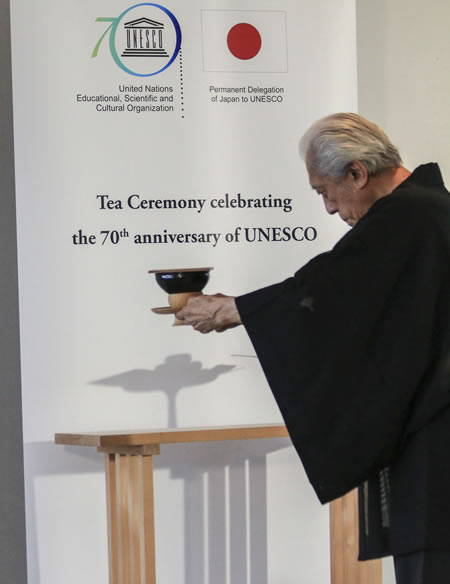
Photo: Japanese Tea Ceremony celebrating the 70th Anniversary of UNESCO. Paris, France. November 13, 2015. © UNESCO/P. Chiang-Joo.

Photo: Leaders’ Forum, marking UNESCO’s 70th Anniversary. A short performance by the World Orchestra for Peace. Musicians representing 19 nationalities play works by Samuel Barber and Tchaikovsky. Paris, France. November 16, 2015. © UNESCO/Nora Houguenade.
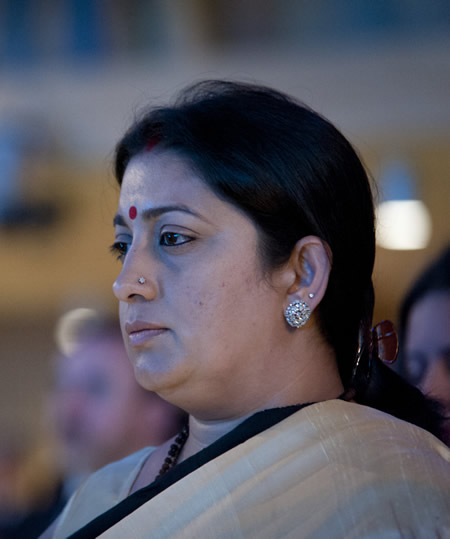
Photo: Ms. Smriti Irani, India’s Minister of Human Resource Development, attends Leaders’ Forum marking UNESCO’s 70th Anniversary. Paris, France. November 16, 2015. © UNESCO/Nora Houguenade.
Paris, France — November 18, 2015 — The President of France, Francois Hollande, declared his commitment to “freedom, human creativity and intercultural dialogue” in his address at the Leaders’ Forum, which on 16 and 17 November brought together Heads of State and Government from all over the world in the context of the 38th session of UNESCO’s General Conference.
The afternoon session of the Leaders’ Forum, organized on the occasion of the 70th anniversary of UNESCO, also featured addresses by the President of the Republic of Malta, Marie-Louise Coleiro Preca and the President of the Republic of Azerbaijan, Ilham Aliyev.
The French President, welcomed to UNESCO by the Organization’s Director-General, Irina Bokova, was accompanied by the French Minister for the Economy and Finance, Michel Sapin, the Minister for Culture, Fleur Pellerin, and the Secretary of State in Charge of Development and the Francophonie, Annick Girardin. The French President declared: “I wished to be present at the General Conference because you stand for the unity of all cultures of the world. […] And what better place to affirm the need to hold fast than here, at UNESCO, an institution which was born of a Utopia to unite the whole of humanity through science, education and culture and which found a welcoming home in Paris.”
President Hollande paid tribute to UNESCO’s crucial role in protecting cultural heritage and cultural diversity. “Yes, UNESCO is the moral conscience of humanity. What underpinned its foundation was the promotion of the diversity of cultures, a diversity based on the idea that culture links people to their history and to their territory; a diversity anchored in the recognition of the equal dignity of cultures, as every people has a special message to bring to the world.”
Earlier in the afternoon, in a message read by United States Ambassador Crystal Nix-Hines, Permanent Delegate of the U.S. to UNESCO, U.S. President Barack Obama thanked UNESCO for its “unwavering commitment to building peace and tolerance around the world.” He encouraged the Organization to pursue its mandate in global citizenship education.
Echoing this declaration, President Ilham Aliyev of Azerbaijan invited the international community to bolster its support for the Organization. “More time and resources should be invested into the spread of a culture of peace. UNESCO has the appropriate mandate, genuine experience, and rich assets such as education, culture, sport, communication and science to serve as one of the most effective and shortest ways to prevent conflicts.”
|GlobalGiants.Com|
“I am not an Athenian or a Greek, but a citizen of the world.”
— Socrates.
“My country is the world, and my religion is to do good.”
— Thomas Paine.
“Vasudhaiva Kutumbakam — The whole world is one single family.”
— Maha Upanishad.
Edited & Posted by Editor | 4:29 AM | Link to this Post
November 12, 2015
Global Innovation Index 2015: Switzerland, UK, Sweden, Netherlands, USA are Leaders
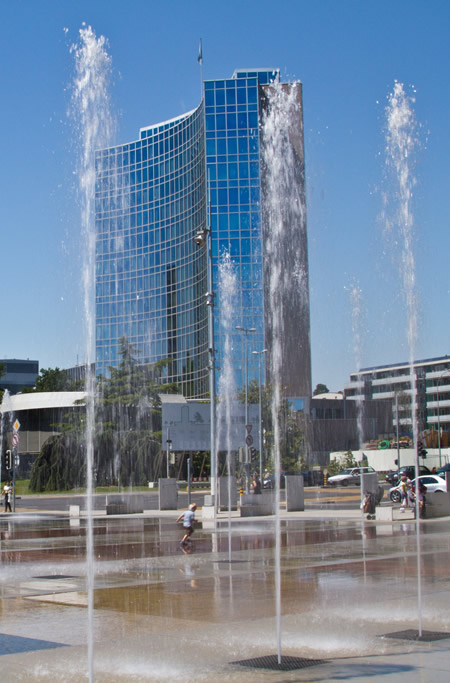
Photo: World Intellectual Property Organization. WIPO Main Building and the Place des Nations in summer. © WIPO 2011. Photographer: Emmanuel Berrod.

Photo: World Intellectual Property Organization. WIPO Conference Hall. Foyer of the WIPO Conference Hall featuring volumes and perspectives created by ramps, staircases, railings, landings and mezzanines. The Conference Hall was inaugurated in September 2014. © WIPO 2014. Photographer: Emmanuel Berrod.
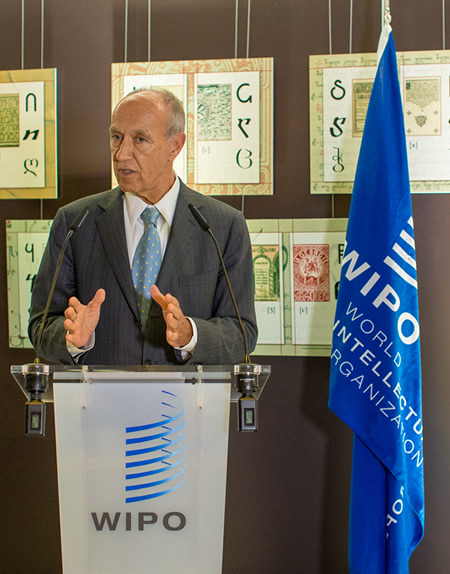
Photo: World Intellectual Property Organization. WIPO Director General Opens “Georgian Heritage” Exhibition at WIPO on the sidelines of the WIPO Assemblies, which met in Geneva from October 5 to 14, 2015. © WIPO 2015. Photographer: Emmanuel Berrod.
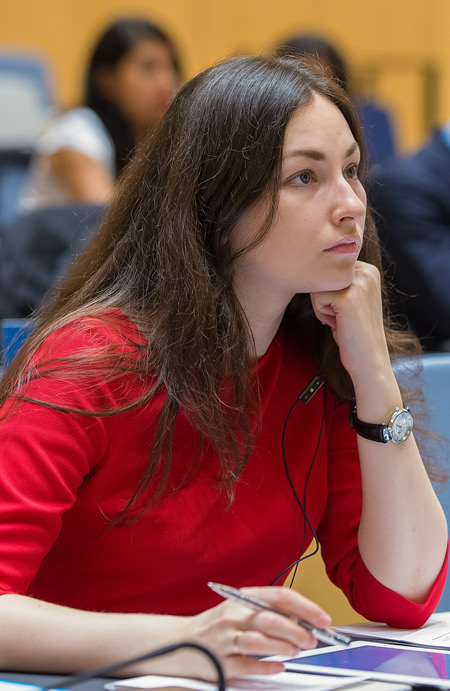
Photo: World Intellectual Property Organization. A Member of the Delegation from the Russian Federation attends the Committee on Development and Intellectual Property. The Sixteenth Session of WIPO’s Committee on Development and Intellectual Property (CDIP) is taking place in Geneva, Switzerland from November 9 to November 13, 2015. © WIPO 2015. Photographer: Emmanuel Berrod.
Switzerland, the United Kingdom, Sweden, the Netherlands and the United States of America are the world’s five most innovative nations, according to the Global Innovation Index 2015, while China, Malaysia, Viet Nam, India, Jordan, Kenya, and Uganda are among a group of countries outperforming their economic peers.
The GII (Global Innovation Index) 2015 looks at “Effective Innovation Policies for Development” and shows new ways that emerging-economy policymakers can boost innovation and spur growth by building on local strengths.
“Innovation holds far-reaching promise for spurring economic growth in countries at all stages of development. However, realizing this promise is not automatic,” said WIPO Director General Francis Gurry, “Each nation must find the right mix of policies to mobilize the innate innovative and creative potential in their economies.”
The GII, co-published by Cornell University, INSEAD and the World Intellectual Property Organization (WIPO), surveys 141 economies around the world, using 79 indicators to gauge both innovative capabilities and measurable results.
Top Rankings
- Switzerland
- United Kingdom
- Sweden
- Netherlands
- United States of America
- Finland
- Singapore
- Ireland
- Luxembourg
- Denmark
• In terms of innovation quality - as measured by university performance, the reach of scholarly articles and the international dimension of patent applications - a few economies stand out. The US and the UK stay ahead of the pack, largely as a result of their world-class universities, closely followed by Japan, Germany and Switzerland. Top-scoring middle-income economies on innovation quality are China, Brazil and India, with China increasingly outpacing the others.
Soumitra Dutta, Anne and Elmer Lindseth Dean, Samuel Curtis Johnson Graduate School of Management, Cornell University and co-author of the report, points out that “Innovation quality matters. Creating world class universities and investing in research is essential for staying ahead in the global race for successful innovation.”
Regional Innovation Leaders
Rank in Region — Country Name — GII 2015 Rank
Central and Southern Asia
- India — 81
- Kazakhstan — 82
- Sri Lanka — 85
Europe
- Switzerland — 1
- United Kingdom — 2
- Sweden — 3
Latin America and the Caribbean
- Chile — 42
- Costa Rica — 51
- Mexico — 57
Northern Africa and Western Asia
- Israel — 22
- Cyprus — 34
- Saudi Arabia — 43
Northern America
- United States of America — 5
- Canada — 16
Southeast Asia and Oceania
- Singapore — 7
- Hong Kong (China) — 11
- Korea, Rep. of — 14
Sub-Saharan Africa
- Mauritius — 49
- South Africa — 60
- Senegal — 84
The Global Innovation Index 2015 (GII), in its 8th edition this year, is co-published by Cornell University, INSEAD, and the World Intellectual Property Organization (WIPO), a specialized agency of the United Nations.
Published annually since 2007, the GII is now a leading benchmarking tool for business executives, policy makers and others seeking insight into the state of innovation around the world.
|GlobalGiants.Com|
Edited & Posted by Editor | 1:10 PM | Link to this Post
November 6, 2015
India aspiring to have a World Class University
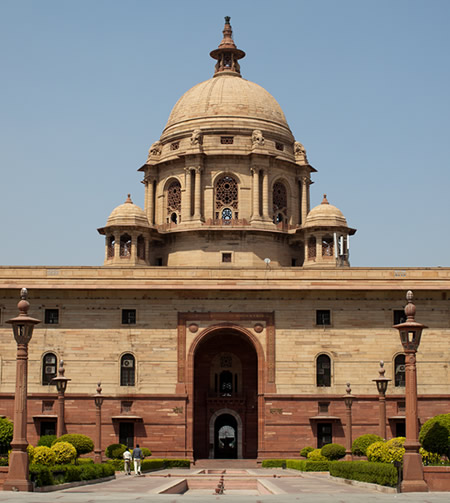
Photo: Entrance to Rashtrapati Bhavan (Presidential Palace), New Delhi, India. Picture Credit: Rob Towell.
New Delhi, India — November 6, 2015 — India’s first ever Visitor’s Conference concluded today at Rashtrapati Bhavan (Presidential Palace) with an interactive session between Industry and Academia. The President of India is Visitor of 114 central institutions of higher learning.
Participants in the conference included heads of all Central Universities and Indian Institutes of Technology’s.
During the conference, India’s Prime Minister, Narendra Modi, released a brochure “IMPRINT INDIA” and handed over the first copy to the President of India. Smriti Irani, India’s Human Resource Development Minister, was also present on the occasion.
• The President of India, Pranab Mukherjee said, “my constant refrain that we cannot aspire to be a world power without having a single world-class university, has found resonance amongst the institutions, who have now started looking at the international ranking processes in a more proactive and systematic manner.”
“For the first time,” President Mukherjee said, “two Indian institutions have found place in the top 200 positions in QS rankings.” “Indian Institute of Science Bangalore at 147th and Indian Institute of Technology Delhi at 179th place deserve full praise and compliments,” he added.
“Innovation is the currency of the future. Innovation converts research into wealth,” the President concluded. “Unless we recognize this reality and start working in a focused manner on creating a strong innovation culture in our country now, we will be left behind in the march to modernity.”
Source: President’s Secretariat, Rashtrapati Bhavan
|GlobalGiants.Com|
Edited & Posted by Editor | 7:33 AM | Link to this Post
September 25, 2015
World Leaders Arrive in New York for the United Nations Sustainable Development Summit 2015
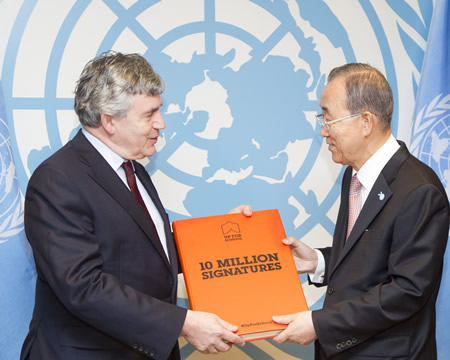
Photo: UN Secretary-General Ban Ki-moon (right) meets Gordon Brown, United Nations Special Envoy for Global Education, on the sidelines of the UN Summit on Sustainable Development. 25 September 2015. United Nations, New York. UN Photo/Rick Bajornas.
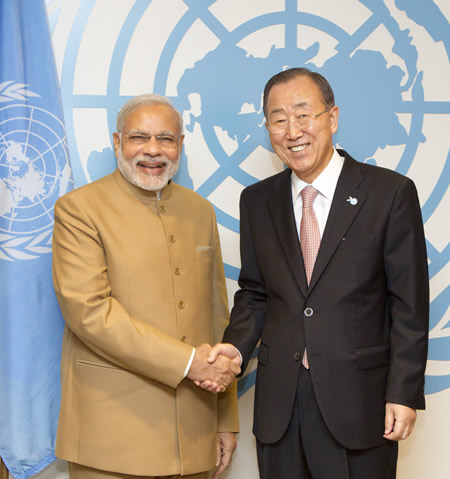
Photo: UN Secretary-General Ban Ki-moon (right) meets with Narendra Modi, Prime Minister of India. 25 September 2015. United Nations, New York. UN Photo/Rick Bajornas.
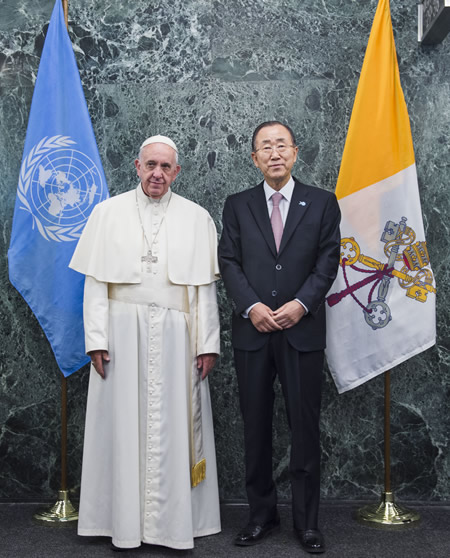
Photo: UN Secretary-General Ban Ki-moon with Pope Francis upon the pontiff’s arrival at United Nations headquarters. 25 September 2015. United Nations, New York. UN Photo/Amanda Voisard.
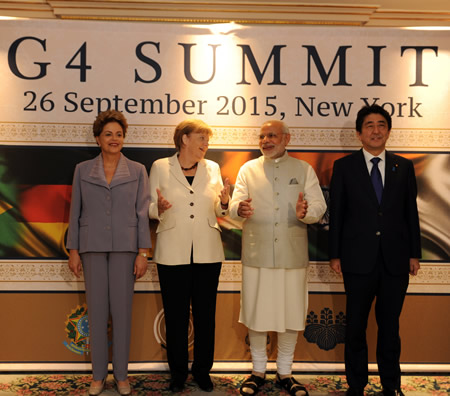
Photo: Leaders of the G-4 Countries - Brazil, Germany, India and Japan at the Summit on United Nations Security Council Reform in New York (September 26, 2015). Image provided by & Copyright © Ministry of External Affairs, Government of India / Brij Meena, Photo Division.
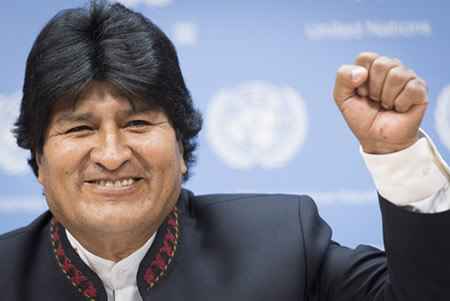
Photo: Press Conference by President of Bolivia. Evo Morales Ayma, President of the Plurinational State of Bolivia, briefs correspondents at a press conference in UN Headquarters. 26 September 2015. United Nations, New York. UN Photo/Mark Garten.
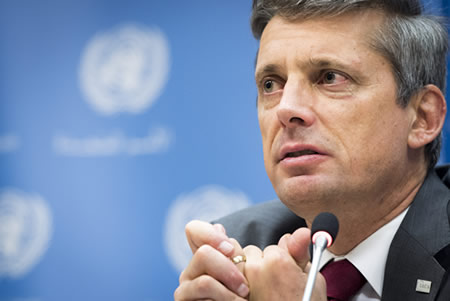
Photo: Press Briefing by Dean of International Anti-Corruption Academy. Martin Kreutner, Dean and Executive Secretary of the International Anti-Corruption Academy (IACA), addresses a press conference sponsored by the Permanent Mission of Austria to the United Nations. 26 September 2015. United Nations, New York. UN Photo/Mark Garten.
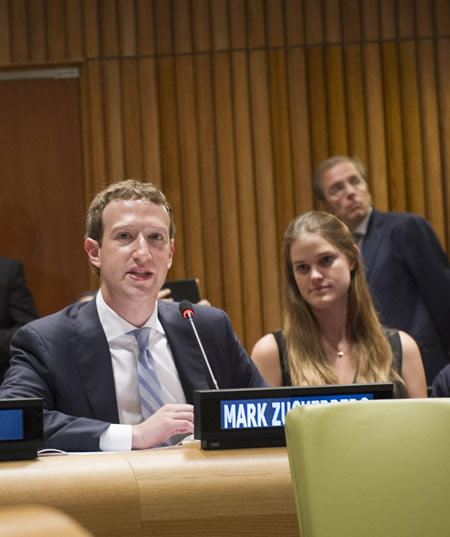
Photo: Facebook CEO Attends Interactive Dialogue on Sustainable Economic Growth. Mark Zuckerberg (centre), CEO of Facebook Inc., addresses the interactive dialogue of the Summit for the adoption of the post-2015 development agenda, “Fostering sustainable economic growth, transformation and promoting sustainable consumption and protection”, held at UN Headquarters. 26 September 2015. United Nations, New York. UN Photo/Mark Garten.
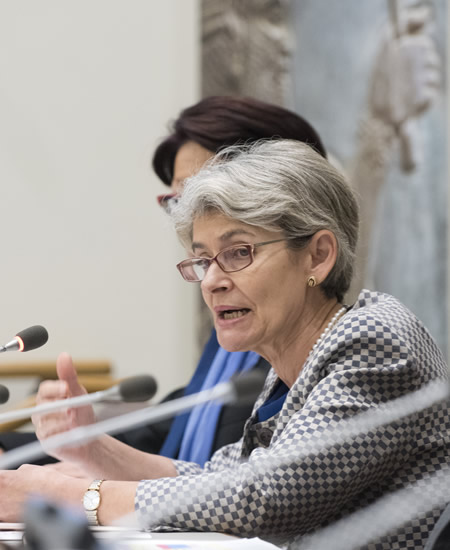
Photo: High-level Ministerial Meeting on World’s Heritage Proctection. Irina Bokova, Director General of UNESCO, addresses the High-level ministerial meeting entitled “Moving Together for the World’s Heritage” co-organized by the Permanent Missions of Italy and Jordan to the United Nations in collaboration with INTERPOL, the United Nations Educational, Scientific and Cultural Organization (UNESCO), and the United Nations Office on Drugs and Crime (UNODC). 27 September 2015. United Nations, New York. UN Photo/Kim Haughton.
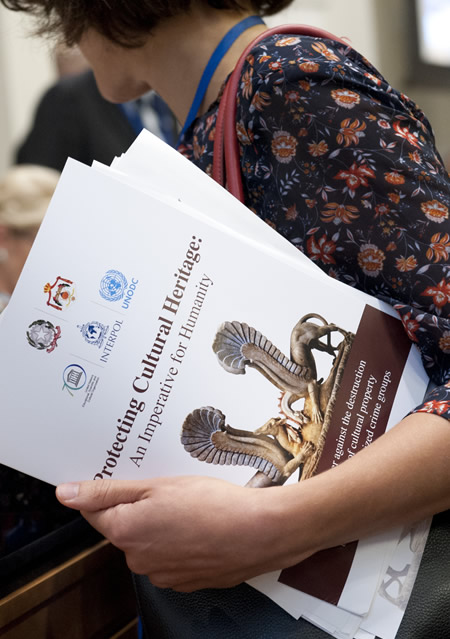
Photo: High-level ministerial meeting entitled “Moving Together for the World’s Heritage” co-organized by the Permanent Missions of Italy and Jordan to the United Nations in collaboration with INTERPOL, the United Nations Educational, Scientific and Cultural Organization (UNESCO), and the United Nations Office on Drugs and Crime (UNODC). 27 September 2015. United Nations, New York. UN Photo/Kim Haughton.
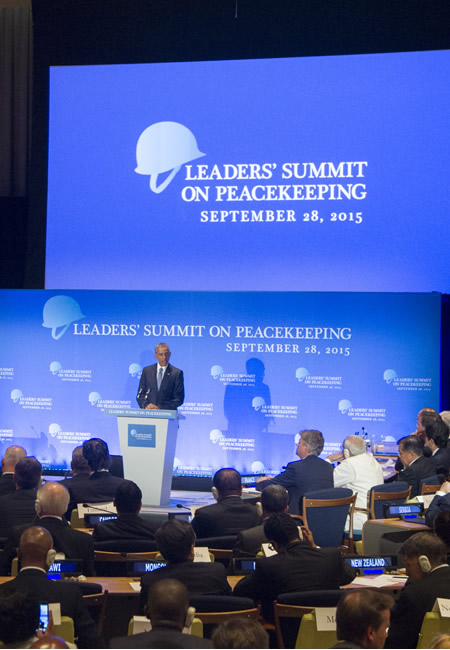
Photo: Barack Obama (podium), President of the United States of America, addresses the Leader’s Summit on Peacekeeping. Leaders of more than 50 countries gathered for the Summit to pledge new commitments and strengthen existing capabilities. 28 September 2015. United Nations, New York. UN Photo/Rick Bajornas.
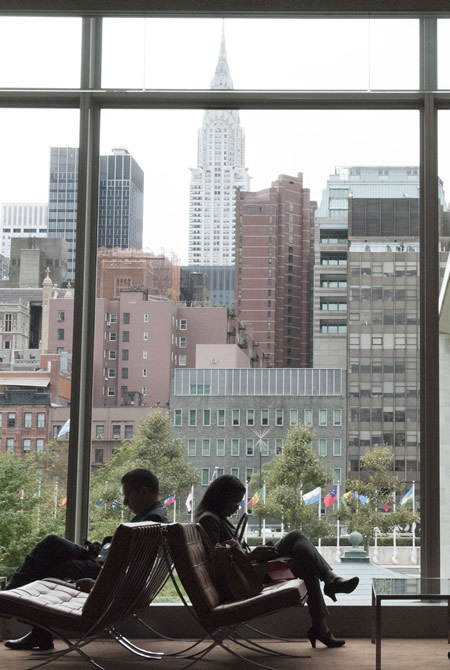
Photo: A view of the Manhattan skyline from inside the UN Headquarters in New York. 30 September 2015. United Nations, New York. UN Photo/Kim Haughton.
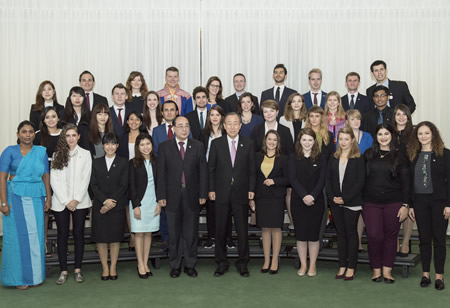
Photo: UN Secretary-General Meets Youth Delegates. UN Secretary-General Ban Ki-moon (front centre) meets with youth delegates attending the seventieth session of the General Assembly. On his right is Wu Hongbo, Under-Secretary-General for Economic and Social Affairs. 07 October 2015. United Nations, New York. UN Photo/Rick Bajornas.
|GlobalGiants.Com|
Edited & Posted by Editor | 2:41 PM | Link to this Post
September 12, 2015
UN General Assembly Marks International Day against Nuclear Tests
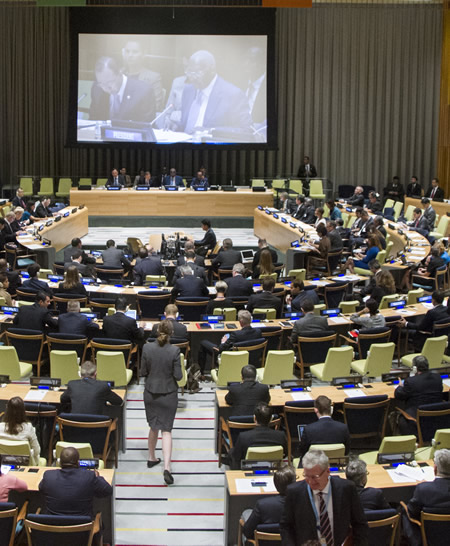
Photo: A view of the United Nations General Assembly meeting to mark the observance of the International Day against Nuclear Tests (29 August). 10 September 2015. United Nations, New York. UN Photo/Rick Bajornas.
10 September 2015 - Top United Nations officials today highlighted the existential threat posed by nuclear testing, and called for all States that have not yet done so to sign and ratify the international treaty that seeks to achieve a ban on such testing.
Addressing a meeting to mark the International Day against Nuclear Tests, observed annually on 29 August, Secretary-General Ban Ki-moon noted the devastation caused by nuclear testing.
“I have witnessed the lasting societal, environmental and economic damage nuclear tests have caused,” he told the gathering. “Since the first test in New Mexico 70 years ago, the world has endured over 2,000 nuclear tests. Those tests devastated pristine environments and local populations around the world.
The Secretary-General said that the Comprehensive Nuclear-Test-Ban Treaty (CTBT), which was adopted in 1996, was an essential building block for achieving this goal as a legally-binding, verifiable means by which to constrain the quantitative and qualitative development of nuclear weapons.
Stressing that the Treaty must enter into force in order to be truly effective, Mr. Ban called on all remaining States to sign and ratify the instrument, including China, the Democratic People’s Republic of Korea, Egypt, India, Iran, Israel, Pakistan, and the United States.
|GlobalGiants.Com|
“Well, also, was it written by Theologians: a King rules by divine right. He carries in him an authority from God, or man will never give it him.
Can I choose my own King?
I can choose my own King Popinjay, and play what farce or tragedy I may with him: but he who is to be my Ruler, whose will is to be higher than my will, was chosen for me in Heaven.”
— Thomas Carlyle, Sartor Resartus
Edited & Posted by Editor | 1:14 AM | Link to this Post
September 1, 2015
World Conference of Speakers of Parliament Opens at UN Headquarters
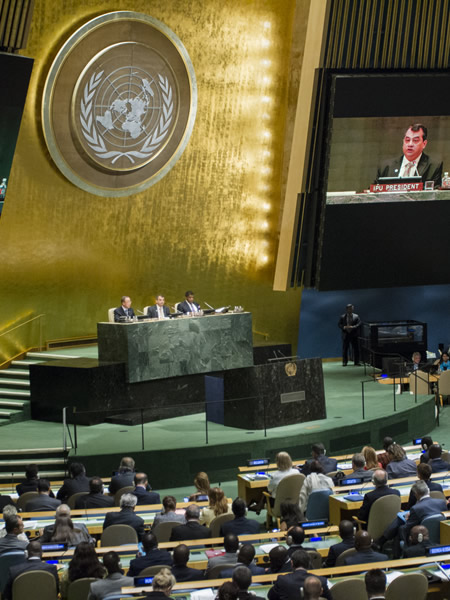
Photo: A view of the General Assembly Hall as Saber Chowdhury of Bangladesh (shown on screens), current President of the the Inter-Parliamentary Union (IPU), addresses the opening session of the Fourth World Conference of Speakers of Parliament, taking place at UN headquarters from 31 August through 2 September. 31 August 2015. United Nations, New York. UN Photo/Rick Bajornas.
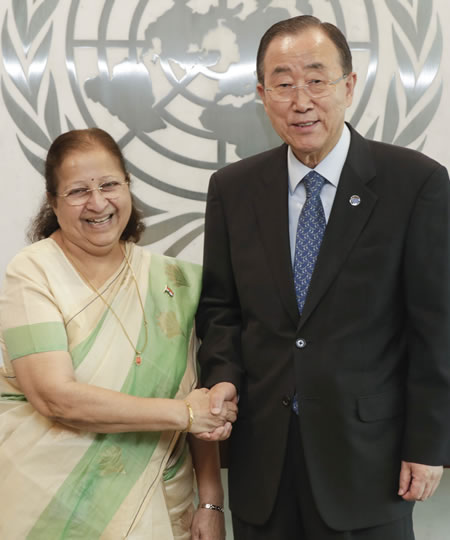
Photo: Secretary-General Ban Ki-moon (right) meets with Sumitra Mahajan, Speaker of the Lok Sabha, the lower house of the Parliament of India. 31 August 2015. United Nations, New York. UN Photo/Evan Schneider.
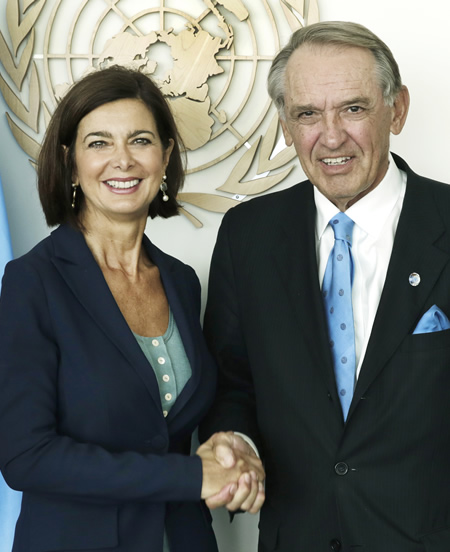
Photo: UN Deputy Secretary-General, Jan Eliasson (right), meets with Laura Boldrini, President of the Chamber of Deputies of Italy. 01 September 2015. United Nations, New York. UN Photo/Evan Schneider.
|GlobalGiants.Com|
Edited & Posted by Editor | 3:45 PM | Link to this Post