















November 4, 2011
G20 Summit Concludes in Cannes, France
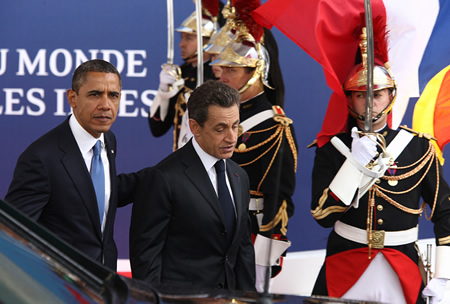

Photo: President Barack Obama (USA) and President Nicolas Sarkozy (France) during G20 Summit in Cannes, France. Credits: France Diplomatie / F. de la Mure / MAEE.
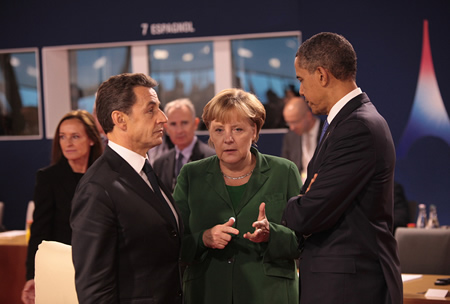
Photo: President Nicolas Sarkozy (France), Chancellor Angela Merkel (Germany), and President Barack Obama (USA) during G20 Summit in Cannes, France. Credits: France Diplomatie / F. de la Mure / MAEE.
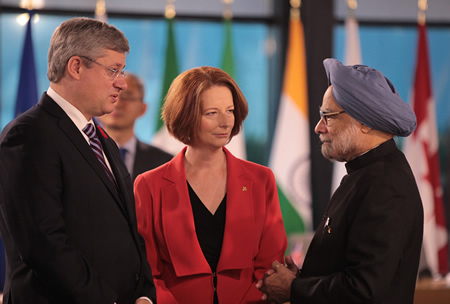
Photo: Prime Minister Stephen Harper (Canada), Prime Minister Julia Gillard (Australia), and Prime Minister Manmohan Singh (India) during a working session at the G20 Summit in Cannes, France, Friday, Nov. 4, 2011. Credits: France Diplomatie / F. de la Mure / MAEE.
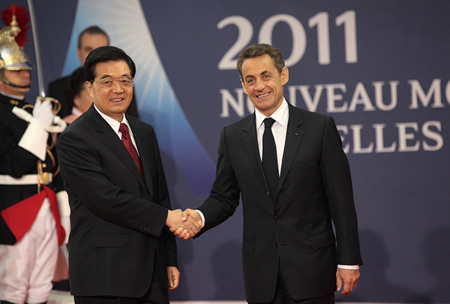
Photo: President Hu Jintao (China) and President Nicolas Sarkozy (France) during a working session at the G20 Summit in Cannes, France, Friday, Nov. 4, 2011. Credits: France Diplomatie / F. de la Mure / MAEE.
“We, the Leaders of the G20, met in Cannes on 3-4 November 2011. Since our last meeting, global recovery has weakened, particularly in advanced countries, leaving unemployment at unacceptable levels. In this context, tensions in the financial markets have increased due mostly to sovereign risks in Europe; there are also clear signs of a slowing in growth in the emerging markets. Commodity price swings have put growth at risk. Global imbalances persist,” said the final communique of the G20 Leaders Summit.
“Today, we reaffirm our commitment to work together and we have taken decisions to reinvigorate economic growth, create jobs, ensure financial stability, promote social inclusion and make globalization serve the needs of the people…”
The G20 has become the number one forum for economic policy coordination. Since the end of 2008, it has met on a regular basis: in London in April 2009, Pittsburgh in September 2009, Toronto in June 2010 and in Seoul in November 2010. It met for the sixth time on 3 and 4 November 2011 in Cannes, France.
The main emerging and developed economies, the G20 countries, account for 85 percent of global output and two thirds of the world’s population. Its members are Argentina, Australia, Brazil, Canada, China, France, Germany, India, Indonesia, Italy, Japan, Mexico, Russia, Saudi Arabia, South Africa, South Korea, Turkey, the United Kingdom, the United States and the European Union. Spain is a permanent guest. This year, the French Presidency has invited the United Arab Emirates, Ethiopia, Singapore and the African Union Presidency.
To carry out its work, the G20 draws on the expertise of the International Monetary Fund (IMF), the World Bank, the United Nations (UN), the Organisation for Economic Cooperation and Development (OECD), the International Labour Organization (ILO), the World Trade Organization (WTO), and the Financial Stability Board (FSB).
|GlobalGiants.Com|
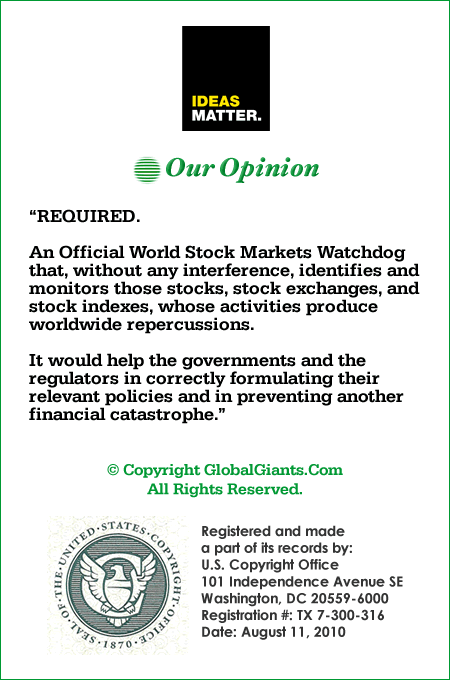
A Suggestion for the Financial Stability Board (FSB):


Edited & Posted by Editor | 12:14 PM | Link to this Post
September 1, 2011
Brand USA — What is its Current Value?

In the ‘Nations Brand Index’ of ‘Brand Finance plc’, the value of ‘Brand USA’ has dropped 10% since April 2011 to $11.4 Trillion. In that index, ‘Brand USA’ is being downgraded to AA- , as “its brand strength falls to a 10 year low.”
According to Brand Finance plc., new data shows there is a significant decline in ‘Brand USA’s’ value. Brand Finance plc is an independent global business focused on advising strongly branded organisations on how to maximise value through effective management of their brands and intangible assets. Brand Finance plc is headquartered in London and has a network of international offices in Amsterdam, Athens, Bangalore, Barcelona, Cape Town, Colombo, Dubai, Geneva, Helsinki, Hong Kong, Istanbul, Lisbon, Madrid, Moscow, New York, Paris, Sao Paulo, Sydney, Singapore, Toronto and Zagreb.
‘Nation Brand’ values are produced through a detailed analysis of economic data, perceptual market research data and infrastructure measures producing a combined score out of 100. For ‘Brand USA’ decreases are apparent across all inputs. Infrastructure scores dropped from 77 to 76 points, economic measures fell from 74 to 64 points and the brand equity measure slipped from 71 to 61.
Photo: MacBook Pro
• As the world’s biggest economy, ‘Brand USA’ is still significantly more valuable than the next nearest nation. However, there has been a drop in brand strength caused by inflation, cost of capital, reduced capital, higher unemployment and declining image abroad.
“If ‘Brand USA’ had been given the AA- rating in the Brand Finance ‘Nations Brand Index’ published in May 2011, it would have fallen below Canada, Australia and South Korea in brand strength,” says Brand Finance.
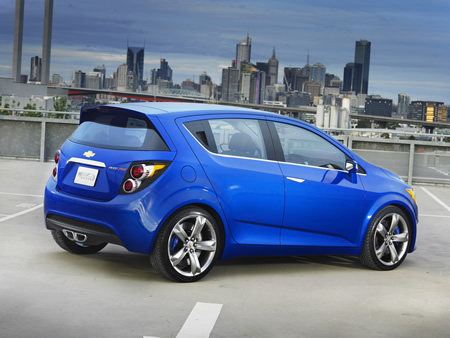
Photo: 2011 Chevrolet Aveo.

David Haigh, CEO of Brand Finance plc, comments:
“‘Brand USA’ is under enormous pressure as a decade of crises in business and foreign policy have been joined by serious economic problems. Low consumer spending, a static property market and the sovereign debt credit downgrade have all taken their toll on the value of ‘Brand USA’. At the same time other developed and emerging nation brands are performing better and growing in value. The economic crisis and double dip recession will accelerate these differences, with further shifts likely in the near future.”
Ollie Schmitz, Director of Nation Brand Valuation, Brand Finance plc adds:
“Prior to the recession, ‘Brand USA’ communicated strong and desirable values in everything from popular culture and entertainment to food and retailing brands. However, as a result of the current economic situation the brand strength has now dropped to its lowest score since tracking began in 2000. Once the global benchmark, emerging markets across the globe will now look to other nations to take the lead signalling exceptionally testing times for the ‘Brand USA’ in the future.”
• The full ‘Nation League Table 2011’ and methodology is available upon request from Brand Finance plc.
|GlobalGiants.Com|
Edited & Posted by Editor | 6:24 AM | Link to this Post
August 6, 2011
Standard & Poor's lowers long-term sovereign credit rating on the United States of America
Standard & Poor’s Ratings Services said today that it lowered its long-term sovereign credit rating on the United States of America to ‘AA+’ from ‘AAA’. Standard & Poor’s also said that the outlook on the long-term rating is negative. At the same time, Standard & Poor’s affirmed its ‘A-1+’ short-term rating on the U.S. In addition, Standard & Poor’s removed both ratings from CreditWatch, where they were placed on July 14, 2011, with negative implications.
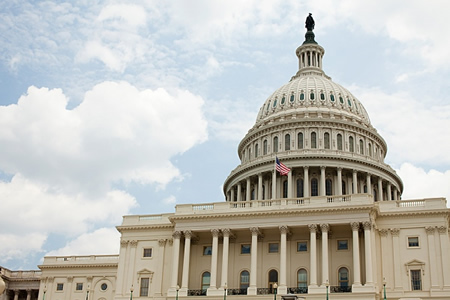
“We lowered our long-term rating on the U.S. because we believe that the prolonged controversy over raising the statutory debt ceiling and the related fiscal policy debate indicate that further near-term progress containing the growth in public spending, especially on entitlements, or on reaching an agreement on raising revenues is less likely than we previously assumed and will remain a contentious and fitful process. We also believe that the fiscal consolidation plan that Congress and the Administration agreed to this week falls short of the amount that we believe is necessary to stabilize the general government debt burden by the middle of the decade,” Standard & Poor’s said in a statement.
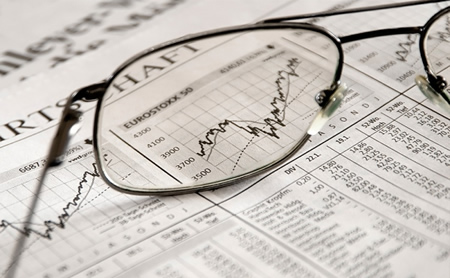
“The political brinksmanship of recent months highlights what we see as America’s governance and policymaking becoming less stable, less effective, and less predictable than what we previously believed. The statutory debt ceiling and the threat of default have become political bargaining chips in the debate over fiscal policy.”
“Our opinion is that elected officials remain wary of tackling the structural issues required to effectively address the rising U.S. public debt burden in a manner consistent with a ‘AAA’ rating and with ‘AAA’ rated sovereign peers (Canada, France, Germany, and the U.K.).”
“The outlook on the long-term rating is negative. We could lower the long-term rating to ‘AA’ within the next two years,” the statement noted.
|GlobalGiants.Com|
“As a very important source of strength and security, cherish public credit. One method of preserving it is, to use it as sparingly as possible; avoiding occasions of expense by cultivating peace, but remembering also that timely disbursements to prepare for danger frequently prevent much greater disbursements to repel it; avoiding likewise the accumulation of debt, not only by shunning occasions of expense, but by vigorous exertions in time of peace to discharge the debts, which unavoidable wars may have occasioned, not ungenerously throwing upon posterity the burthen, which we ourselves ought to bear.”
— GEORGE WASHINGTON, Farewell Address, September 17, 1796.

Edited & Posted by Editor | 8:10 AM | Link to this Post
July 20, 2011
ECOSOC 2011
A meeting of the High-level Segment of the United Nations Economic and Social Council (ECOSOC), with focus on education, took place in Geneva.
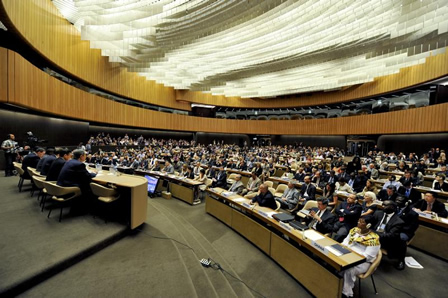
Photo: Participants at the ECOSOC High-Level Segment. UN Photo / Jean-Marc Ferre.
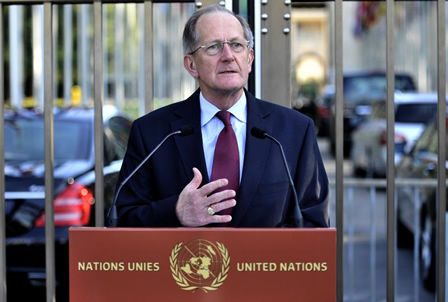
Photo: Joseph Deiss, President of the General Assembly, delivers his statement during the meeting of senior United Nations officials with local Pupils in the context of the 2011 ECOSOC High-Level Segment. UN Photo / Jean-Marc Ferre.
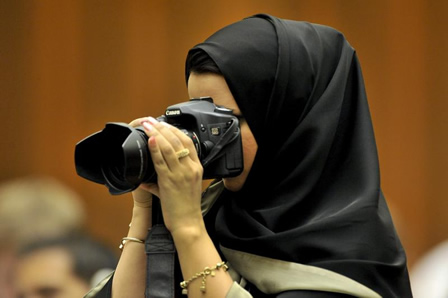
Photo: A member of delegation of Qatar at the ECOSOC High-Level Segment. UN Photo / Jean-Marc Ferre.
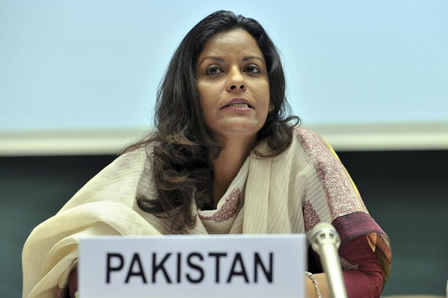
Photo: Nafisa Shah, Member of the National Assembly of Pakistan, addresses the ECOSOC High-Level Segment. UN Photo / Jean-Marc Ferre.
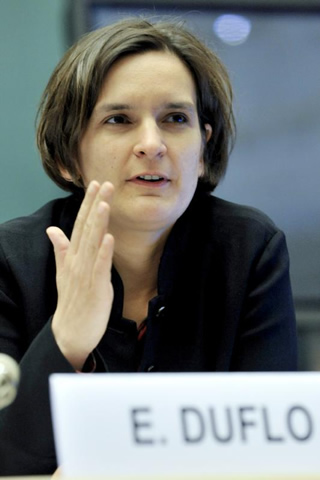
Photo: Esther Duflo, Professor or Poverty Alleviation and Development, Massachussetts Institute of Technology, during the ECOSOC High-Level Segment. UN Photo / Jean-Marc Ferre.
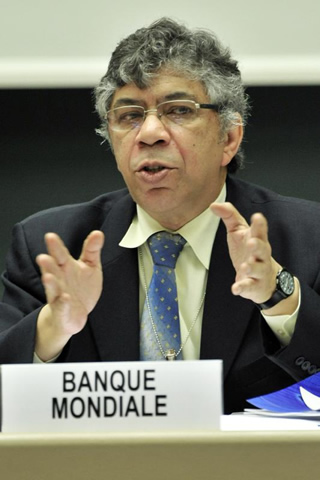
Photo: Otaviano Canuto dos Santos Fihlo, Vice-President, Poverty Reduction and Economic Management, World Bank, during the ECOSOC High-Level Segment. UN Photo / Jean-Marc Ferre.
ECOSOC was established under the United Nations Charter as the principal organ to coordinate economic, social, and related work of the 14 UN specialized agencies, functional commissions and five regional commissions. The Council also receives reports from 11 UN funds and programmes.
• The Economic and Social Council (ECOSOC) serves as the central forum for discussing international economic and social issues, and for formulating policy recommendations addressed to Member States and the United Nations system.
ECOSOC is responsible for:
• Promoting higher standards of living, full employment, and economic and social progress;
• Identifying solutions to international economic, social and health problems;
• Facilitating international cultural and educational cooperation; and
• Encouraging universal respect for human rights and fundamental freedoms.
It has the power to make or initiate studies and reports on these issues. It also has the power to assist the preparations and organization of major international conferences in the economic and social and related fields and to facilitate a coordinated follow-up to these conferences. With its broad mandate the Council’s purview extends to over 70 per cent of the human and financial resources of the entire UN system.
|GlobalGiants.Com|
Mobius Says Another Financial Crisis ‘Around The Corner’
May 30, 2011 — Mark Mobius, executive chairman of Templeton Asset Management’s emerging markets group, said another financial crisis is inevitable because the causes of the previous one haven’t been resolved.
“There is definitely going to be another financial crisis around the corner because we haven’t solved any of the things that caused the previous crisis,” Mobius said at the Foreign Correspondents’ Club of Japan in Tokyo today in response to a question about price swings. “Are the derivatives regulated? No. Are you still getting growth in derivatives? Yes.”
The total value of derivatives in the world exceeds total global gross domestic product by a factor of 10, said Mobius, who oversees more than $50 billion. With that volume of bets in different directions, volatility and equity market crises will occur, he said.
The global financial crisis three years ago was caused in part by the proliferation of derivative products tied to U.S. home loans that ceased performing, triggering hundreds of billions of dollars in write-downs and leading to the collapse of Lehman Brothers Holdings Inc. in September 2008.
The freezing of global credit markets caused governments from Washington to Beijing to London to pump more than $3 trillion into the financial system to shore up the global economy.
— BLOOMBERG.COM
Edited & Posted by Editor | 12:06 PM | Link to this Post
July 19, 2011
Sonia Gandhi Greets U.S. Secretary of State Hillary Clinton in New Delhi
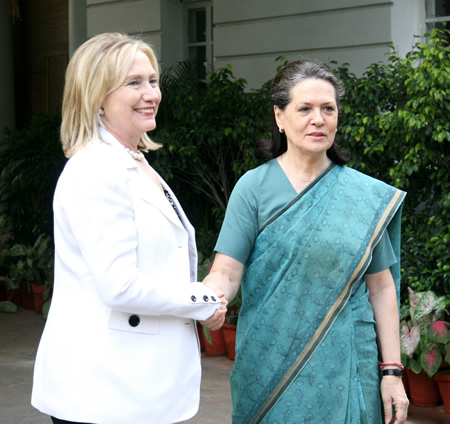
Photo: U.S. Secretary of State Hillary Rodham Clinton is greeted by All India Congress Party President Sonia Gandhi in New Delhi, India, on July 19, 2011. (State Department Photo).
|GlobalGiants.Com|
Edited & Posted by Editor | 1:03 PM | Link to this Post
May 21, 2011
Military Bands of China and USA Take Friendship Tour to UN HQ
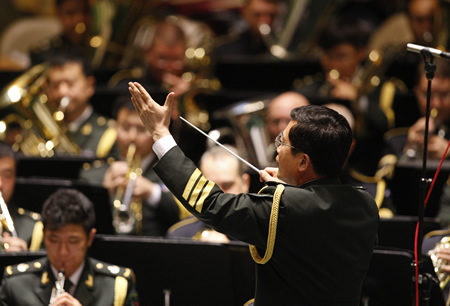
Photo: Senior Colonel Yu Hai conducts the Military Band of the People’s Liberation Army of China during a joint concert with the United States Army Band “Pershing’s Own” at UN Headquarters. The concert is part of the ensembles’ three-city tour based on friendship and cooperation through music, and will conclude on May 21 at Avery Fisher Hall, Lincoln Center. May 20, 2011. United Nations, New York. UN Photo/Paulo Filgueiras.
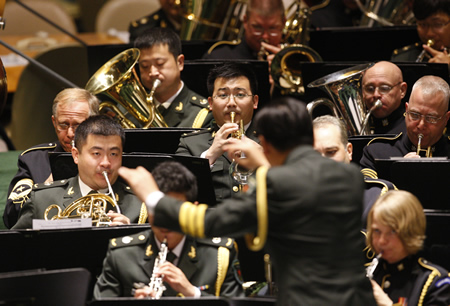
Photo: A close-up of performers of the Military Band of the People’s Liberation Army of China during their first-ever joint concert with the United States Army Band “Pershing’s Own” at UN Headquarters. The concert is part of the ensembles’ three-city tour based on friendship and cooperation through music, and will conclude on May 21 at Avery Fisher Hall, Lincoln Center. May 20, 2011. United Nations, New York. UN Photo/Paulo Filgueiras.
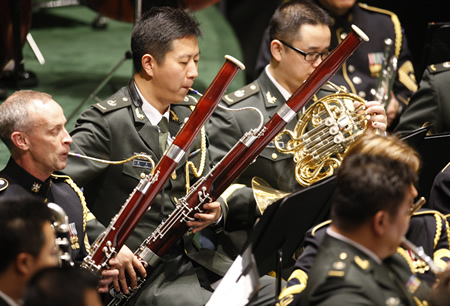
Photo: A close-up of performers of the Military Band of the People’s Liberation Army of China and the United States Army Band “Pershing’s Own” during their first-ever joint concert at UN Headquarters. The concert is part of the ensembles’ three-city tour based on friendship and cooperation through music, and will conclude on May 21 at Avery Fisher Hall, Lincoln Center. May 20, 2011. United Nations, New York. UN Photo/Paulo Filgueiras.
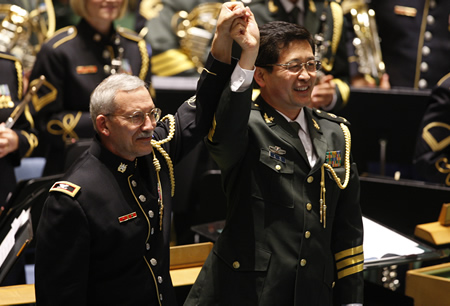
Photo: Colonel Thomas Rotondi, Jr. (left), Leader and Commander of the United States Army Band “Pershing’s Own”, and Senior Colonel Yu Hai, Chief of the Military Band of the People’s Liberation Army of China, thank the audience after their first-ever joint concert at UN Headquarters. The concert is part of the ensembles’ three-city tour based on friendship and cooperation through music, and will conclude on May 21 at Avery Fisher Hall, Lincoln Center. May 20, 2011. United Nations, New York. UN Photo/Paulo Filgueiras.
|GlobalGiants.Com|
Edited & Posted by Editor | 4:11 AM | Link to this Post
May 4, 2011
Balanced Cities Perform Best
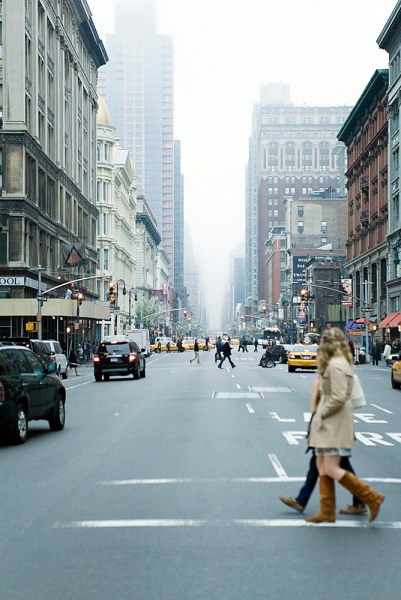
The finance and business centers of the future may not be the traditional capitals of global dominance, according to a new report released today by PwC (PricewaterhouseCoopers LLP, a member firm of PricewaterhouseCoopers International Limited) and the Partnership for New York City (a non-profit organization working to maintain New York City’s position as the global center of commerce, culture and innovation).
The fourth edition of Cities of Opportunity shows that “well-rounded cities with balanced economies and strong quality of life have resilience during downturns and they attract skilled people”.
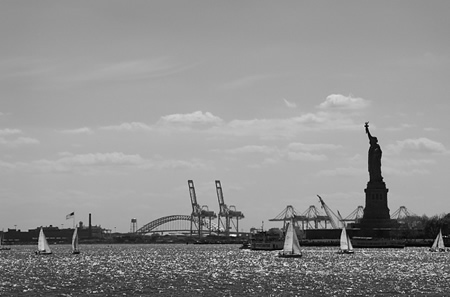
New York leads the 2011 study, which analyzes and ranks how 26 global centers of finance, business and culture perform across 10 key indicators. But it is followed closely in the top five by Toronto, San Francisco, Stockholm and Sydney — cities more notable for quality of life and balance than global business dominance.
While these cities cannot match the size or economic clout of longstanding commercial hubs like London, New York, Paris or Tokyo, their performance highlights a changing global dynamic. “Modern cities are less dependent on geography and historic connections and more reliant on holistic approaches to attracting and keeping creative minds and cutting-edge businesses,” informs the report.
New York, despite finishing first, hardly dominates. It leads because of balanced performance across the indicators.
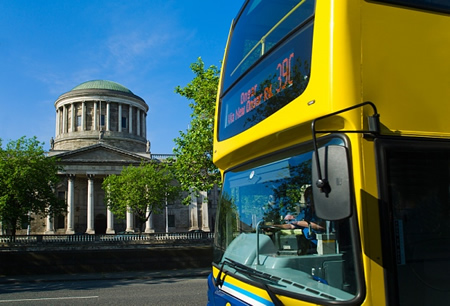
The study analyzes 26 cities and ranks them as follows: • New York • Toronto • San Francisco • Stockholm • Sydney • London • Chicago • Paris • Singapore • Hong Kong • Houston • Los Angeles • Berlin • Tokyo • Madrid • Seoul • Beijing • Abu Dhabi • Shanghai • Mexico City • Moscow • Santiago • Istanbul • Sao Paulo • Johannesburg • Mumbai.
The Cities of Opportunity key indicators and top three cities in each are:
• Intellectual capital and innovation — Stockholm, Toronto, New York/San Francisco (tied for 3rd)
• Technology readiness — New York, Seoul, Stockholm
• Transportation and infrastructure — Paris, Chicago, New York
• Demographics and livability — Stockholm, Sydney, Toronto
• Economic clout — London, Paris, New York
• Cost — Houston, Los Angeles, Chicago
• Lifestyle assets — New York, Paris, London
• Health, safety and security — Stockholm, Toronto, Chicago
• Ease of doing business — Hong Kong, Singapore, New York
• Sustainability — Berlin, Sydney, Stockholm

“Changes in communications, education and knowledge-sharing, transportation and urban migration are transforming world dynamics,” said Bob Moritz , US Chairman and Senior Partner of PwC. “Cities that want to thrive need to adapt to these changes. Size is no longer a leading predictor of influence. The success of cities such as Toronto, San Francisco, Stockholm and Sydney sends a clear signal that holistic balance makes a real difference.”
“For more than a year, researchers at the Partnership and PwC exhaustively compiled and analyzed data from more than 400 different global sources,” said Kathryn Wylde, President & CEO of the Partnership for NYC. “We are pleasantly surprised to see how the totals broke in favor of NYC, but with the clear competition rising from smaller, more livable cities.”
The complete report is available at: www.pwc.com/cities.
|GlobalGiants.Com|
Edited & Posted by Editor | 4:21 AM | Link to this Post
April 23, 2011
Conversations on Diplomacy
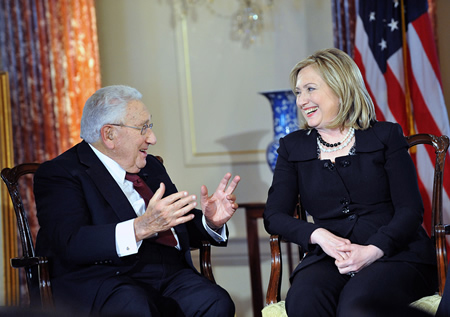
Photo: U.S. Secretary of State Hillary Rodham Clinton and former U.S. Secretary of State Henry Kissinger film, “Conversations on Diplomacy, Moderated by Charlie Rose,” at the U.S. Department of State in Washington, D.C., on April 20, 2011. (State Department Photo.)
|GlobalGiants.Com|
“There are few ironclad rules of diplomacy but to one there is no exception. When an official reports that talks were useful, it can safely be concluded that nothing was accomplished.”
— John Kenneth Galbraith.
Edited & Posted by Editor | 6:52 AM | Link to this Post
April 12, 2011
UN Peacekeeping Operations: Top Five Troop-Contributing Countries
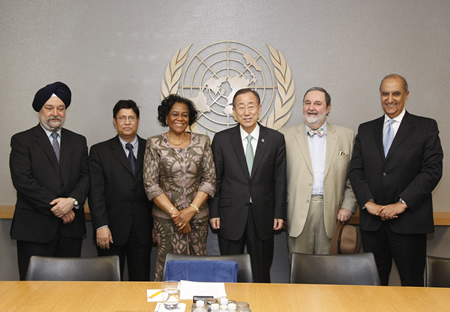
Photo: Secretary-General Ban Ki-moon (third from right) meets with the representatives of the top five countries contributing troops to UN peacekeeping operations.
From left:
• Hardeep Singh Puri, Permanent Representative of India to the UN;
• Abulkalam Abdul Momen, Permanent Representative of the People’s Republic of Bangladesh to the UN;
• U. Joy Ogwu, Permanent Representative of Nigeria to the UN;
• Abdullah Hussain Haroon, Permanent Representative of Pakistan to the UN; and
• Maged A. Abdelaziz, Permanent Mission of the Arab Republic of Egypt to the UN.
April 11, 2011. United Nations, New York. UN Photo/Paulo Filgueiras.
|GlobalGiants.Com|
Edited & Posted by Editor | 7:48 AM | Link to this Post
April 11, 2011
U.S. Postal Service: Open for Business in All Circumstances
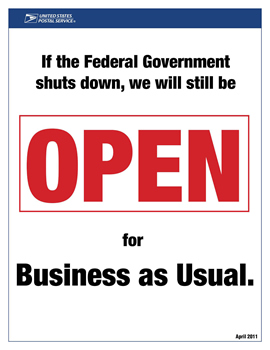
Photo: U.S. Postal Service Poster
U.S. Postal Service has released a poster declaring that even if the Federal Government Shuts Down, USPS Will Still Be Open for Business as Usual.
The United States Postal Service receives no tax dollars for operating expenses, and relies on the sale of postage, products and services to fund its operations.

Photo: JAZZ Appreciation Stamp recently issued by the U.S. Postal Service.
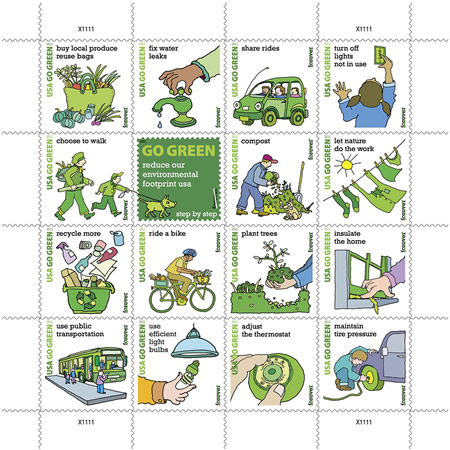
Photo: U.S. Postal Service Delivers a Greener America - One Stamp at a Time: 16 Easy Ways to Help the Environment.
A self-supporting government enterprise, it reaches every address in the USA — 150 million residences, businesses and Post Office Boxes.
According to U.S. Postal Service, it has annual revenue of more than $67 billion and delivers nearly 40 percent of the world’s mail.
|GlobalGiants.Com|
Edited & Posted by Editor | 3:50 AM | Link to this Post
March 2, 2011
Libyan Crisis: UN Secretary-General meets with U.S. President
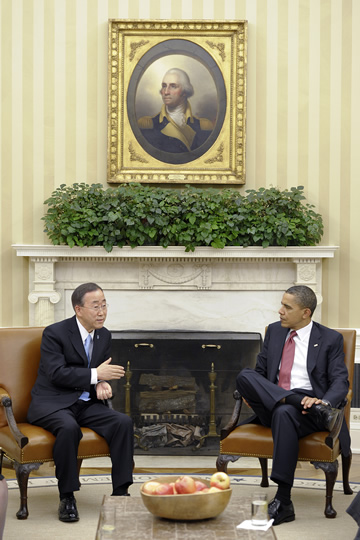
Photo: UN Secretary-General Ban Ki-moon (left) meets with Barack Obama, President of the United States of America, inside the White House Oval Office, Washington D.C., where they discussed the ongoing crisis in Libya. February 28, 2011. Washington DC, United States. UN Photo/Eskinder Debebe.
|GlobalGiants.Com|
Edited & Posted by Editor | 4:15 AM | Link to this Post
February 19, 2011
U.S.A. Vetoes Draft Resolution Condemning Israeli Settlement Activity
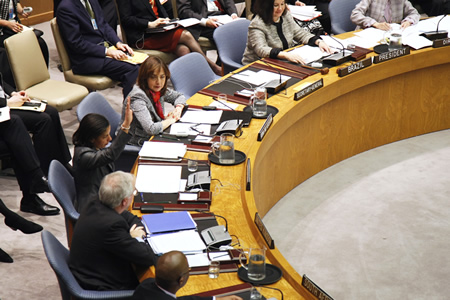
Photo: A view of the Security Council as Susan E. Rice (third from left), Permanent Representative of the United States of America to the UN, on behalf of her Government, vetoes a draft resolution condemning Israeli settlement activity. The other 14 Members of the Council voted in favour of the resolution. February 18, 2011. United Nations, New York. UN Photo/Paulo Filgueiras.
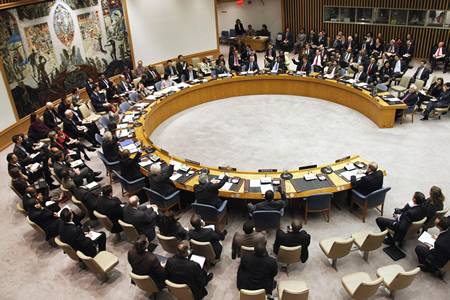
Photo: A wide view of the Security Council as 14 Members vote in favour of a draft resolution condemning Israeli settlement activity. The draft resolution was vetoed by the United States. February 18, 2011. United Nations, New York. UN Photo/Paulo Filgueiras.
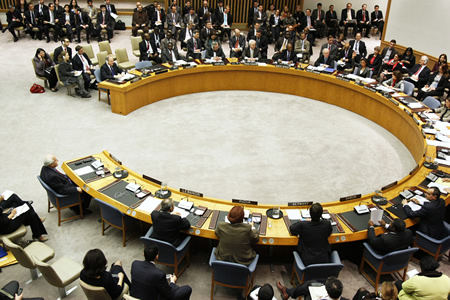
Photo: A wide view of the Security Council as Susan E. Rice, Permanent Representative of the United States of America to the UN, vetoes a draft resolution condemning Israeli settlement activity. The other 14 Members of the Council voted in favour of the resolution. February 18, 2011. United Nations, New York. UN Photo/John McIlwaine.
|GlobalGiants.Com|
Edited & Posted by Editor | 6:38 AM | Link to this Post
February 18, 2011
Contenders for UN Security Council Permanent Seats
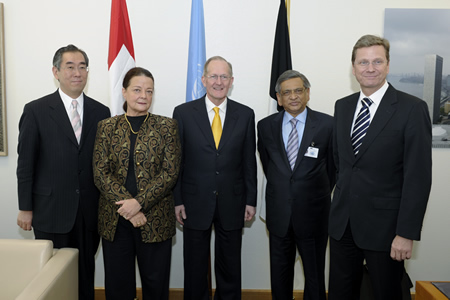
Photo: Joseph Deiss (centre), President of the sixty-fifth session of the United Nations General Assembly, meets with high-level representatives of the G4 nations, the group seeking permanent seats on the Security Council.
From left:
• Takeaki Matsumoto, Japanese State Secretary for Foreign Affairs.
• V. L. B. Crivano Machado, Under Secretary-General for Political Affairs of Brazil.
• S. M. Krishna, Minister for Foreign Affairs of India.
• Guido Westerwelle, Minister for Foreign Affairs of Germany.
February 11, 2011. United Nations, New York. UN Photo/Eskinder Debebe.
• The current council is composed of five permanent members with veto power - the United States, Russia, China, France and Britain, the victors of World War II - and 10 members elected for two-year terms.
|GlobalGiants.Com|
“Well, also,” says he elsewhere, “was it written by Theologians: a King rules by divine right. He carries in him an authority from God, or man will never give it him. Can I choose my own King? I can choose my own King Popinjay, and play what farce or tragedy I may with him: but he who is to be my Ruler, whose will is to be higher than my will, was chosen for me in Heaven.”
— Sartor Resartus By Thomas Carlyle.
Edited & Posted by Editor | 12:21 AM | Link to this Post
February 17, 2011
Global Light-Vehicle Sales Set Record in 2010 and Build Momentum for 2011
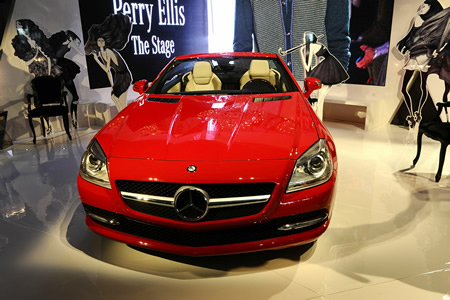
Photo: A view of a Mercedes-Benz car during Mercedes-Benz Fashion Week at Lincoln Center on February 11, 2011 in New York City. (Photo by Michael Buckner/Getty Images for Mercedes-Benz.)
• Global new light-vehicle sales this year are projected to reach 76.5 million units in 2011, which would surpass the record of 72 million light vehicles sold in 2010, according to J.D. Power and Associates Automotive Forecasting.
If new light-vehicle sales reach their expected levels, this would be 6 percent higher than the 2010 total, which shattered the previous record of 70 million units set in 2007.
“Overall growth in the world economy has been supporting further recovery in auto sales,” said John Humphrey, senior vice president of automotive operations at J.D. Power and Associates. “We’re seeing signals of stability and increased consumer demand for new vehicles as economic optimism increases.”
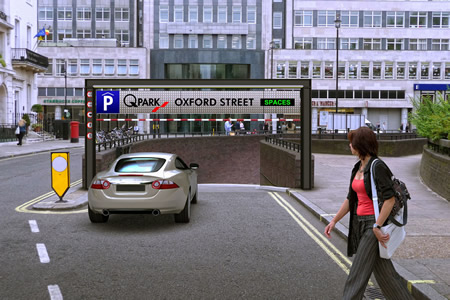
Photo: Q-Park wins bid to take over 14 car parks in London. Oxford Street is one of the car parks located in the heart of London.
Most regions saw sales growth in 2010, including North America, South America and Asia, with China being a key to growth for that continent. Western Europe was the notable exception to the growth pattern.
Also, for the first time in 2010, emerging auto markets accounted for more than one-half of global light-vehicle sales (51%), clearly signaling the shift of power in the global automotive market that has been taking place during the past five years. That momentum in the emerging markets is expected to continue throughout 2011.

Photo: The REVA NXG Electric Car, Bangalore, India.
• Outlook for 2011: Mature Markets Recover, Emerging Markets Continue to Expand
Emerging markets, including China, India and Brazil, are expected to continue to expand on the 51 percent share of total light-vehicle sales captured in 2010. Overall, emerging markets are expected to account for 53 percent of total light-vehicle sales in 2011, a further sign that these are the key markets that will drive the level of growth in the coming years.
Mature markets, on the other hand, are forecasted to see mixed results. The U.S. economy is expected to be stronger, which should lead to higher sales. Western Europe is expected to be flat, while Japan is expected to see its auto market shrink.
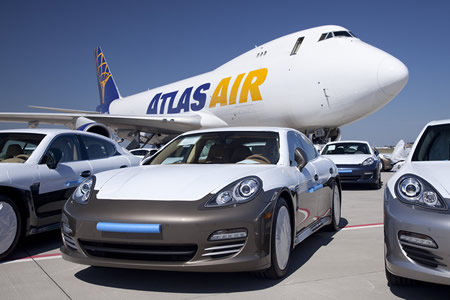
Photo: Thirty one brand new Porsche Panameras are awaiting their flight to the U.S. at the Leipzig, Germany, airport. Having just rolled off the assembly line at the nearby Porsche production plant, each car is carefully lifted, secured and then placed on the 747 cargo plane.
• North America
The outlook for North America in 2011 is positive, with sales forecasted to increase by 11 percent to 15.5 million units — an increase of 1.5 million units from 2010.
• Europe
In contrast to the steady recovery taking place in North America, Europe is expected to see a slight decrease in its light-vehicle market in 2011, with sales down to 18.1 million units.
• Asia
The auto market in Asia will continue to grow in 2011.
CHINA: In China, a country that has seen exceptional growth in its auto market in recent years, sales are expected to exceed 19 million units, an increase of 11 percent compared with 2010.
• In spite of the expected cooling of the growth rate, China will remain the top global auto market by a significant margin — outselling the U.S. by approximately 6 million units — and the long-term prospects for the market remain strong.
INDIA: With the higher income levels and increased demand for new sub-compact models, sales in India are being boosted, particularly in the semi-urban and rural markets. Accordingly, sales volume in India in 2011 is projected to be up 17 percent to 3.2 million units.
• South America
South America’s economies and auto markets have made a sharp recovery.
According to J.D. Power, the major near-term risks to the region include rising inflation and continuing monetary tightening, a sudden reversal in investor confidence, and a possible credit bubble in Brazil, which is the largest auto market in the region with nearly 75 percent of sales.

Photo: A 30 ft. inflatable Carfax Car Fox helps draw customers to Serra Buick Cadillac GMC Showroom in Michigan, USA.
“From a global standpoint, 2010 was a combination of recovery and strong growth in emerging markets,” said Jeff Schuster, executive director of global forecasting at J.D. Power and Associates. “Growth in 2011 is not expected to be as pronounced as it was in 2010. However, 2011 appears to be a stable environment with more manageable growth rates balanced across the world, as the recovery in the auto market will continue in many countries.”
|GlobalGiants.Com|

Edited & Posted by Editor | 1:46 AM | Link to this Post
January 30, 2011
World Economic Forum Annual Meeting at Davos, Switzerland: Business Leaders Point to Key Risks Facing Global Economy
• Asset bubbles in emerging markets, soaring commodity prices, state debt are key risks.
• World’s financial system is in better shape than three years ago.
• No consensus on how to tackle high state debt.
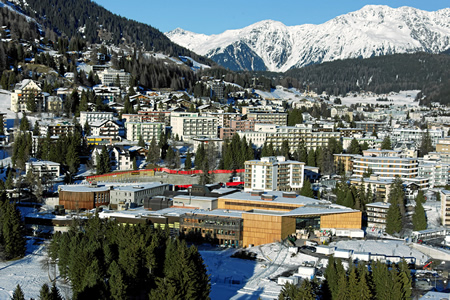
Photo: Aerial Photo of Davos, the biggest tourism metropolis of the Swiss alps, captured before the opening of the Annual Meeting 2011 of the World Economic Forum in Davos, Switzerland, January 17, 2011. Davos is in the middle of Swiss Alps and the city for holidays, sports, congresses, health, development and culture. © World Economic Forum/Andy Mettler.
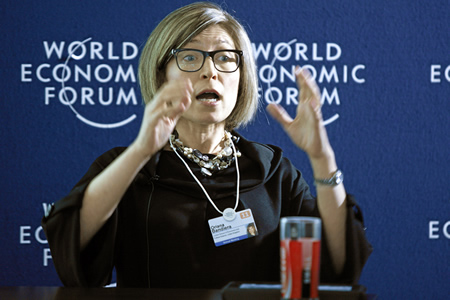
Photo: Oriana Bandiera, Professor of Economics, London School of Economics and Political Science, United Kingdom, is captured during the ‘IdeasLab with the London School of Economics: Doing Better with Less’ at the Annual Meeting 2011 of the World Economic Forum in Davos, Switzerland, January 26, 2011. © World Economic Forum/Jolanda Flubacher.
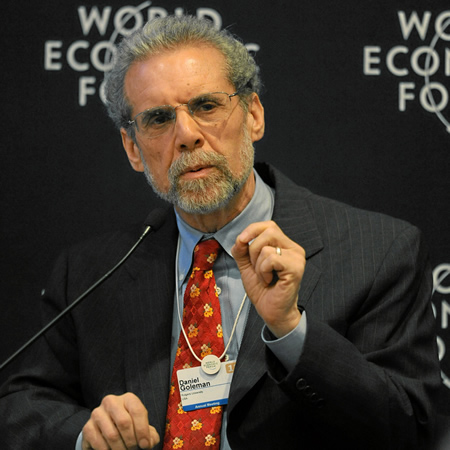
Photo: Daniel Goleman, Co-Director, Consortium for Research on Emotional Intelligence in Organizations, Rutgers University, USA, speaks during the session ‘The New Reality of Consumer Power’ at the Annual Meeting 2011 of the World Economic Forum in Davos, Switzerland, January 27, 2011. © World Economic Forum/Michael Wuertenberg.
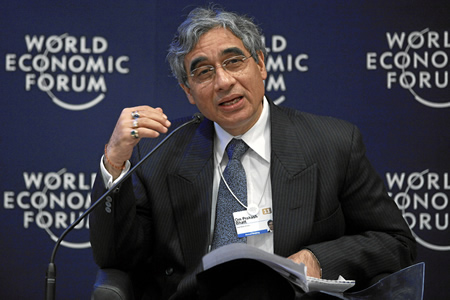
Photo: Om Prakash Bhatt, Chairman, State Bank of India, India, speaks during the session ‘Redeploying Development Finance’ at the Annual Meeting 2011 of the World Economic Forum in Davos, Switzerland, January 28, 2011. © World Economic Forum/Moritz Hager.
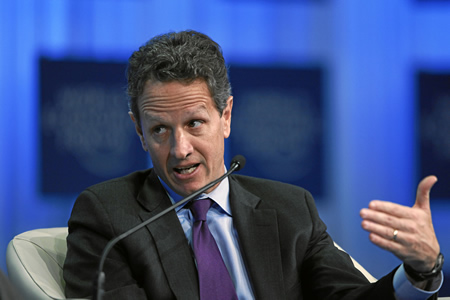
Photo: Timothy F. Geithner, US Secretary of the Treasury is captured during the session ‘Priorities for the US Economy’ at the Annual Meeting 2011 of the World Economic Forum in Davos, Switzerland, January 28, 2011. © World Economic Forum/Moritz Hager.
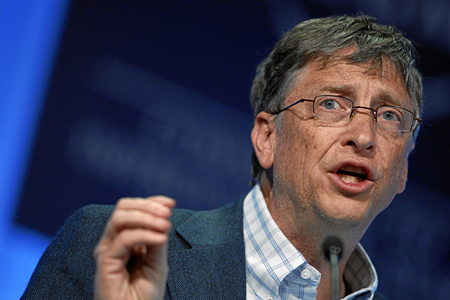
Photo: William H. Gates III, Co-Chair, Bill & Melinda Gates Foundation, USA, speaks during the session ‘Polio: Eradicating an Old Reality Once and for All’ at the Annual Meeting 2011 of the World Economic Forum in Davos, Switzerland, January 28, 2011. © World Economic Forum/Moritz Hager.
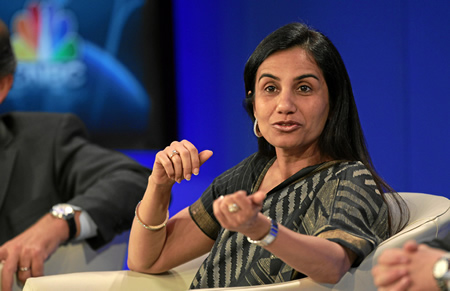
Photo: Chanda Kochhar, Managing Director and Chief Executive Officer, ICICI Bank, India; Co-Chair of the World Economic Forum Annual Meeting 2011, is captured during the session ‘The Global Agenda in 2011’ at the Annual Meeting 2011 of the World Economic Forum in Davos, Switzerland, January 30, 2011. © World Economic Forum/Sebastian Derungs.
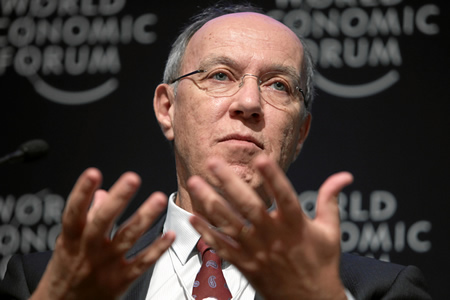
Photo: Francis Gurry, Director-General, World Intellectual Property Organization (WIPO), Geneva; Global Agenda Council on the Intellectual Property System, is captured during the session ‘The Davos Debrief: Policy Priorities’ at the Annual Meeting 2011 of the World Economic Forum in Davos, Switzerland, January 30, 2011. © World Economic Forum/Sebastian Derungs.
• Top business leaders see a host of potential dangers facing the world economy - ranging from asset bubbles in emerging market countries to soaring world commodity prices and huge levels of state debt in Europe. However, it is difficult to say just where the next global shock will come from.
On the question of continuing low borrowing costs and cheap money in the most-developed economies, one of the factors that contributed to the global economic crash, participants said that they are confident that the lessons have been learnt and that the global banking system has emerged stronger from the test.
“I am a little optimistic. I think that we have a stronger system than three years ago,” James Dimon, Chairman and Chief Executive Officer of JP Morgan & Chase, said during a debate on whether the world is now better prepared to face a future systemic shock.
But, business leaders were divided on how to approach the issue of huge state debt built up by some European countries during the boom years.. Some saw the need for Europe’s stronger economies, particularly Germany, to take part of the load by supporting, for example, the launch of European Union-backed Eurobonds in support of weaker economies, such as Ireland and Greece.
But Dimon warned that any “socializing” of states’ debts, by involving other European Union countries in financing them, could send out the wrong message on the need for fiscal discipline. “You have got to make sure that some are not piggy-backing on others,” he said.
|GlobalGiants.Com|
“Thought, not money, is the real business capital, and if you know absolutely that what you are doing is right, then you are bound to accomplish it in due season.”
— Harvey S. Firestone.
“It is not by augmenting the capital of the country, but by rendering a greater part of that capital active and productive than would otherwise be so, that the most judicious operations of banking can increase the industry of the country.”
— Adam Smith.
Edited & Posted by Editor | 7:48 AM | Link to this Post
January 23, 2011
UN Security Council Holds Open Debate on Post-conflict Peacebuilding
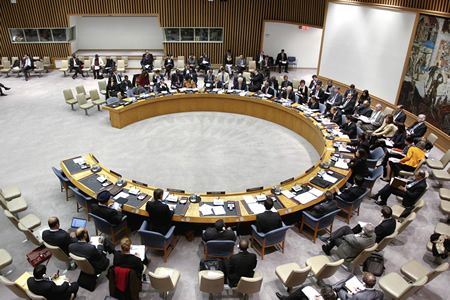
Photo: A wide view of the Security Council during its open debate, “Post-conflict peacebuilding: institution-building”. January, 21, 2011. United Nations, New York. UN Photo/John McIlwaine.
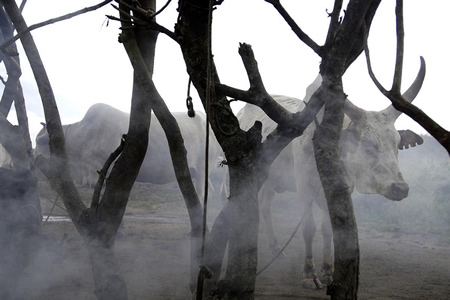
Photo: Cattle of the Sudanese Dinka people roam through their camp on the oustskirts of Nimule, South Sudan. These Dinka were displaced from their homes in a widespread dispute over land. Nimule, Sudan. UN Photo/Tim McKulka.
• The United Nations Security Council, on January, 21, 2011, acknowledged the need to continue improving its peacebuilding support for countries emerging from conflict.
Peter Wittig (Germany), Chairperson of the Peacebuilding Commission, said institution-building went beyond creating organizational structures. It involved rebuilding on the basis of “new rules of the game”, from power-sharing and rotation and women’s active participation in decision-making to fair distribution of wealth and economic opportunities. Communities and their organizations, as well as the private sector and civil society, must also be rebuilt. In that regard, the Peacebuilding Commission’s role could be expanded to encourage the identification of crucial institutions and mechanisms that could make post-conflict societies more resilient and better able to address tensions and challenges through non-violent means.
Also addressing the Council were representatives of the United States, France, South Africa, Russian Federation, Colombia, Brazil, Lebanon, Nigeria, India, Gabon, Portugal, China, United Kingdom, Bosnia and Herzegovina, Egypt, Turkey, Croatia, Afghanistan, Costa Rica, Uganda, Morocco, Japan, Republic of Korea, New Zealand, Mexico, Nepal, Australia, Peru, Ukraine, Bangladesh (on behalf of the Non-Aligned Movement), Armenia, Slovenia, Serbia, Pakistan, United Republic of Tanzania, Benin, Botswana and Argentina.
The Council emphasized the need for the United Nations and the wider international community to better coordinate and more effectively help nations stabilize in the aftermath of conflict.
|GlobalGiants.Com|
“If they want peace, nations should avoid the pin-pricks that precede cannon shots.”
— Napoleon Bonaparte
“Where no wood is, there the fire goeth out: so where there is no talebearer, the strife ceaseth.”
— Proverbs of Solomon 26:20
“And they shall beat their swords into plowshares, and their spears into pruninghooks: nation shall not lift up sword against nation, neither shall they learn war any more.”
— Isaiah 2:4
Edited & Posted by Editor | 3:40 AM | Link to this Post
January 19, 2011
Diplomacy at Work: Proposed China Garden
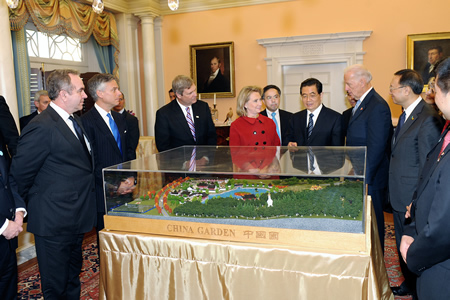
Photo: U.S. Secretary of State Hillary Rodham Clinton, U.S. Vice President Joseph Biden, and U.S. Secretary of Agriculture Tom Vilsack show Chinese President Hu Jintao a model of the proposed China Garden in the National Arboretum at the U.S. Department of State in Washington, D.C., on January 19, 2011. [State Department Photo]
|GlobalGiants.Com|
Edited & Posted by Editor | 10:12 PM | Link to this Post
October 28, 2010
Growing Global Imbalances Threaten a Sustainable Recovery, says Deloitte Research
Failure to adjust to new realities will only perpetuate uncertainty and volatility, the report warns.
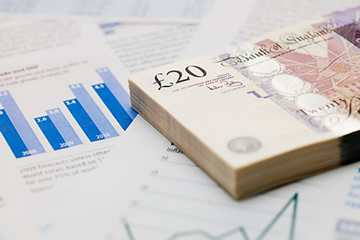
In the fourth quarter issue of the Global Economic Outlook, Deloitte Research economists examine the current economic environment and, in particular, the varied pace of growth and global imbalances impacting nine of the world's major markets: the United States, Eurozone, China, India, Japan, United Kingdom, Russia, Brazil, and Australia.
"The global economy is imbalanced," says Ira Kalish, Director of Global Economics, Deloitte Research, part of Deloitte Services LP in the United States. "The money is flowing out of developed countries that have been supporting unusually low interest rates for some time into higher interest rate emerging countries. At the same time, rapid growth in emerging markets is creating new inflationary pressures. Many governments are intervening in their currency markets to improve export competitiveness, further exacerbating inflation.

"Additionally, countries that have traditionally relied on exports -- China, Japan, Germany -- and need to move toward domestic-led growth continue to depend heavily on exports. Meanwhile, countries that have relied heavily on consumer spending (the U.S. and UK), and need to export more face competitive devaluations in their target export markets. Even though the adjustments needed to address these new realities will involve short-term pain, the failure to do so will only delay the day of reckoning."
Highlights of the Q4 issue include:
• The United States is currently experiencing an epidemic of thrift as banks, non-financial corporations, and households hoard cash. Expanding the money supply and sparking inflation can result in stronger spending. While embracing higher inflation is a high risk strategy, it's also the path of least resistance out of the post-credit crisis liquidity trap that is currently inhibiting growth.
• The economic imbalances in the Eurozone continue. Strong export-driven growth in Germany and France is spilling over to the domestic sector, but fringe countries are still struggling as a result of financial market stress. The imminent move toward tighter regulation and stricter controls will be painful in the short run, but is ultimately likely to help the Eurozone to become a truly integrated economic region.
• The Chinese economy appears headed for a soft landing, as opposed to a full blown deceleration, which is good news -- both for China's trade partners and China. Yet, China's shifting demographics -- starting in 2011, the number of dependents (mainly retirees) will rise faster than the number of workers, reversing the trend of the past two decades when the ratio of dependents to workers has been declining -- is likely to lead to slower future growth.
• The outlook on the Indian economy is generally positive. A good harvest season is expected to help feed the substantial appetite for consumption in the domestic sector. But policymakers will have to address the appreciating rupee and rising inflation.
• The Japanese economy remains weak due to stagnant consumer spending and decelerating business investment amidst a small surge in imports. Moreover, the current political turmoil in the country is not conducive to economic success. Reviving consumer and business confidence will be keys to Japan's success.
• In the United Kingdom a surprisingly strong recovery will likely be followed by a slowdown in growth. As the United Kingdom rebalances the economy toward industrial production, exports and capital spending, consumers and government will likely play less of a role as drivers of growth.
• Policy-makers in Russia are facing significant disparities. They must balance concerns about growth and currency values with worries about potential inflation. They must also weigh the desire to invest in new infrastructure with aspirations to limit government debt. Longer term, the possibility of joining the World Trade Organization could help Russia diversify away from an excessive dependence on commodities.
• Brazil's economy is rapidly growing. Cooling down the economy may not be an easy task. The country's next president will have to safeguard against hyper-inflation and a rising currency.
• In Australia, the growth that was punted by government funding and healthy export volumes may not carry forward to future quarters. A slowdown in global economic conditions hint at some deceleration ahead.
|GlobalGiants.Com|
Repeated
"REQUIRED.
An Official World Stock Markets Watchdog that, without any interference, identifies and monitors those stocks, stock exchanges, and stock indexes, whose activities produce worldwide repercussions.
It would help the governments and the regulators in formulating their relevant policies and in preventing another financial catastrophe."
© GlobalGiants.Com. All Rights Reserved.
Additional Comment: The United Nations along with the International Monetary Fund (IMF), whose one of the functions is to secure global financial stability, ought to take the initiative towards the establishment of such an official watchdog.


Edited & Posted by Editor | 2:32 AM | Link to this Post
September 12, 2010
Investment and Enterprise Responsibility Review: UNCTAD report calls for upgraded corporate social responsibility practices to protect public interest

• World Investment Forum of the United Nations Conference on Trade and Development (UNCTAD) has just concluded in Xiamen, China.
• Welcoming more than 1,800 participants, including 460 senior officials from 120 countries, the UNCTAD Secretary General, Dr Supachai Panitchpakdi officially opened the Forum, pointing to the distinctive status of the World Investment Forum 2010 as the key international event of the investment community involving global leaders, senior policy-makers, corporate executives, investors, investment promotion agencies, and investment experts from all over the world.
Transnational corporations (TNCs) play an ever more important role in sustainable development as conduits of capital, technology, and management know-how. Increasingly, TNCs are being called upon to address broader Environmental, Social and Governance (ESG) issues. At the same time large globally active investment institutions are becoming increasingly aware of the potential impact of a range of non-financial issues (e.g. climate change, human rights, corporate governance practices) on an investment proposition.
The World Investment Forum (WIF) is the global forum on investment and development issues organized by the United Nations Conference on Trade and Development (UNCTAD). Held biennially, the forum aims to strengthen international cooperation in the interest of promoting international investment and its contribution to economic growth and development.

WIF 2010 brings together all investment stake-holders, including governments, businesses, international organizations, investment promotion agencies (IPAs), civil society, and international investment experts and practitioners from across the world.
Organized by UNCTAD in partnership with the Ministry of Commerce of China, WIF 2010 is supported by a range of international partners and sponsors, including the World Association of Investment Promotion Agencies, the International Chamber of Commerce, the United Nations Global Compact and the Principles for Responsible Investment.
• There, UNCTAD presented its "Investment and Enterprise Responsibility Review".
This Review, the first of its kind, finds that the world's largest Transnational Corporations (TNCs) and private investment institutions frequently publish information on their social and environmental polices, but that there is wide variation in how such firms and institutions adopt, implement, and report on such matters, undermining the comparability and usefulness of the information.
The study recommends that corporate reporting and investor responsibility standards be upgraded to ensure the public interest is being served.
This review of the current state of practices in the area of Corporate Social Responsibility (CSR) among the world's 100 largest TNCs and Responsible Investment (RI) among the 100 largest institutional investors reveals a number of important insights:
1. Private policy at a large enough scale can have an impact similar to, or greater than, public policy. As a result, CSR has emerged as an important area of soft law self-regulation (or 'soft-regulation'). CSR can present policy makers with new options and tools for addressing key development challenges.
2. Most large TNCs now recognise the importance of CSR yet the standard of communication varies widely. There is a role for policy makers to enhance the quality of communications. Various policy options exist such as supporting the harmonization of CSR reporting, and mandating such standardized reporting through stock exchange listing requirements.
3. Responsible investment practices (efforts by investors to incorporate ESG issues into investment decisions and to engage with investee companies to encourage ESG practices) have become common features of the world's 100 largest pension funds. Regulators can work to strengthen the mechanisms through which institutional shareholders are able to influence the ESG practices of the companies in which they invest, while also encouraging investors to formally articulate their stance on ESG issues in public reports.
4. At least basic climate change related information is now reported by most large TNCs. However significant inconsistencies and inadequacies among company reports undermine the comparability and usefulness of this information. Unless reporting is produced in a consistent and comparable manner, it is difficult for policy makers, investors and other stakeholders to use it to make informed decisions. Policy makers could promote an internationally harmonized approach to the way companies explain, calculate and define climate change related emissions.
5. A number of voluntary initiatives are taking a leading role in designing and facilitating CSR and responsible investment instruments, encouraging improved corporate communication on ESG issues and creating important benchmarks, based on universally agreed principles. Policy makers can become involved in these initiatives with the aims of promoting sustainable development goals and identifying useful tools to complement government rules.
• Meanwhile, World Economic Forum has released its Global Competitiveness Report 2010-2011. Switzerland tops the overall rankings. The United States falls two places to fourth position, overtaken by Sweden (2nd) and Singapore (3rd).
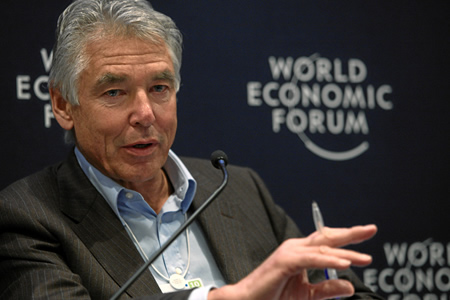
Photo: Peter Brabeck-Letmathe, Chairman of the Board, Nestle, Switzerland; Member of the Foundation Board of the World Economic Forum; Global Agenda Council on Water Security, speaks during the session 'Rebuilding Water Management' in the Congress Centre of the Annual Meeting 2010 of the World Economic Forum in Davos, Switzerland, January 30, 2010 (© World Economic Forum/Remy Steinegger.
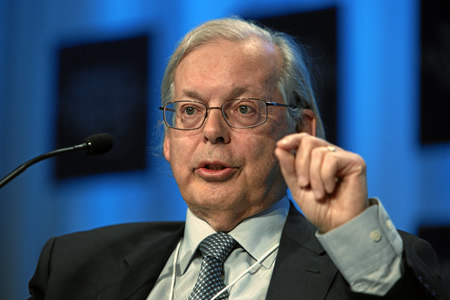
Photo: Yvan Allaire, Chair of the Board of Directors, Institute for Governance of Public and Private Organizations (IGOPP), Canada; Global Agenda Council on the Role of Business, speaks during the session 'Rethinking Values in the Post-Crisis World' at the Annual Meeting 2010 of the World Economic Forum in Davos, Switzerland, January 27, 2010 (© World Economic Forum/Remy Steinegger).
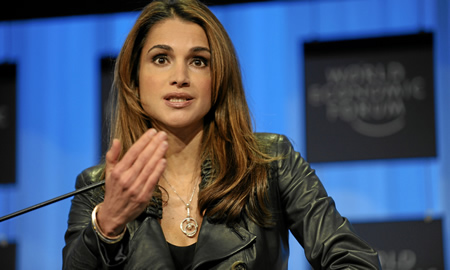
Photo: Queen Rania Al Abdullah, H.M. Queen Rania Al Abdullah of the Hashemite Kingdom of Jordan; Member of the Foundation Board of the World Economic Forum; Global Agenda Council on Education Systems captured during the session 'Rebuilding Education for the 21st Century' at the congress centre at the Annual Meeting 2010 of the World Economic Forum in Davos, Switzerland, January 30, 2010. (© World Economic Forum/ Michael Wuertenberg).
According to the WEF report, in addition to the macro-economic imbalances that have been building up over time, there has been a weakening of the United States' public and private institutions, as well as lingering concerns about the state of its financial markets. The Nordic countries continue to be well positioned in the ranking, with Sweden, Finland (7th) and Denmark (9th) among the top 10, and with Norway at 14th. Sweden overtakes the US and Singapore this year to be placed 2nd overall. The United Kingdom, after falling in the rankings over recent years, moves back up by one place to 12th position.
The People's Republic of China (27th) continues to lead the way among large developing economies, improving by two more places this year, and solidifying its place among the top 30. Among the three other BRIC economies, Brazil (58th), India (51st) and Russia (63rd) remain stable. Several Asian economies perform strongly, with Japan (6th) and Hong Kong SAR (11th) also in the top 20. In Latin America, Chile (30th) is the highest ranked country, followed by Panama (53rd) Costa Rica (56th) and Brazil.
Several countries from the Middle East and North Africa region occupy the upper half of the rankings, led by Qatar (17th), Saudi Arabia (21st), Israel (24th), United Arab Emirates (25th), Tunisia (32nd), Kuwait (35th) and Bahrain (37th), with most Gulf States continuing their upward trend of recent years. In sub-Saharan Africa, South Africa (54th) and Mauritius (55th) feature in the top half of the rankings, followed by second-tier best regional performers Namibia (74th), Botswana (76th) and Rwanda (80th).
• View All Countries Rankings in the Global Competitiveness Report 2010-2011
• The World Economic Forum, based in Geneva, Switzerland, is an independent international organization committed to improving the state of the world by engaging leaders in partnerships to shape global, regional and industry agendas.
• While the United Nations Conference on Trade and Development (UNCTAD) is a permanent intergovernmental body. It is the principal organ of the United Nations General Assembly dealing with trade, investment, and development issues. UNCTAD has 193 member States and is headquartered in Geneva, Switzerland.
|GlobalGiants.Com|
Edited & Posted by Editor | 1:01 PM | Link to this Post
September 3, 2010
World's First Educational Institution dedicated to Fighting Corruption: UN Secretary-General inaugurates International Anti-Corruption Academy in Vienna, Austria
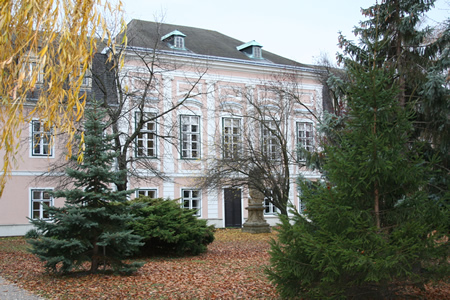
Photo: International Anti-Corruption Academy (IACA) Building, Vienna, Austria.
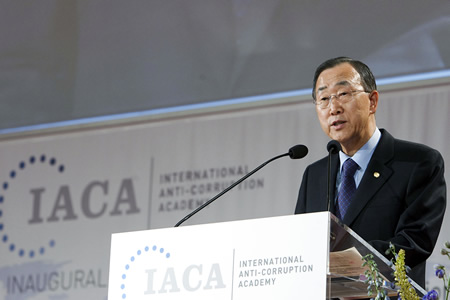
Photo: Secretary-General Ban Ki-moon addresses the inaugural conference of the International Anti-Corruption Academy, in Vienna. UN Photo/Mark Garten.
• UN Secretary-General Ban Ki-moon today inaugurated the International Anti-Corruption Academy (IACA) in Vienna, Austria.
Addressing the Inaugural Conference, the UN Secretary-General said: "The launch of the International Anti-Corruption Academy is a milestone in the efforts of the international community to fight corruption. It has great potential to advance the goals of the landmark United Nations Convention against Corruption."
Mr. Ban added that while too often in the past corruption was perceived as a fact of life, today attitudes are changing. "Across the world, intolerance of corruption is growing. The establishment of this Academy responds not only to this increasing sense of outrage and injustice, but also to an urgent need to train the experts we need to conquer this global menace."
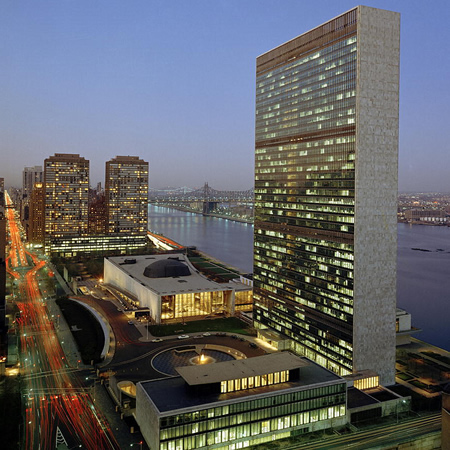
Photo: A view of the Headquarters of the United Nations in New York at sunset. UN Photo/Yutaka Nagata.
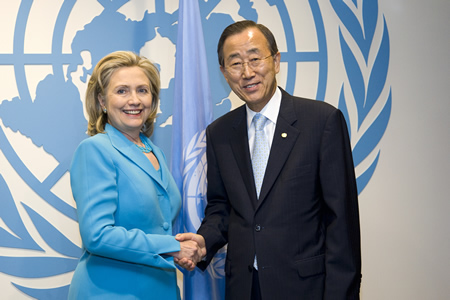
Photo: Secretary-General Ban Ki-moon meets with Hillary Rodham Clinton, Secretary of State of the United States of America. 19 August 2010. United Nations, New York. UN Photo/Mark Garten.
Noting that traditional methods are proving no match for new types of corruption, especially financial crimes, Mr. Ban said that the Academy will nurture a new generation of leaders in the public and private sectors - a global network of talented, like-minded professionals.
"The creation of a precise body of knowledge about a poorly researched and little-understood subject will shed more light on murky deals. If we can calculate inflation and GDP, it should not be beyond our abilities to develop an effective and scientific measure for corruption," he said.
After his address in Vienna's historic Hofburg Palace, which was attended by some 1,000 participants from 90 countries, Mr. Ban visited the campus where the first courses were already taking place.
IACA will offer tailor-made programs, including courses for practitioners from developing countries. Students will be able to pursue academic degrees while exchanging ideas and networking on campus. Finally, IACA will be a global think tank and a standard-setter for all matters related to corruption.
Internationally recognized scholars and experts will make up the teaching faculty. "Superior training coupled with advanced academic research will give those who need it a significant edge in their work," said Martin Kreutner, Head of the IACA Transition Team. "Their know-how will have a trickle-down effect in their countries and help create the conditions for change."
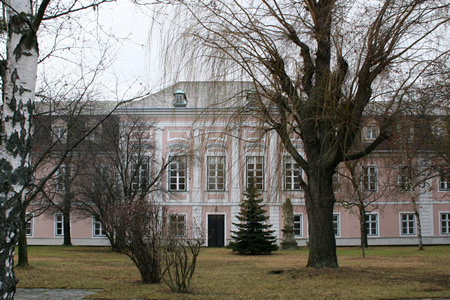
Photo: Back View of the International Anti-Corruption Academy (IACA) Building, Vienna, Austria.
IACA is pursuing partnerships with international organizations (such as the World Bank, the United Nations Development Program and the Organization for Economic Cooperation and Development), anti-corruption networks, international academic institutions and the private sector. Mr. Kreutner notes that "the increasing participation of private companies wishing to establish ethics compliance program is another exciting aspect of our work."
The Austrian Government is providing state-of-the-art premises in Laxenburg, near Vienna, to house the Academy, which will become an international organization in 2011.
• The International Anti-Corruption Academy (IACA) is the world's first educational institution dedicated to fighting corruption. Starting in September, it will train policy-makers in governments, the private sector and civil society, as well as professionals such as judges, investigators, prosecutors, police officers, regulators and academics from all over the world.
|GlobalGiants.Com|
Edited & Posted by Editor | 1:51 PM | Link to this Post