
















October 23, 2010
Overthrow Traditional Admissions Culture, says College Enrollment Expert
• New Book Offers Colleges a Way to Succeed in Today's Difficult Recruiting Environment.
• Higher education marketer Brian Niles has published a sobering look at the challenges faced by enrollment officers and a set of solutions rooted in the overthrow of traditional admissions culture.

Success in today's changing world of student admissions means thinking and acting differently than ever before. It means overthrowing the "dead culture" that persists in most admissions offices, says TargetX CEO Brian Niles.
Feeling strongly about the need for dramatic change, he has written a book that offers a roadmap for revolutionizing higher education recruiting and marketing.
In "Overthrowing Dead Culture: A Vision to Change the World of College Recruiting," the former admissions director tells the story of how combining business basics with innovation can lead to success -- and help the college admissions culture break from the past.
Brian Niles, a leading U.S. authority on interactive recruiting in higher education, decided it was time to write the book once he realized that schools were continuing to market themselves to students and families the same way they have for decades, despite the sea change that has taken place in college admissions communications.
A popular speaker in higher education, Niles was a college recruiter and marketer before starting his own company in 1998. "At TargetX, we have spent the last 12 years helping colleges think and act differently," he says, "and this book is the natural outgrowth of that effort."
The book includes a collection of practical exercises at the end of each chapter designed to help admissions offices think about who they are, what makes them distinctive and how they can use the latest tools and techniques to attract, admit and retain best-fit students.

According to the book, a NACAC (National Association for College Admissions Counseling) study demonstrates that recent demographic and economic trends have created a buyer's market for students in lieu of the seller's market that colleges have enjoyed for decades.
"But it's not just economics. In a major way, technology and communications have bypassed the way that colleges have reached out to potential students," explains the book. "In the days when glossy marketing packages arrived in their parents' mailboxes, it was colleges that called the shots; it was admissions offices that dictated how schools and students would communicate; and it was admissions offices that led students and families around by the nose, directing how applications would be handled, how finances would be covered, and how marketing campaigns would be delivered. But the Internet changed all that. As websites proliferated and technology went mobile in the form of cell phones and laptop computers with WiFi access, gradually it was the students who started setting the terms."
"Consider Digital Equipment Corp., the industry leader in mid-range computers in the early 1990s," the book points out. "The company isn't around today for one good reason--it didn't foresee the ascent of the personal computer. 'There is no reason anyone would want a computer in their home,' said Ken Olson, president, chairman, and founder of Digital in 1977."

• "There's a price to pay when you resist change," the book warns. "And it's a big one for college leaders who preside over archaic admissions cultures that don't connect with twenty-first century students and families." "Make no mistake, these are the lean times, not only for American families but for colleges and universities, too. Public universities have their own financial problems. The amount of public funding such schools receive from their respective states is in decline."
"Hundreds of universities across the U.S. have put building projects on hold, closed classes, fired staff, frozen salaries and scaled back benefits," the book quotes a source. "Harvard, for example, eliminated 275 jobs this year in addition to halting construction in Allston. Yale reduced staff salaries and other non-personnel costs by 12.5 percent and froze several hundred job vacancies. Princeton, which chose to skip a transfer of funds from its endowment to its operating budget last spring, convinced 145 staff members to take early retirement as part of a two-year, $170 million (13 percent) budget cut and is now facing further staff reductions. Stanford has laid off 412 staff members, and 60 more people will lose their jobs by the end of the year."
• The book informs that due to the huge endowment losses suffered by colleges and universities, and the subsequent decline in donations from alumni, who were also adversely impacted by the global recession, schools were forced to do the unthinkable -- issue bonds to raise much-needed cash.

"Harvard was first, floating $1.5 billion in taxable bonds last December, joined early this year by Princeton and Stanford, which each issued $1 billion in bonds," the book quotes 'Institutional Investor'. "By the time most students had gone home for summer break, Brown University, the University of Chicago, Cornell University, Duke University, Johns Hopkins University and Vanderbilt University had followed suit, issuing anywhere from $100 million to $500 million in bonds."

• According to the book, there is no doubt that colleges are caught between two eras. Behind them are decades of traditions and tenets that have historically served colleges well in their search for new students to share the unique experience that each campus offers. In front of them is the second decade of the twenty-first century, which poses challenges in the form of a troubled economy and new modes of communication that schools have failed -- or are at least reluctant -- to master.
• In conclusion, the book "Overthrowing Dead Culture" is relevant to colleges and universities facing a new age of admissions. It tells that institutions are using an outdated model that no longer works in recruiting today's prospective student and that the colleges must overthrow their own dead culture in order to thrive in a new economy and meet the needs of a new generation of students and parents.
|GlobalGiants.Com|


Edited & Posted by Editor | 4:53 AM | Link to this Post
October 11, 2010
McGraw-Hill's Custom Publishing Platform - Create
Platform enables professors to design custom classroom content from library of nearly 50,000 sources and receive e-books within hours.


• McGraw-Hill Education says it has brought custom publishing into the 21st century with McGraw-Hill Create, an innovative platform that gives instructors unprecedented control over the customization of higher education classroom content.
"Gone are the days when professors had no choice in how to assemble content for classroom instruction, or had to wait weeks to receive a customized text," explains McGraw-Hill. "With Create, instructors can produce their own e-books or printed texts by selecting content from a vast library of resources - and receive a digital proof in under an hour."
"McGraw-Hill's Create custom publishing tool gives me the power to provide only the content that is relevant to how I teach," said Cliff Thompson, director of Theatre at Freed-Hardeman University. "I can pick and choose what makes the most sense for me and my class, which allows me to be a more effective teacher and cost-conscious for my students."

Increasingly, instructors are demanding content solutions that are tailored to the way they teach. Custom publishing is one of the fastest growing areas in the higher education market, rising by 25 percent on a yearly basis. But not all custom content is created equal: results of a recent McGraw-Hill survey show that instructors are looking for low-cost solutions that offer the ability to integrate content from multiple disciplines, allow them to seamlessly incorporate their own material, contain enhanced search functions and promise faster delivery times. It is with these needs in mind that it developed Create, says McGraw-Hill.
"McGraw-Hill Education is committed to putting the control back in professors' hands when it comes to producing course content," said Ed Stanford, president, McGraw-Hill Higher Education. "Through Create, we are empowering professors to customize content with a great degree of specificity and flexibility based on their course and syllabus, enhancing students' learning experiences while lowering the burden of cost."

At Create's core is a Google-like search engine functionality that enables professors to immediately pull from a wide range of quality content, including 4,000 McGraw-Hill textbooks, 5,500 articles, 11,000 literature, philosophy and humanities readings, and 25,000 business case studies from prominent providers such as the Harvard Business School. This powerful search tool allows professors to view content across the library, or limit their search by category, such as discipline or copyright year. Professors can also easily upload and incorporate self-produced content into their Create project.
Once a Create text has been fully customized, the instructor receives a digital review copy in under an hour or a print review copy in three to five days. Once a professor finalizes the book in Create, he or she can make it available for student purchase. Students may purchase Create e-books through the McGraw-Hill ebookstore or purchase Create print books through their campus bookstore.

To simplify and streamline the custom publishing process, an index and table of contents is automatically generated for each Create project. Create allows professors to easily save and archive projects to work on at another time or edit for future semesters. Professors can customize the look and feel of their Create project by selecting a cover design and adding their name and course information. Additionally, instructors can share Create projects with colleagues for review, making content customization a collaborative experience.
According to McGraw-Hill, instructors from two-year, four-year and career colleges and universities in the USA have used Create to customize their educational content since its launch in April. Twenty-eight percent of the instructors who have used Create elected to receive their review copies as e-books.
• Create, which can be used by higher education institutions worldwide, is currently available across all 75 disciplines for which McGraw-Hill supplies content.
Founded in 1888, The McGraw-Hill Companies is a global information and education company providing knowledge, insights and analysis in the financial, education and business information sectors through leading brands including Standard & Poor's, McGraw-Hill Education, Platts, and J.D. Power and Associates. The Corporation has more than 280 offices in 40 countries.
|GlobalGiants.Com|
Edited & Posted by Editor | 2:00 AM | Link to this Post
October 8, 2010
Collective Intelligence of Groups Exceeds Cognitive Abilities of Individual Group Members: New Study by Carnegie Mellon, MIT and Union College
Groups demonstrate distinctive 'collective intelligence' when facing difficult tasks.


A new study co-authored by Carnegie Mellon University, MIT and Union College researchers documents the existence of collective intelligence among groups of people who cooperate well, showing that such intelligence extends beyond the cognitive abilities of the groups' individual members, and that the tendency to cooperate effectively is linked to the number of women in a group.
Many social scientists have long contended that the ability of individuals to fare well on diverse cognitive tasks demonstrates the existence of a measurable level of intelligence in each person. In a study to be published in an upcoming issue of the journal Science, the researchers applied a similar principle to small teams of people. They discovered that groups featuring the right kind of internal dynamics perform well on a wide range of assignments, a finding with potential applications for businesses and other organizations.
"We set out to test the hypothesis that groups, like individuals, have a consistent ability to perform across different kinds of tasks," says Anita Williams Woolley, the paper's lead author and an assistant professor at Carnegie Mellon's Tepper School of Business.
"Our hypothesis was confirmed," continues Thomas W. Malone, a co-author and Patrick J. McGovern Professor of Management at the MIT Sloan School of Management. "We found that there is a general effectiveness, a group collective intelligence, which predicts a group's performance in many situations."

That collective intelligence, the researchers believe, stems from how well the group works together. For instance, groups whose members had higher levels of "social sensitivity" were more collectively intelligent. "Social sensitivity has to do with how well group members perceive each other's emotions," says Christopher Chabris, a co-author and assistant professor of psychology at Union College in New York.
"Also, in groups where one person dominated, the group was less collectively intelligent than in groups where the conversational turns were more evenly distributed," adds Woolley. And teams containing more women demonstrated greater social sensitivity and in turn greater collective intelligence compared to teams containing fewer women.
To arrive at their conclusions, the researchers conducted studies at MIT's Center for Collective Intelligence and Carnegie Mellon, in which 699 people were placed in groups of two to five. The groups worked together on tasks that ranged from visual puzzles to negotiations, brainstorming, games and complex rule-based design assignments. The researchers concluded that a group's collective intelligence accounted for about 40 percent of the variation in performance on this wide range of tasks.
Moreover, the researchers found that the performance of groups was not primarily due to the individual abilities of the group's members. For instance, the average and maximum intelligence of individual group members did not significantly predict the performance of their groups overall.
Only when analyzing the data did the co-authors suspect that the number of women in a group had significant predictive power. "We didn't design this study to focus on the gender effect," Malone says. "That was a surprise to us." However, further analysis revealed that the effect seemed to be explained by the higher social sensitivity exhibited by females, on average. "So having group members with higher social sensitivity is better regardless of whether they are male or female," Woolley explains.

Malone believes the study applies to many kinds of organizations. "Imagine if you could give a one-hour test to a top management team or a product development team that would allow you to predict how flexibly that group of people would respond to a wide range of problems that might arise," he says. "That would be a pretty interesting application. We also think it's possible to improve the intelligence of a group by changing the members of a group, teaching them better ways of interacting or giving them better electronic collaboration tools."
• Woolley and Malone say they and their co-authors "definitely intend to continue research on this topic," including studies on the ways groups interact online, and they are "considering further studies on the gender question."
Still, they believe their research has already identified a general principle indicating how the whole adds up to something more than the sum of its parts. As Woolley explains, "It really calls into question our whole notion of what intelligence is. What individuals can do all by themselves is becoming less important; what matters more is what they can do with others and by using technology."
"Having a bunch of smart people in a group doesn't necessarily make the group smart," concludes Malone.
In addition to Woolley, Malone and Chabris, the other co-authors were Alexander Pentland, the Toshiba Professor of Media Arts & Science at the MIT Media Lab; and Nada Hashmi, a doctoral candidate at MIT Sloan.
|GlobalGiants.Com|
"I used to say of Napoleon that his presence on the field made the difference of forty thousand men."
-- Duke of Wellington.

"There be four things which are little upon the earth, but they are exceeding wise:
The ants are a people not strong, yet they prepare their meat in the summer;
The conies are but a feeble folk, yet make they their houses in the rocks;
The locusts have no king, yet go they forth all of them by bands;
The spider taketh hold with her hands, and is in kings' palaces."
-- Proverbs of Solomon 30:24-28.
Edited & Posted by Editor | 2:44 AM | Link to this Post
September 27, 2010
World's Best Universities: U.S. News Media Group Releases 2010 Rankings
3rd annual edition includes 400 institutions worldwide.



Photo: Rotunda of the University of Virginia, Charlottesville, VA, USA (April 1943). Photographer: John Collier. Repository: Library of Congress Prints and Photographs Division Washington, D.C. 20540 USA.
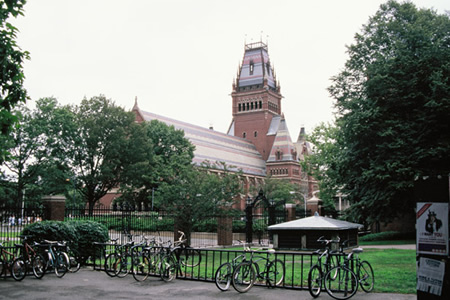
Photo: Harvard University. Bicycles outside the campus entrance. © UNESCO/Ariane Bailey.
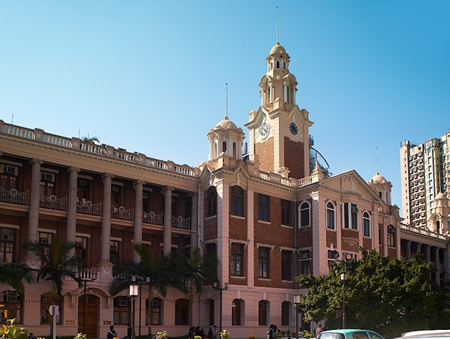
Photo: The University of Hong Kong, Main Campus.
• U.S. News Media Group today released the third annual edition of the World's Best Universities Rankings.
World's Best Universities rankings, updated annually by U.S. News, are based on the 2010 QS World University Rankings, developed by QS Quacquarelli Symonds, one of the world's leading resources for careers and education.
Following a different methodology and ranking data than the well-known U.S. News Best Colleges rankings, the World's Best Universities rates universities on factors such as the proportion of international faculty and the proportion of international students.
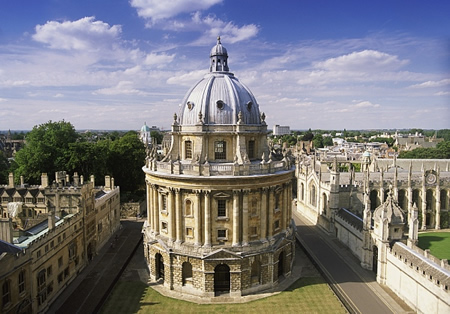
Photo: Radcliffe Camera, Oxford University, Oxford, England.
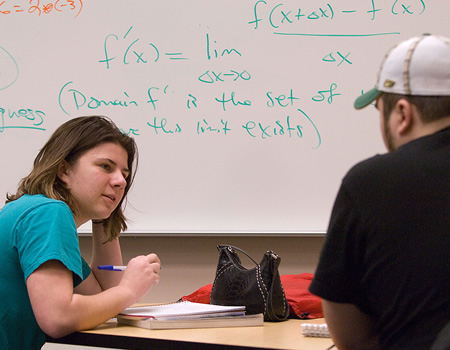
Photo: Buffalo State College is offering New York State's first and so far only professional science master's (P.S.M.) degree program in applied mathematics and computation. (Buffalo State College/Bruce A. Fox)
"There's a growing interest among prospective students to attend institutions abroad," said U.S. News Media Group Editor Brian Kelly. "The World's Best Universities rankings help students compare and select the best schools worldwide. In addition, the rankings enable our readers to understand more fully how well American institutions perform when compared with other institutions of higher learning around the world."
"The world is rapidly changing," said Director of Data Research Bob Morse. "More students and faculty are eager to explore the higher education options that exist outside their countries. Universities worldwide are competing for the best and brightest students, the most highly recognized research faculty, and coveted research dollars. And more universities are seeking world-class status to become players on the global academic stage."
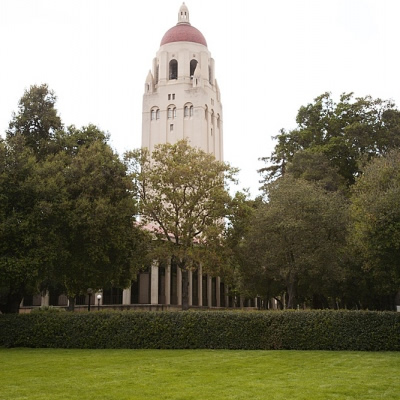
Photo: Stanford University Campus.
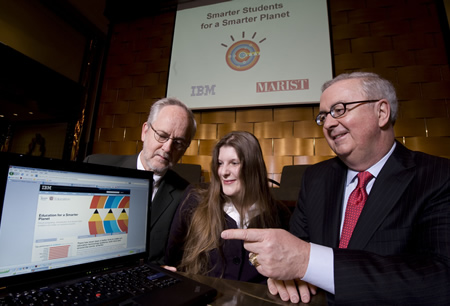
Photo: (l. to r.) Dean Roger Norton, Marist College, with student Carol Hagedorn, and Jim Corgel, general manager of IBM's academic initiative. IBM has announced an academic cloud that will help colleges integrate technology into their curricula.
Using an in-depth methodology, the World's Best Universities rankings is one of the most comprehensive of its kind, and includes the following rankings: Top 400 Universities Worldwide, Top 50 Asian Universities, Top 50 British and European Universities, Top 20 Canadian Universities, Top 20 Australian and New Zealand Universities and Top 10 Latin American Universities. The listing also includes the Top 100 global rankings in the fields of arts and humanities; engineering and IT; life sciences and biomedicine; natural and physical sciences; and social sciences.

To determine the 2010 rankings, six distinct indicators of excellence were evaluated, including: Academic Peer Review, Employer Review, Student-to-Faculty Ratio, Proportion of International Faculty, Proportion of International Students, and Citations per Faculty Member.
• Download the 2010 World University Rankings
|GlobalGiants.Com|
Edited & Posted by Editor | 12:18 AM | Link to this Post
September 5, 2010
UNESCO launching Knowledge and Innovations Network for Literacy (KINL) on International Literacy Day - September 8


• The highlight of the International Literacy Day celebrations on September 8 at UNESCO Headquarters in Paris would be the launch of a new Knowledge and Innovations Network for Literacy (KINL) that will enable researchers and practitioners all over the world to link up and share information and best practices.
• The Knowledge and Innovations Network for Literacy (KINL) has been created with support from Verizon Foundation and Microsoft.
The Network is a virtual workplace where literacy researchers and practitioners can link up, share knowledge and debate literacy topics on line. The network will generate knowledge and innovation in support of the acquisition and use of literacy, and promote advocacy, policy formulation and program delivery, as well as cooperation and partnerships.

Photo: Early Childhood Care and Education. Dublin Community Program. A young girl chats with her Dad during the associated parent and toddler group meeting. Dublin, Ireland. (© UNESCO/Niamh Burke).

Photo: Early Childhood Care and Education. The Dublin Community Mothers' Program operates through experienced local mothers who give guidance to first-time mothers in certain communities. In this image, a young boy learns to read with one of the Programs' community mothers. Dublin, Ireland. (© UNESCO/Niamh Burke).
Participating in the KINL launch will be UNESCO Goodwill Ambassador Cheick Modibo Diarra, who is Microsoft Corporation's Chairman for Africa and Literacy Champion; and Marc Gosselin, representative of Verizon Foundation.
"Promoting literacy requires action from both the public and private sectors; we are all stakeholders in the fight to eradicate illiteracy," said Dr. Diarra about KINL. "Microsoft shares UNESCO's belief that technology can play an important role in doing so by providing access to education solutions and curriculum for both basic and digital literacy and helping more people participate in the global information society."
Verizon Foundation President Patrick Gaston said, "If we are to create a seismic shift in the literacy landscape, education and literacy leaders from around the world must be able to communicate with one another and collaborate. The Knowledge and Innovations Network for Literacy will provide literacy leaders from every nation with easy access to the resources needed to ensure that every child is literate. The Verizon Foundation is proud to partner with UNESCO on this transformational project."
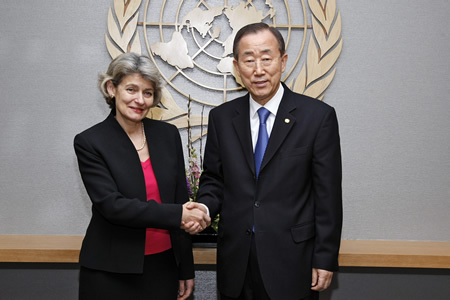

Photo: Secretary-General Ban Ki-moon meets with Irina Bokova, newly-elected Director General of the United Nations Educational, Scientific and Cultural Organization (UNESCO). 19 January 2010. United Nations, New York. UN Photo/Paulo Filgueiras.
Following are the two other main events that will take place at UNESCO Headquarters in Paris on the International Literacy Day:
1. Annual 2010 International Literacy Prize Awards Ceremony.
2. Round Table on "Literacy and Women's Empowerment".
UNESCO's Director-General Irina Bokova is, however, flying to New York to give a keynote address at the United Nations international conference "Literacy: an essential foundation for development".
There, the former First Lady of the United States, Laura Bush, who is Honorary Ambassador for the UN Literacy Decade (UNLD), will give the opening address.
|GlobalGiants.Com|
Edited & Posted by Editor | 12:41 PM | Link to this Post
August 19, 2010
Best Colleges in the USA: U.S. News Media Group Announces the 2011 Edition of its Rankings


Photo: A Building at the Harvard University Campus.
• U.S. News Media Group has released the 2011 edition of Best Colleges, which includes rankings of more than 1,400 schools in the USA.
Harvard University is ranked No. 1 among Best National Universities, while Williams College tops the list of Best National Liberal Arts Colleges. The exclusive rankings, available online today at USNews.com, will also be published in the September issue of U.S. News & World Report, on newsstands starting August 31.
Over the past two decades, the U.S. News college rankings, which group schools based on categories created by the Carnegie Foundation for the Advancement of Teaching, has grown to be a comprehensive research tool for students and parents considering higher education opportunities.
"As soaring college costs make the decision more complicated than ever, U.S. News strives to provide students and families with the best information to help guide them through this process," said U.S. News & World Report Editor Brian Kelly. "This year the challenge comes down to finding the right college--at a cost you can afford. The 2011 edition includes specialty rankings, online guides for admission and paying for college advice to help navigate your search."
• Top 5 U.S. National Universities
1. Harvard University (MA)
2. Princeton University (NJ)
3. Yale University (CT)
4. Columbia University (NY)
5. Stanford University (CA)
• Top 5 U.S. National Liberal Arts Colleges
1. Williams College (MA)
2. Amherst College (MA)
3. Swarthmore College (PA)
4. Middlebury College (VT)
4. Wellesley College (MA)
The 2011 Best Colleges feature the established rankings of the Best National Universities and Best National Liberal Arts Colleges, while also including rankings of A+ Schools for B Students, Great Schools at Great Prices, and Up-and-Coming Schools, among others.
• The 2011 Best Colleges package provides an examination of how more than 1,400 accredited four-year schools compare on a set of up to 16 widely accepted indicators of excellence.
Among the many factors weighed in determining the rankings, the key measures of quality are: peer assessment, graduation and retention rates, faculty resources, student selectivity, financial resources, alumni giving, and for National Universities and National Liberal Art Colleges "graduation rate performance" and high school counselor ratings of colleges.
According to U.S. News, it has made some significant changes to the 2011 Best Colleges' ranking methodology and presentation.
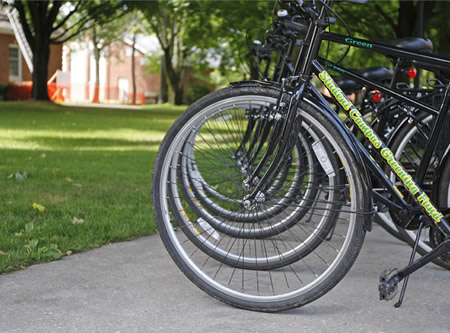
Photo: Free "green bikes" parked at Green Mountain College in Poultney, Vermont.
• Meanwhile, responding to some dissatisfaction with traditional college rankings and the growing demand for universities to refocus on undergraduate education and value, the American Council of Trustees and Alumni (ACTA) unveiled today its 2011 college evaluations on WhatWillTheyLearn.com.
According to ACTA, its rankings grade more than 700 universities on education -- not reputation.
The free website evaluates more than 700 colleges and universities based on their general education curricula: the core courses aimed at providing a strong foundation of knowledge.
The website assigns each institution a grade from "A" to "F" based on how many of the following seven core subjects it requires: Composition, Mathematics, Science, Economics, Foreign Language, Literature, and American Government or History.
"The crisis in higher education is about more than money - it's about what we are paying for. And when it comes to ensuring graduates possess the basic skills and knowledge they need to succeed, universities are shortchanging students," said ACTA president Anne D. Neal, speaking at the National Press Club.
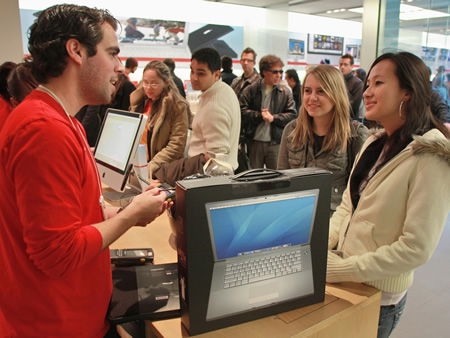
Photo: College student Stephanie Sequeira, right, buys herself a MacBook Pro while holiday shopping with her friend, Gillian Walsworth, center, at the Apple Store San Francisco. (Foto © Apple)
Key ACTA Findings:
• Colleges and universities have by and large abandoned a coherent content-rich general education curriculum, thereby allowing students to graduate with important gaps in their knowledge:
• More than 60% of all institutions receive a "C" or worse for requiring 3 or fewer subjects.
• Nearly 40% don't require college-level mathematics.
• Less than 5% of colleges and universities require economics.
• Less than a third require intermediate-level foreign language, a broad survey class in American government or history, or literature.

• ACTA concludes that universities have on the whole abdicated their responsibility to direct students to the most important subjects they will need for success after graduation, while continuing to charge a premium. A published report aggregating the data for the more than 700 schools will be sent to trustees of the institutions covered, as well as to the Governors and educational policymakers in the states.
• The American Council of Trustees and Alumni (ACTA) is an independent non-profit dedicated to academic freedom, academic quality, and accountability, while the U.S. News Media Group is a multi-platform publisher of news analysis, research and rankings which includes the monthly U.S. News & World Report magazine.
|GlobalGiants.Com|
Edited & Posted by Editor | 6:53 AM | Link to this Post
August 1, 2010
UN Academic Forum calls on Businesses to Balance Social and Economic Objectives
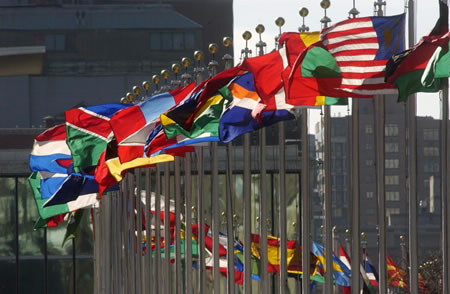
Photo: Outside the United Nations Headquarters, flags fly in the north end of the building, on a sunny fall day. UN Photo/Mark Garten.
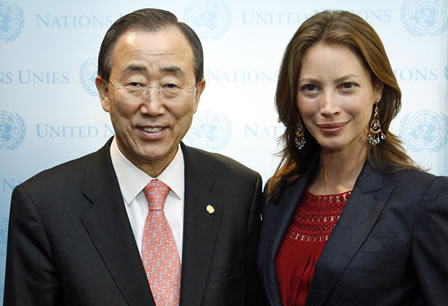
Photo: Secretary-General Ban Ki-moon (left) meets with Christy Turlington, model and maternal health advocate, at a documentary film forum entitled "Envision: Addressing Global Issues through Documentaries". This Millennium Development Goals-focused forum is the result of collaboration between the non-profit Independent Filmmaker Project (IFP) and the Department of Public Information. New York, United States. UN Photo/Mark Garten.
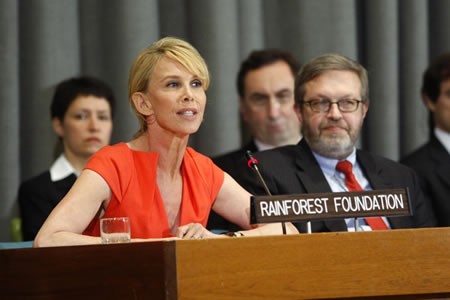
Photo: Trudie Styler, Co-founder of the Rainforest Foundation, addresses the General Assembly's informal meeting on climate change and the status of intergovernmental negotiations. Ms. Styler discussed the work of her foundation in protecting tropical rainforests and their indigenous populations. United Nations, New York. UN Photo/Evan Schneider.

Educators and administrators from 37 countries, meeting at the second UN Global Forum on Responsible Management Education, recently held in New York, called on business leaders to better balance social and economic objectives and encouraged management education to prepare future leaders for this challenge.
• At the end of the conference, participants representing business schools and other academic institutions exhorted business to emphasize societal value just as much as its commitment to shareholder return.
Assuring their support for researchers, task forces and associations dedicated to the globalization of business education and development of effective leaders, academic leaders participating in the forum reaffirmed their commitment to the Principles for Responsible Management Education (PRME). The UN-backed initiative was launched in 2007 to better prepare current and future organizational leaders for their dual roles as economic developer and societal servant.
The Global Forum for Responsible Management Education, was organized by the PRME Secretariat and hosted by Fordham University Schools of Business.
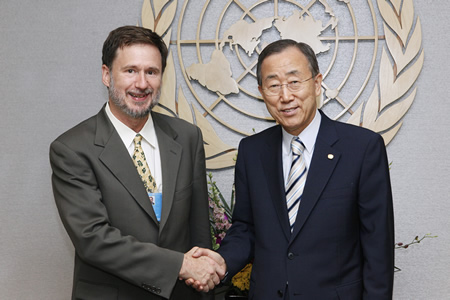
Photo: Secretary-General Ban Ki-moon (right) meets with Michael Doyle, Harold Brown Professor of U.S. Foreign and Security Policy at Columbia University. 28 July 2010. United Nations, New York . UN Photo/John McIlwaine.

Photo: Actress and fashion model Patricia Velasquez addresses a press conference on the "Fashion for Development" project in Colombia and its implementation in the context of achieving the Millennium Development Goals. The project aims at applying traditional techniques in manufacturing goods for the fashion industry. United Nations, New York. UN Photo/Mark Garten.
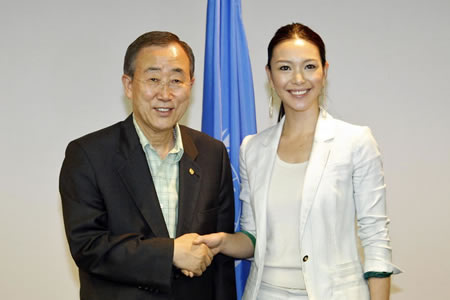
Photo: Secretary-General Ban Ki-moon meets with Kurara Chibana, United Nations World Food Programme Celebrity Partner and 2006 Miss Universe from Japan. Tokyo, Japan. UN Photo/Mark Garten.
• Following is the Declaration of the 2nd Global Forum for Responsible Management Education, New York, NY.
"For more than 100 years, management education has sought to provide business leaders with the tools to invigorate economic growth. Yet economic gain is no longer a solitary end in the hearts and minds of the globe's six billion people. Business must emphasize societal and environmental value just as much as its commitment to shareholder return. Management education must also enhance its curricula, pedagogy, research and incentives, as well as lead by example, to prepare organizational leaders who will balance economic and social development.
We support the numerous business schools and universities, companies, governments, civil society groups and associations dedicated to the globalization of business education and development of effective leaders. These initiatives inspire us to make management education the hallmark for responsible leadership.
The Principles for Responsible Management Education (PRME), written in 2007 and now endorsed by over 300 business schools from 62 countries, serve as guidelines for management education providers to better prepare current and future organizational leaders for their dual roles as economic developer and societal steward. Yet with more than 12,000 business degree granting institutions worldwide, our job has just begun. We aspire to the goal of 1,000 PRME schools by 2015. We urge business schools to adopt the Principles and organizations to balance their economic and social objectives.
-- Endorsed by the participants of the 2nd Global Forum for Responsible Management Education."
• Launched in 2007, the Principles for Responsible Management Education (PRME) provide framework for academic institutions to advance corporate social responsibility through the incorporation of universal values into curricula and research. The PRME is coordinated by a Steering Committee constituted of the Association to Advance Collegiate Schools of Business (AACSB International), the European Foundation for Management Development (EFMD), the Aspen Institute's Business and Society Program, the European Academy for Business in Society (EABIS), the Graduate Management Admission Council (GMAC), the Globally Responsible Leadership Initiative (GRLI), Net Impact, and the United Nations Global Compact.
|GlobalGiants.Com|
"You are not here merely to make a living. You are here in order to enable the world to live more amply, with greater vision, with a finer spirit of hope and achievement. You are here to enrich the world, and you impoverish yourself if you forget the errand."
-- Woodrow Wilson (28th President of the United States. President of Princeton University from 1902 to 1910).
"Riches do not consist in the possession of treasures, but in the use made of them."
-- Napoleon Bonaparte.
"There must be, not a balance of power, but a community of power; not organized rivalries, but an organized peace."
-- Woodrow Wilson (28th President of the United States. President of Princeton University from 1902 to 1910).
Edited & Posted by Editor | 7:28 AM | Link to this Post
July 18, 2010
Giffoni International Film Festival, Italy

GIFFONI EXPERIENCE
40TH ANNUAL INTERNATIONAL FILM FESTIVAL: JULY 18 - 31, 2010


Photo: Giffoni Experience 2010: 40th Edition - Day 2. Actress Sofia Bruscoli attends the Giffoni Experience 2010 on July 19, 2010 in Giffoni Valle Piana, Italy. (Foto: Vittorio Zunino Celotto).

Photo: Actress Claudia Pandolfi and the children of the jury attend a photocall during Giffoni Experience 2010 on July 18, 2010 in Giffoni Valle Piana, Italy.
• The most important film festival for children.
• LOCATION: Giffoni Valle Piana, Italy.
• THE SELECTION:
162 films scheduled: 63 feature films and 99 short films.
• THE THEME: LOVE
LOVE will be the thin white line and theme of the Festival this year. In all its various facets, this feeling will be the focus around which all discussion, meetings, and screenings will revolve.
• THE JURY:
3000 children and youth from 43 Countries and 150 Italian cities. The films, as every year, will be judged by the juries made up of 3000 kids and youth from 43 Countries. The jurors come from all the 5 continents, including countries like Israel, Palestine, Jordan, India, Nigeria, South Africa, and Lithuania.
• THE FILMS
The fourteen days of the festival will be divided into two parts: the first week (18 to 23 July) for children aged 3 to 12 years, and a second (23 to 31 July) for youth aged 13 to 23. Children and youth will see and judge the 162 films including feature films and short films.
Here are a few shots (fotos © Giffoni) from the films being screened:








"A miracle once more," says Claudio Gubitosi, director and creator of the festival. "The driving force of Giffoni, the energy it produces, the desire of a smile, love, discovery, participation and the desire of being protagonists are all clear elements of the 40th Giffoni Film Festival."
|GlobalGiants.Com|
Edited & Posted by Editor | 8:13 AM | Link to this Post
July 5, 2010
Science Serving Society: Nobel Laureates Gather in Lindau, Germany
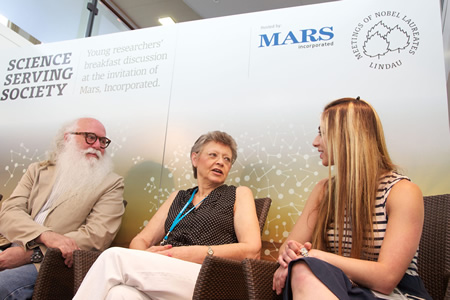
Photo: Howard Shapiro, Global Staff Officer of Plant Science and External Research, Mars, Incorporated and Françoise Barré-Sinoussi, Physiology or Medicine Nobel Laureate, discuss the impact science can have on society with Tanya Petrossian, a selected young researcher from UCLA (University of California, Los Angeles) during Scientific Panel Discussion at one of the Largest Ever Gatherings of Nobel Laureates in Lindau, Germany. Adam Smith, Editor in Chief, Nobelprize.org, moderated the panel and chaired an in-depth Q&A session with the diverse student audience.
The Lindau Nobel Laureate Meetings are a globally-recognized forum which has been bringing Nobel prizewinners and the world's most promising young scientists together since 1951. The week-long, annual event takes place in Lindau, set on the banks of Lake Constance between Germany, Austria and Switzerland. The meetings consist of panel discussions, lectures, seminars and social events.
This year's meeting was an interdisciplinary event bringing together young researchers from all continents and 61 Nobel Laureates in physiology, medicine, physics and chemistry. Following more than 30,000 applications, 650 young researchers were selected to participate in the meetings that took place from 27th June - 2nd July 2010.
|GlobalGiants.Com|
Edited & Posted by Editor | 9:11 AM | Link to this Post
June 7, 2010
Academic Reputation Survey
• Thomson Reuters Academic Reputation Survey Shows High Level of Engagement From Global Scholarly Community.
• Nearly one third of responses came from Asia.

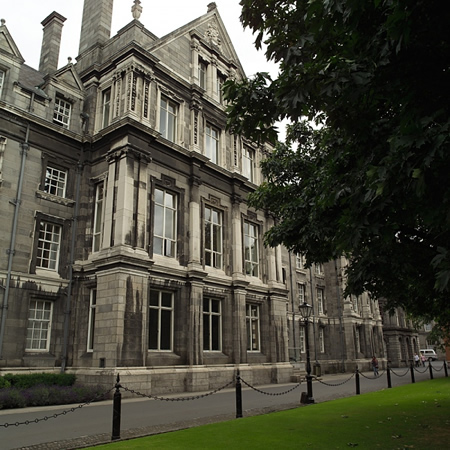
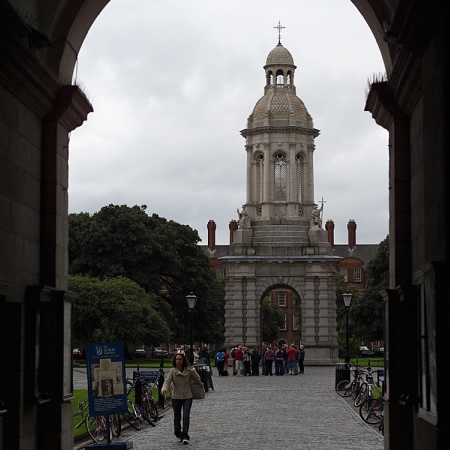
Photos: Trinity College (Dublin, Ireland).
Thomson Reuters has announced preliminary results of its Academic Reputation Survey. The survey received responses from professional scholars from every corner of the world.
Thousands of responses were received in six subject areas: engineering and technology; physical sciences; life sciences; clinical, preclinical and health; social sciences; and arts and humanities. Nearly one third of these responses came from Asia, including a strong representation from China and Japan.
"We're particularly pleased with the number of responses from the Asia Pacific region," said Jonathan Adams, director of research evaluation at Thomson Reuters. "As other surveys have been criticized for over-representing North America and Europe, we took particular care to better balance regional representation."

To help control for language and translation bias the Academic Reputation Survey was offered in eight languages: Japanese, Simplified Chinese, Spanish, French, German, Brazilian Portuguese, European Portuguese and English.
"Interestingly, country affiliation did not always predict language usage," Adams added. "For example, many United States-based participants took the survey in Chinese -- illustrating a highly mobile global academic community."

The Academic Reputation Survey is part of the Thomson Reuters Global Institutional Profiles Project. The initiative will create data-driven profiles of globally significant research institutions/universities -- combining reputation feedback, scholarly outputs, citation patterns, funding levels, and faculty characteristics across disciplines in one comprehensive database. The data can be packaged and analyzed to different specifications, giving organizations custom information for evaluating and benchmarking their performance and supporting efforts to secure research funding.
• The data gathered for the Global Institutional Profiles Project will also help inform the Times Higher Education's influential World University Rankings.
• Thomson Reuters is analyzing the Academic Reputation Survey and would soon release the detailed results.
|GlobalGiants.Com|
Edited & Posted by Editor | 6:46 AM | Link to this Post
June 4, 2010
Widely-Used World University Ranking now on iPhone
• QS World University Rankings now an iPhone App.
• Top 500 Universities in the World can be contacted at the Touch of a Button.
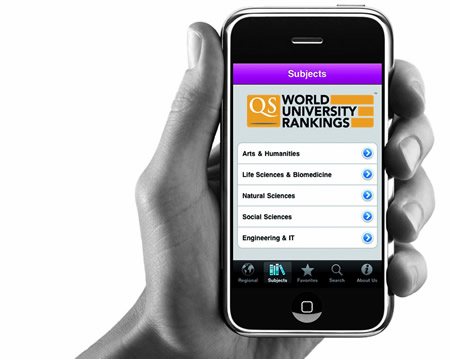
The world's most popular university ranking is now accessible to its diverse users via an innovative new iPhone Application. The QS World University Rankings Application designed for students, parents and ranking fanatics, allows users to conduct their own study destination research by providing global, regional and subject-based rankings as well as profiles and contact details of 500 of the world's top universities.

QS World University Rankings can be viewed and interpreted in three different ways - globally, regionally and by subject area. Users who have reviewed the App said it is, "Very thorough and organized", and also "Great to be able to see info about the universities I'm interested in all in one place".
The iPhone App is the first of a series of initiatives to be launched by QS in the lead up to the release of the 2010 QS World University Rankings; it is free to download on iTunes.
|GlobalGiants.Com|
Edited & Posted by Editor | 1:59 AM | Link to this Post
May 22, 2010
SOS LINK Signs Blackboard Content Network Agreement and Launches CAMPUS SOS LINK
• Delivering Automated Enhanced Physical Security Alerts, From Students to Their Helpers or Security Personnel.


SOS LINK(TM) announces it has signed on with Blackboard Inc. as a Content Network Provider. For this agreement, Campus SOS LINK(TM) has been custom designed and launches today adding to the physical safety and security needs of millions of students within global Blackboard communities.

Photo: New "City of Learning" Campus. Print Courtesy of American University in Cairo.
Campus is a software application that runs on selected smartphones. It is now available for download on Apple iTunes for iPhone and Blackberry App World for selected models. Campus retails for $14.99/year per person for a one year membership. The agreement between SOS LINK and Blackboard further results in students being able to access Campus from their Tools menu after they sign in to their Blackboard operated educational facility website.

Using SOS LINK's patented process, students can quickly and automatically issue alerts to their chosen friends, family members or security personnel, who may receive them in as little as 15 seconds.
These alerts include: numerous emailed photos of what the student sees, along with their GPS location, as well as a follow up phone call and text message that is sent to up to four chosen helpers. End-to-end encryption enhances the potential of using these photos as legal evidence, resulting in a new deterrent for perpetrators.
"There is published government research and many news stories documenting the tens of thousands of reported threats, stalking, assaults and other crimes on campus facilities annually," said Chris Rush, Vice President of SOS LINK. "Smartphones are in widespread use and are usually readily at hand. They are a natural device to use for issuing an alert, notifying those that care about you, and capturing valuable evidence. We believe Campus will contribute significantly to crime prevention. After all, no one wants to get caught in the act."

Campus SOS LINK runs on many smartphones and provides an added layer of security to students when they are commuting, walking between classes, exercising, or traveling - wherever wireless coverage is in place.
SOS LINK provides personal portable security and develops innovative patent-based software solutions for smartphones and other smart-wireless devices that take advantage of their portability and increasing global use.
Source: SOS LINK
|GlobalGiants.Com|
Edited & Posted by Editor | 4:13 AM | Link to this Post
May 14, 2010
2010 QS Asian University Rankings Reveal Top-Class Institutions Throughout Region
University of Hong Kong Tops Table Ahead of Hong Kong University of Science and Technology and National University of Singapore.


• QS Quacquarelli Symonds, the research and information specialists behind the QS World University Rankings™, have launched the new research round for the 2010 rankings, in association with partners including US News & World Report and Scopus, the Elsevier database that supplies bibliometric data.
Meanwhile, the excellence of Asia's universities is showcased in the 2010 QS Asian University Rankings, published today. With 11 countries represented in the top 200, highlights of the research include the continued dominance of Japan's universities and the success of Hong Kong's increasingly internationalized institutions, which take three out of the top four places.


Japanese universities occupy five of the top ten places in this year's table. Government-led investment, most recently through the 'Global 30' program, has helped drive up standards by attracting high-quality international students and staff.
Despite scoring highly in the academic and employer surveys, China's top universities, led by The University of Peking (12) and Tsinghua University (16), are again out-performed by their Hong Kong counterparts. Hong Kong's more international university culture is reflected in the international student and faculty measures, for which four of them achieve the maximum score.

Photo: University of Mumbai Clock Tower, Mumbai, India. The University of Mumbai (earlier known as University of Bombay) was established in 1857.
Strength in academic peer recognition helped 15 South Korean universities and seven Indian Institutes of Technology appear in the Asian top 100.
QS Managing Director, Nunzio Quacquarelli says, "The delivery of high-quality research, excellent employer networks and world-class facilities mean many of these top 200 Asian universities are playing an increasingly important role within the global knowledge economy."
Source: QS Quacquarelli Symonds Ltd.
|GlobalGiants.Com|
Edited & Posted by Editor | 3:53 AM | Link to this Post
May 7, 2010
Daiichi Sankyo and Students 2 Science Help Students Learn Through Hands-On Experience
Innovative Program Encourages Local Students to Excel in Science.

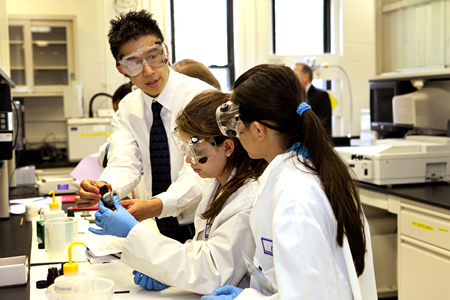
Photo: Newark Science Park High School students work in a lab alongside a science mentor, Matt Wong, to conduct a series of scientific experiments. Thirty students participated in a day of hands-on learning during Students 2 Science "Supercharged Science" program, sponsored by the Pharmaceutical Company Daiichi Sankyo.
Students 2 Science, Inc. (S2S) hosted students from Newark Science Park High School for a day of hands-on science as part of its year-long "Supercharged Science" program. During the 'day of science,' students worked in a lab alongside mentor volunteers to conduct a series of scientific experiments, including:
• "Copper Electroplating," where students plated an iron nail with copper using electrolysis and compared results against theory;
• "Name that Salt," where students identified six different types of salt using visible spectroscopic flame test;
• "Sulfur identification," where students identified sulfur using an igniter; and a titration in the presence of a color indicator;
• "Molecular Structure identification," where students identified various sweeteners using infrared spectroscopy.
According to S2S, these experiments and curriculum taught students the fundamental principles of chemistry and also tapped into problem solving skills.
The "Supercharged Science" program is one of many integrated full-year science education programs offered by S2S that provides students the opportunity to work side-by-side with professional scientists to perform hands-on experiments using sophisticated laboratory instrumentation.
"At a time when our school systems are facing significant resource challenges, we are excited that socially responsible companies such as Daiichi Sankyo are focusing philanthropic initiatives around science education," said Paul A. Winslow, Ph.D., President and Co-Founder of Students 2 Science. "Their commitment underscores the importance of fostering science education among middle and high school students. When students are intrigued by a new idea, they are compelled to discover more. We believe this is an essential component that leads to creativity and a heightened state of exploration and excitement."
• Students 2 Science, Inc. is a New Jersey, USA, non-profit corporation inspiring, motivating, and educating students to pursue careers in Science, Technology, Engineering, and Math (STEM). While Daiichi Sankyo, Inc. is the U.S. subsidiary of global pharmaceutical innovator Daiichi Sankyo Co., Ltd., Tokyo, Japan.
• Daiichi Sankyo Company, Ltd., Japan, has subsidiaries in the USA, England, Germany, France, Austria, Belgium, Switzerland, Spain, Italy, The Netherlands, Portugal, Turkey, Ireland, China, Korea, Thailand, Taiwan, Brazil, and Venezuela. Recently, Ranbaxy Laboratories, India's largest pharmaceutical company, became a subsidiary of Daiichi Sankyo.
Source: Daiichi Sankyo
|GlobalGiants.Com|
Edited & Posted by Editor | 1:43 PM | Link to this Post
April 26, 2010
World Premiere Of Disneynature's OCEANS
Disneynature's OCEANS opened on Earth Day, April 22, 2010.

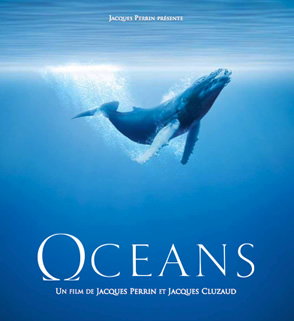
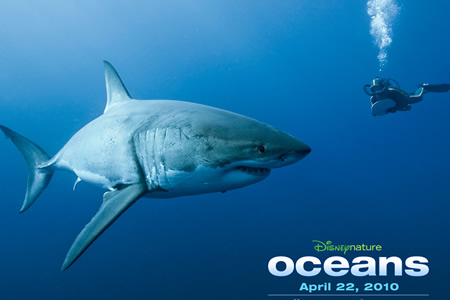

Disneynature, the studio that presented the record-breaking film "Earth," brought OCEANS to the big screen on Earth Day, 2010.
Nearly three-quarters of the Earth's surface is covered by water and OCEANS boldly chronicles the mysteries that lie beneath. Directors Jacques Perrin and Jacques Cluzaud dive deep into the very waters that sustain all of mankind -- exploring the harsh reality and the amazing creatures that live within. Narrated by Pierce Brosnan and featuring spectacular never-before-seen imagery captured by the latest underwater technologies, OCEANS offers an unprecedented look beneath the sea in a powerful motion picture.
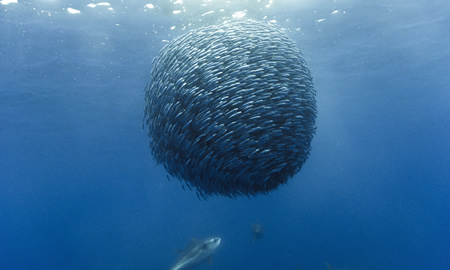
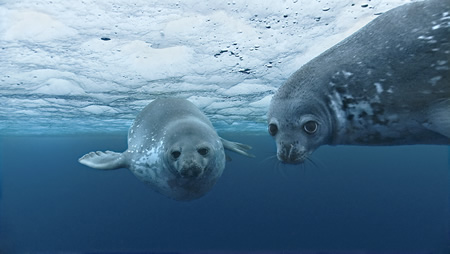


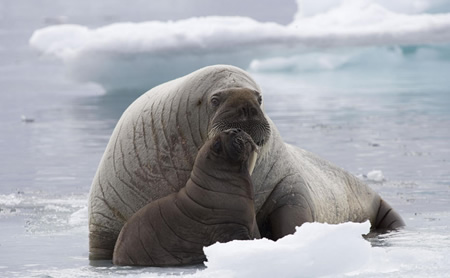

All Photos are Copyright © Disneynature.
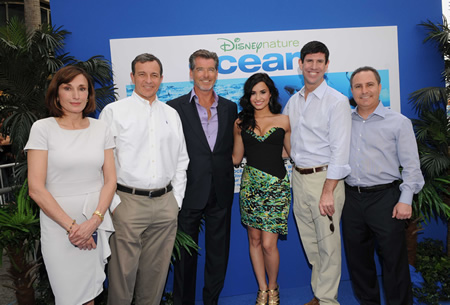
Photo: (Location: Hollywood, CA, USA.) Maguy Maccario, Vice President of the Prince Albert II of Monaco Foundation-USA; Bob Iger, President and CEO The Walt Disney Company; Pierce Brosnan, the film's narrator; Demi Lovato, who sings the film's theme song; Rich Ross, Chairman of the Walt Disney Studios; Alan Bergman, President of the Walt Disney Studios.
The star-studded blue carpet screening of "Disneynature's Oceans" took place at the legendary El Capitan Theatre in Hollywood. [El Capitan Theatre is a movie palace at Hollywood Boulevard in Hollywood. It serves as the venue for many of Walt Disney Pictures' movie premieres.]
Those present were the film's narrator, Pierce Brosnan; the duo who sing the film's theme song, "Make A Wave", Demi Lovato and Joe Jonas; renowned oceanographer and National Geographic Explorer-in-Residence, Sylvia Earle; the grandson and granddaughter of famed ocean explorer Jacques-Yves Cousteau, Fabien & Celine Cousteau; the world's foremost ocean artist, Wyland; some of the film's crew members; and high-ranking executives from the Walt Disney Company. Representing the Principality of Monaco was Maguy Maccario, vice president of the US chapter of the Prince's Foundation.
• Download Educational Activity Guide. This 8-Page Guide can be used to enhance students' scientific and geographic knowledge of Earth's oceans as presented in the new DisneyNature film OCEANS.
|GlobalGiants.Com|
Edited & Posted by Editor | 5:03 AM | Link to this Post
April 19, 2010
City Traffic Management: IBM Helps Stockholm, Sweden, Predict Better Commuting Options



Photo: IBM SMARTER ROADWAYS: IBM is creating smarter roadways for cities around the world using streaming analytics. While streaming analytics may seem highly complex, in reality, it is just a way for people to make sense of all the data in the world in real-time. In the case of traffic congestion, this means better commuting and travel options and better traffic management.
• IBM has announced a new collaboration with KTH Royal Institute of Technology to give city of Stockholm residents and officials a smarter way to manage and use transportation.
Researchers at KTH Royal Institute of Technology in Sweden are using IBM's streaming analytics technology, to gather real-time information from the Global Positioning System (GPS) devices on nearly 1500 taxi cabs in the city and will soon expand to gather data from delivery trucks, traffic sensors, transit systems, pollution monitors and weather information. The data is processed using IBM's streaming analytics software, InfoSphere Streams, giving the city and residents real-time information on traffic flow, travel times and the best commuting options.
For example, a resident could send a text message listing their location and desired destination. The technology would instantly process the real-time traffic, rail and weather information and provide anticipated travel times via car and public transportation, giving people an accurate and instant view of the fastest way to get to their destination.


For the past year, IBM has worked with the city of Stockholm to monitor traffic flow during peak hours. The congestion management system has reduced traffic in the Swedish capital by 20 percent, reduced average travel times by almost 50 percent, decreased the amount of emissions by 10 percent and the proportion of green, tax-exempt vehicles has risen to 9 percent.
The value of InfoSphere Streams is its ability to analyze and integrate any type of data input continuously: text, voice, images, video, databases, weather reports, news, sounds, market feeds and application data in real time. The software automatically determines what information is relevant to solving a particularly problem and continually refines results as new data "streams" in giving organizations instant insights.

Harnessing the power of information with real-time analytics is going mainstream. This year alone, more than 1200 exabyles of digital information will be created. Just one exabyte is equal to one trillion novels. From predicting and managing traffic congestion to determine faster routes for commuters -- people are seeking ways to turn this explosion of data from a problem into an opportunity.
Additionally, IBM announced a new version of its streaming analytics software that includes enhanced processing speeds of up to three times faster and real-time Predictive Analysis for Data in Motion.
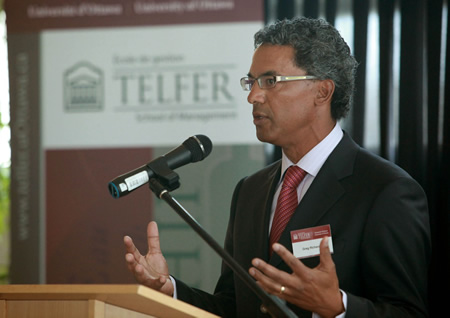
Photo: Dr. Greg Richards, professor of performance management at University of Ottawa Telfer School of Management, discusses the importance of business analytics for the 21st century workforce, Thursday, April 15, 2010, in Ottawa, at the launch of a new international centre of excellence for business analytics announced by IBM and the University of Ottawa.
• Streaming analytics software is a part of IBM's more than $10 billion investment in business analytics which includes organic innovation and acquisitions. In addition, IBM has assembled 4,000 analytics consultants with industry expertise, and opened a network of seven analytics centers of excellence.
• Annual Time Wasted by a Commuter in Traffic Jams: INRIX Traffic Scorecard for USA's Top 10 Most Congested Cities
|GlobalGiants.Com|

Edited & Posted by Editor | 5:00 AM | Link to this Post
April 5, 2010
Science of Business Intelligence
Universities Around the World Lack the Technology and Content to Prepare the Next-Generation Work Force in the Science of Business Intelligence, concludes a Survey.


Teradata Corporation has conducted an international survey. Responding to the survey were professors from more than 80 universities around the world, including Canada, China, Germany, Netherlands, Singapore, South Africa, Spain and the United States.
The survey shows:
• Universities around the world lack the technology and content to prepare the next-generation work force in the science of business intelligence.
• Their instructors are struggling to teach in conformity with the expanding demands for data analytics.
• With the rapid growth of business data, professors need access to larger systems and data sets to teach proper analysis of information.
• The Challenges, reported by the Survey Respondents, are: Technology (43%), Content (41%), Marketing (11%) and Staffing (5%).
• Teachers can't adequately prepare students because they lack access to the needed software, hardware and real-world business problems.
• Students are ill-prepared for the required rigorous statistical analysis.



• Companies are hungry for qualified new business workers. But the universities around the world are struggling to develop the next-generation business intelligence work force.
The two largest areas of concern are an inability to provide relevant and meaningful problems for students to solve, and the cost of providing the database technology needed to solve the problems.
"It's clear from the survey that instructors want to change the way students learn about business intelligence," states Barbara Wixom, associate professor at the University of Virginia's McIntire School of Commerce. "Professors want to provide large data sets, contemporary software tools, and real-world content within their classrooms. But, factors like high technology costs, complex maintenance requirements, and steep learning curves present insurmountable obstacles."
Meanwhile, Teradata Corporation has stepped forward to provide the needed tools, including free software, hardware through the Teradata University Network.
"When we can help students understand what it means to use business intelligence to address problems faced by companies today, they are much better prepared to become productive employees," explained Scott Gnau, vice president and general manager, Research and Development, Teradata Corporation. "We recognize the obstacles universities face in teaching BI (Business Intelligence). By helping them prepare students, we're helping the business world capitalize on data analytics, one of the top technology priorities for companies today."
Source: Teradata University Network, Teradata Corporation
|GlobalGiants.Com|
"The age of chivalry is gone: that of sophisters, economists, and calculators has succeeded."
-- Edmund Burke [British Statesman] (1729-1797)
"The age of Academics is going: that of Professionals is succeeding."
© GlobalGiants.Com. All Rights Reserved.


Edited & Posted by Editor | 12:37 PM | Link to this Post
Apple Sells Over 300,000 iPads First Day
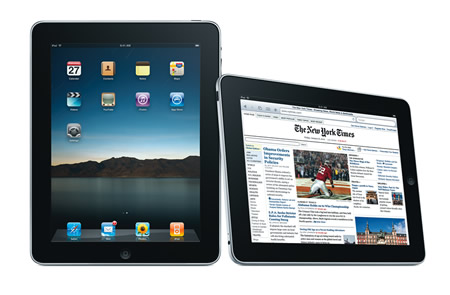
Apple today announced that it sold over 300,000 iPads in the US as of midnight Saturday, April 3. These sales included deliveries of pre-ordered iPads to customers, deliveries to channel partners and sales at Apple Retail Stores. Apple also announced that iPad users downloaded over one million apps from Apple's App Store and over 250,000 ebooks from its iBookstore during the first day.
"It feels great to have the iPad launched into the world -- it's going to be a game changer," said Steve Jobs, Apple's CEO.
Source: Apple
|GlobalGiants.Com|
Edited & Posted by Editor | 9:33 AM | Link to this Post
March 15, 2010
Global Institutional Profiles Project: Thomson Reuters Launches Academic Reputation Survey

Thomson Reuters today announced it has launched the highly anticipated Academic Reputation Survey, which will help inform the Times Higher Education's influential World University Rankings.
The survey reflects a new approach to data gathering and analytics to provide a one-of-a-kind resource to the global scholarly community.
A unique feature of the Thomson Reuters Academic Reputation Survey is an opportunity for disciplinary focus: academics will highlight what they believe to be the strongest universities in their specific fields, both in teaching and research.

With the ability to select from hundreds of disciplines and over 6,000 academic institutions, scholars will have great latitude in pinpointing their reputation assessment.
"Researcher engagement is critical to ensuring that this new initiative delivers what the industry has long been asking for -- a more accurate representation of the institutional landscape, from the source," said Jonathan Adams, director of research evaluation at Thomson Reuters. "The survey results, combined with clear methodology, will provide the community with a thorough, accurate, and multi-faceted data source to support institutional assessment, comparisons and rankings."


Participants of the survey have been carefully selected from Thomson Reuters internal databases and supplemented by a third-party source for balanced coverage of disciplines and geographic regions.
The survey will represent thousands of researchers, university administrators, and students worldwide. And their responses will provide the most reliable and accurate representation of academic viewpoints used in the World University Rankings' seven year history, says Thomson Reuters.


The Academic Reputation Survey is part of the Thomson Reuters Global Institutional Profiles Project. The initiative will create data-driven profiles of globally significant research institutions -- combining reputation feedback, scholarly outputs, citation patterns, funding levels, and faculty characteristics across disciplines in one comprehensive database.
• The data can be packaged and analyzed to different specifications, giving organizations custom information for evaluating and benchmarking their performance and supporting efforts to secure research funding.
• Get the Report: New Outlooks on Institutional Profiles
Source: Thomson Reuters
|GlobalGiants.Com|
 World University Rankings 2009: TOP 200 WORLD UNIVERSITIES
"Soon, any Academic Institution with Higher Global Ranking would be an Automatic Candidate for Grants, Funds, and Investment."
© GlobalGiants.Com. All Rights Reserved.
Edited & Posted by Editor | 5:09 PM | Link to this Post
January 8, 2010
Thomson Reuters to work with Times Higher Education: Data-Driven Profiles of World's Leading Universities & Research Institutions to be Created

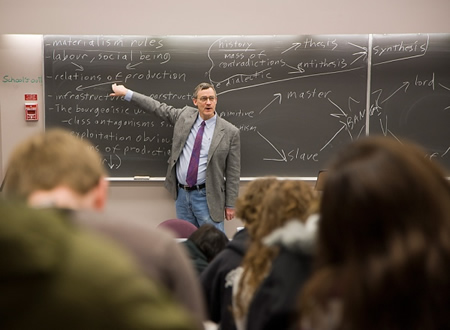
Thomson Reuters, the authority on research analytics and decision support citation data for more than half a century, announced today in PHILADELPHIA and LONDON that it has begun working with thousands of institutions and research facilities to produce a one-of-a-kind resource.
This initiative, the "Global Institutional Profiles Project", will create data-driven portraits of globally significant universities and research institutions - combining peer review, scholarly outputs, citation patterns, funding levels, and faculty characteristics in one comprehensive database.

"There is a need for robust, dynamic, and above all transparent and verifiable data on scholarly performance to reshape how administrators approach institutional comparisons," said Keith MacGregor, executive vice president at Thomson Reuters. "Thomson Reuters has the proven history of bibliometric expertise and analysis to provide the foundational data and consultative elements needed to create this tool."

The dataset can be packaged and analyzed to different specifications, allowing organizations to receive custom information for their specific needs. The Times Higher Education, a London-based weekly newspaper that covers higher education issues, is the first to request a customized dataset to produce an improved version of their annual World University Rankings. The publication will work closely with Thomson Reuters to create a balanced, transparent methodology to support their influential rankings.
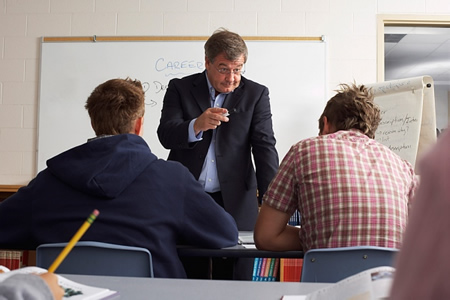
The Global Institutional Profiles Project has already begun with a worldwide survey of opinion leaders at key research institutions. The advice they provide will inform the project both in terms of data collected and methodologies used. According to Thomson Reuters, its goal is to be fully transparent in approach and verifiable in outcomes, so the results of the opinion survey will be published in Q1 of 2010.

• Following is the Thomson Reuters' Open Letter to University & Higher Education Institution Administrators Worldwide:

"Dear Friend:
We are writing to update you on major developments within academic rankings. As 2010 unfolds, your institution's researchers will likely receive multiple survey requests from various ranking initiatives. However, only one seeks to fundamentally change the way data is collected and analyzed.
As you're well aware, institutional rankings play an increasingly powerful and controversial role within the academic landscape. Yet many of the existing efforts have been largely criticized for being based on questionable data and flawed methodology. In response to heated industry debate, Times Higher Education, a global authority on higher education, recently announced plans to work with Thomson Reuters on revamping its popular World University Rankings. We are proud to have been chosen by Times Higher Education and believe this development underscores a major breakthrough within the rankings dialogue.
Our aim with the GLOBAL INSTITUTIONAL PROFILES PROJECT, which includes our work with Times Higher Education, is to develop a data source that provides the best informed and most effective resource to build profiles of universities and research-based institutions around the world.
As part of this initiative, some of your researchers may be contacted soon to complete our reputational survey. Their engagement is critical to ensuring this new initiative delivers what the industry has long been asking for -- an accurate representation of the institutional landscape, from the source. And we firmly believe your support is essential to notifying researchers and encouraging their participation.
We are excited to be a part of such a widespread initiative and look forward to working with you and your institution on bringing greater depth and transparency to institutional assessment."

• Thomson Reuters is the world's leading source of intelligent information for businesses and professionals. With headquarters in New York and major operations in London and Eagan, Minnesota, Thomson Reuters employs more than 50,000 people and operates in over 100 countries.
Source: Thomson Reuters
|GlobalGiants.Com|
Edited & Posted by Editor | 12:28 PM | Link to this Post